Creating Ambience: Ordinary Ways for Better Atmospheres
Sociología Ordinaria Encounters #13
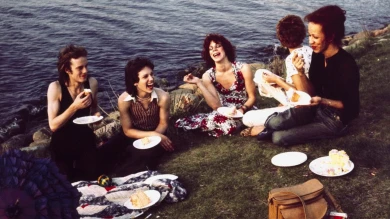
Held on 29, 30 May 2025
Creating Ambience: Ordinary Ways for Better Atmospheres is the title of a new encounter run by Sociología Ordinaria, a transdisciplinary research group that explores daily knowledge deemed ordinary, superficial or frivolous from a traditional academic and intellectual viewpoint.
This fresh edition seeks to approach daily, ordinary and extraordinary environments and atmospheres. From “achieved environments” to “rarified atmospheres”, the theme here responds to a concern over the lack of air and the dismal atmospheres of an uncertain present, in addition to shining a light on the powers, arrangements and fixes used to clean, care and embellish personal environments — and to let off steam. A question is raised over how to ventilate and air lived-in spaces, avoid the shortness of breath that marks the present and to generate strategies to breathe easier.
Furthermore, it explores ways of naming and thinking in these environments and in the difference between the breathable and the toxic, focusing on how the latter is used to negatively single out aspects that are part of the normal and the ordinary. Thus, different tones and actions are put forward: the outdoor atmosphere, the climate of accompaniment, ecosystems for liveable lives and achieving a vibe or atmosphere of the imagination.
Organised by
Museo Reina Sofía and the research group Sociología Ordinaria – Complutense University of Madrid (UCM)
Actividad accesible
Esta actividad cuenta con lazos de inducción magnética (para personas con audífonos) que deben solicitarse previamente mediante correo a centrodeestudios@museoreinasofia.es
Las personas interesadas podrán solicitar con antelación la reserva de un asiento con mayor visibilidad, mediante correo a centrodeestudios@museoreinasofia.es
Participants
Sociología Ordinaria is a research group from the Complutense University of Madrid’s (UCM) Sociology Department. Formed in 2011, its concerns revolve around developing new research and teaching methodologies that enable sociological imagination to be applied to contemporary daily life. The group seeks to highlight the dense socio-political roots of the ordinary, an aspect which is often indiscernible in predominant academic analysis. Under the slogan “learning from the banal, the frivolous and the superficial”, its members look to render an account of the complexity and power relations underlying diverse social and cultural phenomena such as the use of dating apps, language around COVID-19, the world of the cuplé, reality shows, pyjama parties, popstars, TikTokers and club culture.
Programme
Thursday, 29 May 2025
10am Ordinary presentation
Coming Out of Class: Pedagogical Environments and Designs
10:15am Looking, Weaving and Acting for Better Pedagogies
Ez da giro! Hallway Experiments to Enliven Sociology
― Conducted by Jone Allur, Ekain Carrasco, María Céspedes, Naroa Gallues, Paula Gutiérrez-Ponte, Miren Iriarte, Ane Juez, Jone Mendibil, Iñaki Martínez de Albéniz and Asier Amezaga (EHU/UPV)
Restitching Worlds: Textile Artivism and Cultural Practices as Ecosystems of Social Sustainability
― Conducted by Óscar M. Blanco Sierra, Renata Dračková and Miren Edurne Herrán (CSIC-UPV)
AI: Imagination in the Classroom. One Performance, Two Teachers, No Target
― Conducted by Irene Blanco Fuente and Miguel Ángel (Mikel) López Sáez (UCM and URJC)
11:30am Inside/Outside Experimentations
In-person Atmospheres, Virtual Atmospheres. Glasses for What?
― Conducted by Carmen Clara Bravo Torres, Mariana Buenestado-Fernández (UCO), María García-Cano Torrico, Eva F. Hinojosa Pareja, Azahara Jiménez Millán and Elisa Pérez Gracia
The Classroom in the Street and the Street in the Classroom
― Conducted by José Manuel del Barrio Aliste and María Luisa Ibáñez Martínez (USAL)
12pm Coffee and Stuff
12:30pm Interior Design
Producing and Designing Environments, Atmospheres and Experiences Inside the Classroom: The Case of Sociology(ies) of Education(s)
― Conducted by Daniel Muriel (InnoKLab. EHU/UPV)
User Instructions for Designing Socio-productive Environments
― Conducted by Ángeles Fuentes and Kiko Tovar (Escuela Superior de Diseño de Madrid and UCM)
Playing with the Materiality of the Chair: Exploring, with Infrastructures from the Department of Social Sciences through Design, the Chair’s Capacity to Influence Spaces and Bodies
― Conducted by Keio Urkijo Marcos (EHU/UPV)
1:45pm They Had to Be There…
They’ve Made Us a Court and We Must Constitute Ourselves
― Conducted by the Sopa Solida (UCM/USAL) collective
Outdoor Bodies: Climates, Airs and Gusts of Wind
4pm Ventilating (with the gerund)
It’s Stuffy in Here, or How to Air Old Rags and How to Entangle Ourselves to Face Violence from Punto Violeta Somosaguas
― Conducted by Punto Violeta Somosaguas (Paula Martín Peláez, María del Carmen Peñaranda Cólera and Marta Pérez Pérez) (UCM)
Airing the House. Writings of Testimonies on Sexual Violence
― Conducted by Estíbaliz de Miguel Calvo (EHU/UPV)
5pm Body Climates: Desires and Moral Panics
“I have a right to behave badly to have a good time”: An Ethnographic Analysis of the Environment of Sexual Services for Women”
― Conducted by Andrea García-Santesmases Fernández (UNED)
5:45pm In the Wind: Songs and Tales
Gathering in Translucence. For a Politics of the Ambiguous
― Conducted by Candela Crespi
Sing Crying: To Give Some Thought to Places of Utterance
― Conducted by Ana Martínez Pérez
Friday, 30 May 2025
Shacking Up Together: Creating Atmospheres and Good Vibes
10am Homes
Just Like Home in No Apartment: The Construction of “Home-ness” between Young People in Madrid
― Conducted by Santiago Fandos Planelles and Manuel Macías Gómez de Villar (UCM)
SMS and BURR STUDIO: The Experience of a Collective Housing Process
― Conducted by Sato Díaz, María Artigas, Sira Peláez and Ramón Martínez (SMS and BURR STUDIO)
11am Neighbourhoods and Streets
Collective Memory and Self-managed Parties and Culture in Palma
― Conducted by Isa Nadal Amengual (UCM-UIB)
A Mental Map of the Neighbourhood
― Conducted by the BarriLab (Associació de Veïnes de Canamunt) cultural project
GREEN AWNING: Postcards from Another Heritage
― Conducted by Pablo Arboleda and Kike Carbajal (CSIC and independent photographer)
12:15pm Coffee with Posters
Street Air. Breathing, Building and Inhabiting Public Atmospheres
― Conducted by Francisco Javier Rueda Córdoba (UCM)
Memetic Catharsis
― Conducted by María Cecilia Cordero (UPM-UCM)
The Dark Side of Desire
― Conducted by Celia Espada Guerrero, Amanda López Bernad and Celia Roncalés Villa (UCM)
Questioning Masculinities from a Reflection on Paternities. Contributions from a Feminist Approach
― Conducted by Débora Imhoff (CONICET-UNC)
12:45pm We Need to Talk: Collective Care
Al Akhawat Collective. United in Art-Making
― Conducted by Karim Khourrou Gadour, Oumaima Manchit Laroussi, Sanae El Mokaddim Ayadi, Youssef Taki Miloudi and Aicha Josefa Trinidad Gououi (UCLM, UCM, ULL and UB)
1:15pm Escaping Forwards… But in Which Direction?
With So Much Advance I’m Heading for the Forest
― Conducted by Manuel Cabrera de Diego (UCM)
“'Mastodon Is Not Much Fun’, and So Many Other Fictions on the FediVerso”
― Conducted by Rubén Blanco (UCM)
Atmospheres of Feeling: Feelings and Senses
4pm Bad Vibe
Reasoning Together: Self-analytical Conversations for the Revolution to Come
― Conducted by Ane Campaña Blanco and José Llopis Manchón (UCM)
The Room of “Adolescence”: The Domesticity and Culture of Sexist Hate
― Conducted by Alba Mira Roda Ignacio and Moreno Segarra (UCM)
From Meme to Abyss: Generative AI, Viral Aesthetics and the Ordinary Construction of Political Hate in the Extreme Right
― Conducted by Gabriel Bayarri Toscano and Concepción Fernández-Villanueva and (URJC and UCM)
5:30pm The Imperium of the Senses
Heat – Tools of Collective Transformation
― Conducted by Daniel Torrego (UPM-UA)
What Does a “Gym” Smell of? Gender and Sexuality as Olfactory Regulators
― Conducted by Enrico Mora (UAB)
Noise/Ambient, Ambient/Noise: Noise in the Construction of Ordinary Environments
― Conducted by Pablo Santoro (UCM)
6:45pm Ordinary Farewell
![Dara Birnbaum, Technology/Transformation: Wonder Woman [Tecnología/Transformación: la mujer maravilla], 1978-1979. Museo Reina Sofía](https://recursos.museoreinasofia.es/styles/small_landscape/public/Actividades/wonder.jpg.webp)
![John Baldessari, Prima Facie (Third State): From Aghast to Upset [Prima Facie (tercer estado): de aterrado a disgustado], 2005. Museo Reina Sofía](https://recursos.museoreinasofia.es/styles/small_landscape/public/Actividades/so.jpg.webp)
Más actividades
![Isabel Coixet, 100 Years and You Everywhere [100 años y tú en todos los sitios], 2026, película](https://recursos.museoreinasofia.es/styles/small_landscape/public/Actividades/2.diseminar-mundo.jpg.webp)
John Berger and Isabel Coixet. Continued Ways of Seeing
Thursday, 17 September 2026 at 7pm
Ways of Seeing (1972) is one of the most revolutionary television series on art history, the museum and contemporary critical culture. Across four episodes, an articulate, enthusiastic John Berger unpacks the relationships between classical art through the gaze and new technology, the nude and feminism, the oil painting and commodity fetichism, advertising and consumerism. In essence, a level of critical commitment only comparable to its capacity for dissemination. Unsurprisingly, the series, and the book that would distil it, continues to forge vocations. This session sees art historians Alberto López Cuenca and Modesta Di Paola carry out an analysis of Berger’s audiovisual work, placing the stress on episodes one and four of the series. In the first episode, Berger reflects on the connection between the act of seeing, looking and being in light of new technology, such as the film camera. At the same time, it analyses how the culture of reproduction is turning paintings into messages or fragments of communication while stressing the importance of silence when observing historical paintings. In the fourth and final episode, he introduces advertising as a new iconic-verbal language that shares certain principles with the message of oil painting as a luxury item.
The session opens with the premiere of a filmic letter from Isabel Coixet, one of Spain’s most internationally acclaimed directors, to John Berger, with whom she maintained a long friendship and deep admiration. The short film is testament to the ubiquitous and long-lasting presence of the author of Ways of Seeing, even after his death in 2017.
![Chantal Akerman, Woman Sitting after Killing [Mujer sentada después de matar], 2001, instalación. Museo Reina Sofía](https://recursos.museoreinasofia.es/styles/small_landscape/public/Actividades/chantal-akerman-mujer-sentada-despues-matar.jpg.webp)
On Your Screen: Art History and the Museum Facing the Audiovisual Challenge
18, 19 SEP 2026
The conference On Your Screen: Art History and the Museum Facing the Audiovisual Challenge sparks debate around the transformations of art history and museum space upon embracing the audiovisual format. Its starting point is John Berger’s emblematic television series Ways of Seeing (1972), a landmark in the democratisation of art-historical discourse. In the series, Berger illustrated how the transfer of a work such as Goya’s Los fusilamientos del 3 de mayo (The Third of May 1808 or the Executions) from museum gallery to home TV screen completely changed the viewer’s experience, allowing the image to travel to straight to the viewer.
In the twenty-first century, this screen-based ecosystem has expanded exponentially, with museums not only physically integrating screenings and devices into their galleries— following in the wake of many exhibitions on the moving image — but also deploying complex virtual strategies. Equally, numerous en vez de a multitudeof historians, students and creators use digital platforms to circulate their ideas and projects. This audiovisual shift opens access to ignored materials and democratises knowledge, as well as challenging traditional hierarchies and the interpretive authority of institutions. The conference, promoted by the research project ATLAS AV: The Audiovisualisation of Art History and the Museum, seeks to analyse this vast audiovisual material, its archives, and its capacity to transform the memory of art.
Godard and Miéville: Time and Ruin
Friday, 18 September 2026 - 7pm
Inside the framework of the conference On Your Screen: Art History and the Museum Facing the Audiovisual Challenge, this film series sets forth three critical visions of the museum via three sessions featuring the works of John Berger, Jean-Luc Godard and Anne-Marie Miéville, Ariella Azoulay, Alan Resnais and Chris Marker, Kwate Nee-Owoo, and the premiere of short films by Isabel Coixet and La Vulcanizadora (Maria Rojas Arias and Andrés Jurado). In classical theory, the museum gives the world meaning; it contains fragments of the past, granting them a history, a narrative that explains preterite time and the present. Today, there is an implicit assumption that this function hides and legitimises forms of power, yet what if the museum, instead of explaining the world, multiplied it through radical ideas, silenced periods and repressed subjects? Such is the approach of the film-makers and artists in this film season.
In 1972 the writer John Berger opened the landmark television series Ways of Seeing with an iconoclastic gesture: slicing Sandro Botticelli’s painting Venus and Mars (1485) in London’s National Gallery. A transgressive act that recalls contemporary attacks on the museum by dissident youth and with which Berger, after revealing it was a reproduction, sought to ignite debate around the idea of an original artwork and a copy. In this, the hundredth anniversary of his birth, the first session pays homage to one of the great art writers of the twentieth century. Starting with a review of Berger’s audiovisual work by art historians Alberto López Cuenca and Modesta Di Paola, the series begins with the premiere of 100 Years and You Everywhere (2026), an unreleased short film by Isabel Coixet composed as a beautifully crafted letter to Berger, and continues with an analysis of fragments of Ways of Seeing in relation to the museum and contemporary art.
The second session screens two medium-length films by Jean-Luc Godard and Anne-Marie Miéville on time, ruin and museum. In The Old Place. Small Notes Regarding the Arts at Fall of 20th Century (1999), both film-makers consider what remains of that “old place”, the museum, at the close of a century of wars and totalitarianism, and ask whether it should be more of a legend or desire than a place. This same driving principle leads Godard to build his own imaginary museum in Reportage amateur (maquette expo) (2006), a rickety toy museum which, paradoxically, contains the great film-maker’s full power of thought on history and images.
Finally, the third session explores one of the major challenges of recent years: the decolonisation of the museum, the recognition of its link to imperialist discourses of power and the need to situate a new silenced or repressed subject at the centre of the Western narration of history. Under the title Museums and Restitution, it includes the film Undocumented. Unlearning Imperial Plunder (2019), by theorist Ariella Azoulay, Statues Also Die, by Alan Resnais and Chris Marker (1953), Kwate Nee-Owoo’s You Hide Me (1970) and the first screening of the short film Quinto verso, parte de Tonada (Fifth Verse, Part of Tonada), by La Vulcanizadora (Maria Rojas Arias and Andrés Jurado), filmed at the Museo de América in Madrid.
![Ariella Azoulay, Un-documented. Unlearning Imperial Plunder [Indocumentados. Desaprendiendo el saqueo imperial], 2019, película](https://recursos.museoreinasofia.es/styles/small_landscape/public/Actividades/5.diseminar-mundo.jpg.webp)
Museums and Restitution
Saturday, 19 September 2026 - 7pm
Centuries of plundering, decades of amnesia, years of living with unmitigated extractivist power… Does a museum, as we know it, have a raison d'être in a postcolonial society?
This session expounds the operations of the museum as a colonial machine, while putting forward ideas, in narration, for a more just, equal and inclusive institution of the future via society’s marginalised and minority voices. The session begins with the international premiere of Quinto verso, parte de Tonada (Fifth Verse, Part of Tonada), which presents a vision of the Quimbaya Collection (fifth and sixth centuries CE) from the Museo de América in Madrid. It is constructed with the voices and chants of Wayúu mourners and guides, not only as a way of reinstating the role of these gold idols — anthropomorphic figures of men and women used as vessels in ritual practices — but also to imagine that what must be exhibited is not the gold itself. It is the ritual’s own chant. In the classic film You Hide Me (1970), Ghanaian film-maker Kwate Nee-Owoo accesses the British Museum’s collection of African art, located in the building’s basement, to question the meaning behind a museum plundering and nullifying. A fine exercise of first-person institutional critique screened for the first time in Spain. Almost seventy years since Resnais and Marker made Statues Also Die (1953), a reflection on the aura-bearing value of the museum opposite the identity-based and cultural belonging of African art, theorist Ariella Azoulay films the same statues again at the Musée du Trocadéro (today the Musée du Quai Branly), which survive and wait to be reunited with their people. Azoulay, whose wholly original undertaking is a lesson to the museum of the future, connects the forced migration of these sculptures with the mass transit of people crossing borders artificially imposed by the same system that has plundered their culture.
The School of Transformative Institutionalism and Local Organisation
From 21 to 24 September 2026
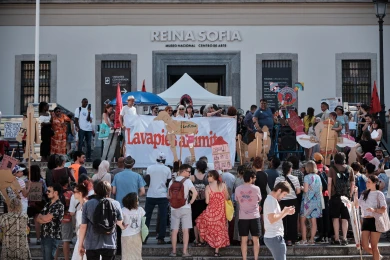
The School of Transformative Institutionalism and Local Organisation (S.T.I.L.O.) is a programme of joint learning and join strategy which sets in motion a process for the exchange of questions, methodologies and experiences between cultural organisations. The overall aim is to create, circulate and prototype tactics, tools and collective knowledge on institutional practices that open new channels for defending culture and advocating structural transformation in divergent geographical contexts.
The project is part of the Laboratorio de Institucionalidad Compartida (The Laboratory of Shared Institutionalism, LIC), a space for the Museo Reina Sofía’s research, work and advocacy centred on developing, experimenting with and systemising practices, protocols and tools which contribute to a fairer and more liveable cultural ecosystem.
For many years now, so-called infrastructural critique in museums questions material, legal and economic infrastructures, among others, as well as the forms of solidarity and practices required to sustain the cultural ecosystem. By approaching current debates, S.T.I.L.O. raises questions on the ways in which organisations define and interpret their practices, organise their relations and respond to the social contexts in which they operate.
The school gathers four cultural organisations that work via different institutional models – scale, contexts, conditions, different working models — with the goal of pooling common strategies and tools of organisation, advocacy and relationships with local communities.
The programme is conceived as a collaborative process with the participation of Arika, La Revuelta, BAK Basecamp and The Tentacular Museum (Museo Reina Sofía) and is structured around preparatory online sessions and an in-person seminar in Madrid.
S.T.I.L.O. is an activity framed inside the working strand of Situated Organisations from L'Internationale’s Museum of the Commons project, which reflects on the role of museums and art organisations as actors within complex social networks and ecosystems, with a view to exploring new ways to democratise institutions and make them more open, inclusive and useful.