Collections

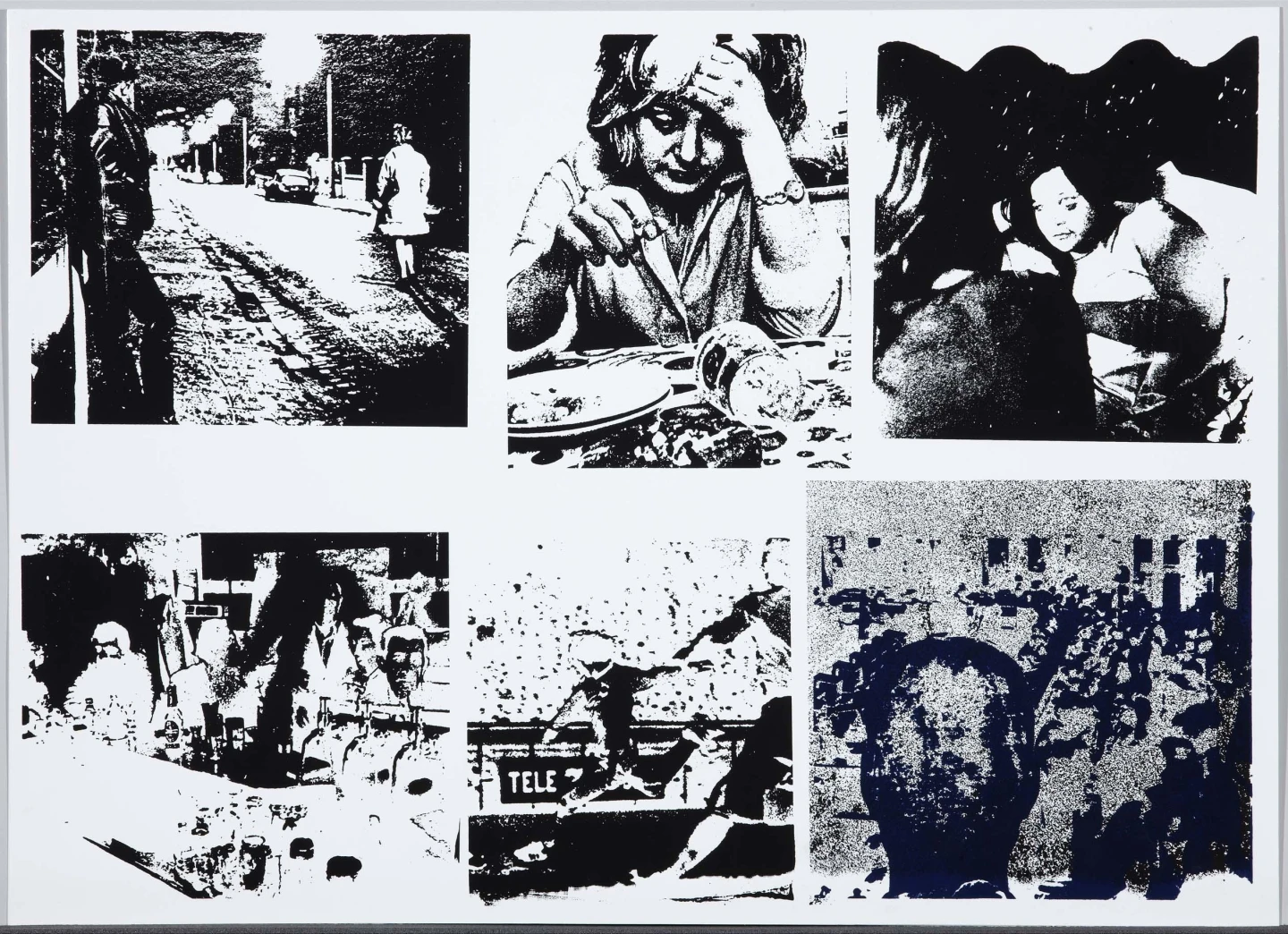
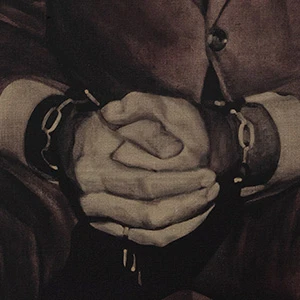
Juan Genovés, Documento nº … (Document No. ...), 1975. Museo Nacional Centro de Arte Reina Sofía. © Juan Genovés, VEGAP, Madrid, 2026

Juan Genovés, Documento nº … (Document No. ...), 1975

Museo Nacional Centro de Arte Reina Sofía. © Juan Genovés, VEGAP, Madrid, 2026

New
New COLLECTION. CONTEMPORARY ART: 1975–PRESENT

Since 18 February

The new presentation of the Museum's Collections covers fifty years of art history in Spain, from the Transition to the present day. Based on a selection of 403 works by 224 artists, more than half of which are unpublished works never before seen in the Reina Collections, the new narrative aims to highlight the contribution of Spanish contemporary art through three different itineraries.

The exhibition occupies the entire fourth floor of the Sabatini Building, more than 3,000 square meters in a linear, and not always chronological, layout that extends over 21 chapters with well-known works by Picasso, Miró, Dalí, Juan Genovés, Juan Muñoz, Cristina Iglesias, Susana Solano, Juan Navarro Baldeweg, Esther Ferrer, Cristina García Rodero, Richard Serra, and Andy Warhol; names inevitably linked to the Transition and the Movida such as Guillermo Pérez Villalta, Ocaña, Ouka Leele, Ceesepe, Nazario, Iván Zulueta, and Alberto García-Alix; artists committed to gender sensibilities such as Judy Chicago, Barbara Hammer, Eulàlia Grau, David Wojnarowicz, Pilar Albarracín, and Cabello/Carceller; and key figures in the cultural, political, and social representation of AIDS such as Pepe Espaliú and Pepe Miralles. Other figures who approach their work from political and theoretical positions within the framework of representation criticism, such as Joan Fontcuberta and Dora García; or those who have developed different approaches to Afro identity, such as Pocho Guimaraes, Agnes Essonti or Rubén H. Bermúdez.

1 of 2

A museum’s collections are the structural nerve centre around which the other messages transmitted by the institution reverberate. The Museo Reina Sofía collections have been taking shape since the foundation of the Museo Español de Arte Contemporáneo in 1894 to unify, over one hundred years later, the state collections of modern and contemporary art. The Collection is made up of 25,000 pieces spanning from the final decades of the nineteenth century to the present, and focusing both on the history of Spanish art and international art, with a particular emphasis on Latin America.    

The Museo’s Collection is being fully reconstructed and rehung in a process due to conclude in 2028, with the works being relocated to the upper floors of the Sabatini Building with a view to improving the circulation of visitors and enhance readings of the spaces inside the Museo. These rearrangements adhere to a criterion in which narratives are multiplied in a chorus that gives rise to multiple voices.    

In this opening of narratives, the dialectal forms of institutional language and the vernacular forms of art history must be accommodated not only as readings which break from notions of one art belonging to the elite and another for the masses, but more importantly within a diverse Spanish State with the multicultural value contributed by historical communities in its territory.  

A collection is the present perfect and past future and indispensable within it is the past. Opposite the linear temporality of conventional history, there are other temporary modalities which must allow narratives of presentation to be expanded upon. The importance of generational discrepancy, of building a contradictory and strategic continuity by virtue of anachronisms, will allow the horizon of consensus to be extended on narratives of art history from Spain. 

16776 artworks in the Collections

Visit the Collections
Visit

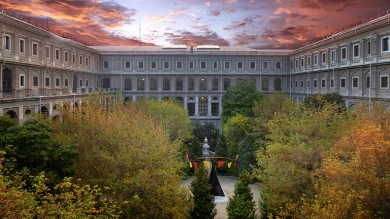
Garden and Rooftop Terraces

Artworks from the Collections in the Museo's outdoor spaces
Garden, Museo Reina Sofía

Video collections

Rethinking Guernica

History and conflict in the 20th century

Unpublished documents, gigapixel images, comparison of photographic techniques, interactive timeline... all this and more on a website dedicated to Pablo Picasso's 'Guernica'. 

Guernica, de Pablo Picasso
Research Projects
Historical, social, and artistic elements that provide a broader understanding and context to the works. 
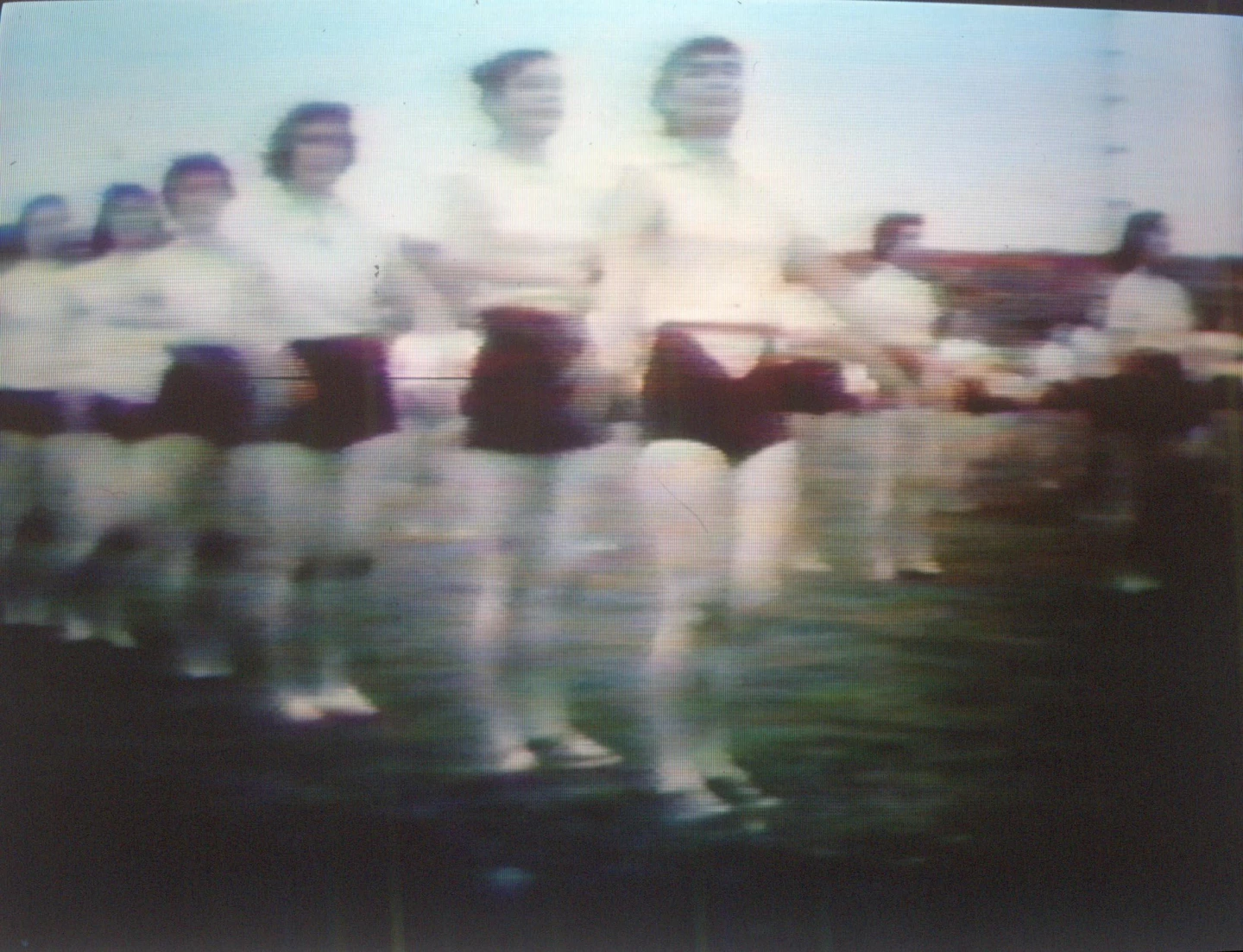
 Juana Francisca, Campamento de unión de muchachas, 1937
Carme Millà, Escola nova: Poble lliure, ca. 1936-1937
Colita (Isabel Steva Hernández), Descuartizar el cuerpo, 1965
Eulàlia Grau, Temps de lleure (Etnografia) (Tiempo de ocio [Etnografía]), 1971
Ricardo Zamorano Molina y Estampa Popular de Madrid, Sín título, ca. 1960
Fotografía de Paolo Gasparini
 El Livro da Criação en las calles de Río de Janeiro. Fotografías de Mauricio Cirne, 1959
Martin Kippenberger, Martin Kippenberger. Absolut LA International, Galerie Max Hetzler, Berlin. Summer 1995  (Martin Kippenberger. Absolut LA International, Galería Max Hetzler, Berlín. Verano 1995), 1995
David Smith, <em>The Occupied Country</em>, 1942. Pluma y tinta sobre papel, (49.5 x 63.5 cm). (c) Estate of David Smith/VAGA, NY. Photo by Geoffrey Clements

RRS

Radio del Museo Reina Sofía

Aural Museum

Sound Journeys (in Spanish)

An Education project with the participation of cabosanroque, Carne Cruda and Emilio Tomé

Museo Aural