-
Saturday, 14 July 2018
Ernesto Giménez Caballero / Edgar Neville
Ernesto Giménez Caballero
Esencia de verbena (The Essence of Verbena), 1930
Spain, b/w, original version (shot silently and post-synchronised with a voice-over by Giménez Caballero), 11’Edgar Neville
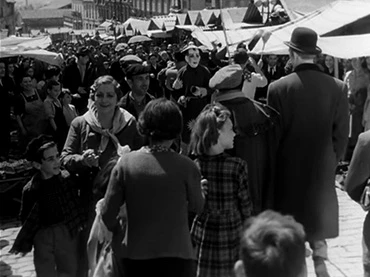
Domingo de Carnaval, 1945
Spain, b/w, original version, 77’Opening concert by Variedades Azafrán.
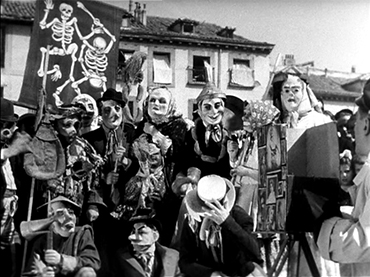
Esencia de verbena is an urban symphony, akin to those filmed on Berlin, Paris and Moscow at the end of the 1920s, depicting Madrid through the typical local verbena festivities held in its neighbourhoods. (Edgar Neville)
“Domingo de carnaval is a one-act farce in Madrid, in which a murder plot is interwoven; a storyline in which a police-type mystery intervenes; but it is, above all, an etching, or rather, a moving Solana painting. The action takes place in El Rastro market over the three days of Carnival in 1917 and 1918, with a grotesque crowd with masks of all kinds that move and convulse on a backdrop as thrilling as El Rastro. Some scenes take place at the top of the Pradera de San Isidro, the Goyaesque profile of Madrid in the background. Lastly, I hope everything has that bustling joy of Goya’s The Burial of the Sardine” (Edgar Neville)
-
Friday, 20 July 2018
José Antonio Nieves Conde
Surcos (Furrows), 1951
Spain, b/w, original version, 100’Presented by: Memorias en red. Impresiones, a research association that works with studies of memory and spaces of encounters for Lavapiés residents who want to share their experiences, memories and affections.
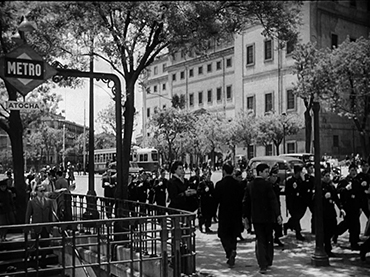
A family moves from the country to the city in search of better living conditions. “I was presented with this story, which was if anything Arnicheseque, but with the crucial intervention of Gonzalo Torrente Ballester we turned it into a social consideration… Surcos was put together in a way that is now commonplace in French and Italian cinema: with background information. We compiled photographs and interviews for over a month, and dressed the actors in the clothes the local residents actually wore… Even the outdoor scenes were filmed with direct sound”. (José Antonio Nieves Conde).
-
Saturday, 21 July 2018
Luis García Berlanga
El verdugo (The Executioner), 1963
Spain, b/w, original version, 91'Presented by: PAH Centro, a Platform for People Affected by Mortgages in the Madrid neighbourhoods of Austrias-Letras, Lavapiés, Arganzuela and Malasaña, and Sindicato de Inquilinas e Inquilinos, an organisation which defends tenants’ rights.
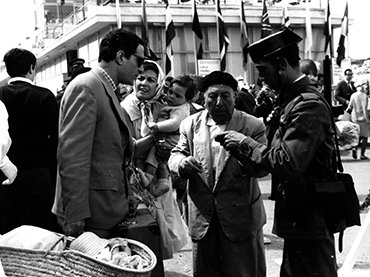
In the guise of a satire about the death penalty during the Franco regime, Berlanga and Azcona created an in-depth and heart-breaking depiction of moral misery in a country which is at once infantilised and repressed. José Luis and Carmen, an executioner applicant and his daughter, dream of leaving the congested neighbourhood of Lavapiés –a marriage and a cosy little apartment on the outskirts in exchange for committing to the cruelty of the Dictatorship. The horizon already forebodes the consequences of this submission, part and parcel of the Transition: tourism and the rampant growth of construction are the economy’s only driving forces.
-
Friday, 27 July 2018
Fernando Colomo
Bajarse al moro (Going Down in Morocco), 1989
Spain, colour, original version, 83'
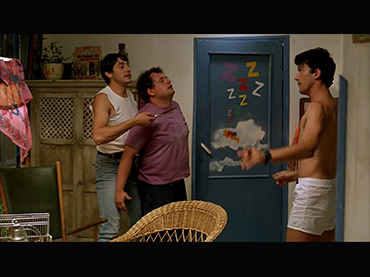
Presented by Fernando ColomoIn an adaptation of the eponymous play by José Luis Alonso de Santos, the endeavours to rework the performance space result in a profusion of images from the Lavapiés neighbourhood, furnished with characteristics that would shape its mythology in the years that followed: a free and accommodating area, where youth is provisionally elongated until there is no choice but to settle down. This film is one of the richest and longest-lasting works on bohemia that defined the area, and which today is becoming ever more difficult to find.
-
Saturday, 28 July 2018
Basilio Martín Patino
Paseo por los letreros de Madrid (A Walk Around Madrid’s Street Signs), 1968
Spain, b/w, original version, 15'Madrid, 1987,
Spain, colour, original version, 110'Presented by: Plataforma de Fiestas Populares de Lavapiés, an ensemble of associations, collectives and local residents calling for mixed and diverse street parties.
This session opens with the first short film by a young film-maker who, new to Madrid, unsuccessfully attempted to unsnarl the history and identity of the city by exploring the naming of its streets.
“Madrid is the country’s capital and an indifferent host to its governing powers [...] It’s as though its apparent resignation to live in discord has developed overt escape mechanisms which are completely unrelated to the regional pretensions of other regions with a different historical conscience. It’s a muted discord that endures and is willing to throng the streets and squares again with the strange instinct of something extraordinarily human that re-touches inner fibres. With the certainty that a film camera will be, and will continue to be, in any corner recording certain gestures and indicating something more than local authenticity; in order for its collective speech not to end up being lost in the vacuum of time”. (Basilio Martín Patino).

-
Friday, 3 August 2018
Francesco Rosi
Las manos sobre la ciudad (Hands on the City), 1963
Italy, colour, original version with Spanish subtitles, 101'Presented by: Darío Corbeira, artist and founding member of the artists’ collective La familia Lavapiés (1975-76).
Set in Naples, Rosi’s home town, the film explores the relationship between the physical make-up of the metropolis and its invisible power structure, laying bare the rotting foundations of both. Real-estate developer Édoardo Nottola plans to build skyscrapers with the blessing of City Hall — where Nottola is also conveniently a councillor. However, the fatal collapse of a block of flats forces alliances to be redressed, with the ideology, not to mention the morality, of the calculated risks the last thing on the councillors’ minds. Hands on the City is one of the bluntest historical manifestations of the thick weft of gentrification.
![Francesco Rosi. Le mani sulla città [Las manos sobre la ciudad], 1963](https://recursos.museoreinasofia.es/legacy_programs/6_6.jpg "Francesco Rosi. Le mani sulla città [Las manos sobre la ciudad], 1963")
-
Saturday, 4 August 2018
Alberto García Ortiz and Ágatha Maciaszek
A ras del suelo (At Ground Level), 2003
Spain, colour, original version, 95'Presented by: Alberto García Ortiz and Ágatha Maciaszek
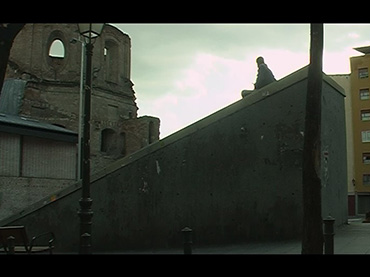
The camera pans through the streets of Madrid’s Lavapiés neighbourhood, immersed in an eye-catching process of redevelopment, to focus on the daily turn of events for different residents and their acts of protest against the local authorities, and on the daily encounters between the characters, filmed low down, ‘at ground level’. An out-of-reach health centre, fake-smile, close-fisted politicians, a TV churning out news behind reality’s back, citizens that give free rein to local knowledge despite their poor living conditions. This film is an example of street-level neighbourhood cinema.
-
Friday, 10 August 2018
Dan Ollman, Sarah Price and Chris Smith
The Yes Men, 2004
USA, colour, original version with Spanish subtitles, 83'Presented by: Jesús Carrillo, art historian and a member of Lavapiés artists’ collectives such as La fiambrera obrera. He is also the author of the book Space Invaders. Intervenciones artístico-políticas en un territorio en disputa: Lavapiés (1997-2004) (Brumaria, 2018).
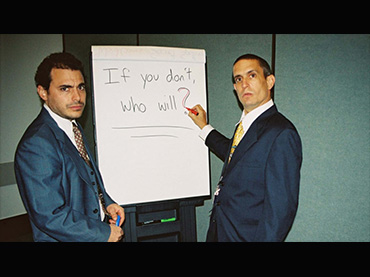
The aim of The Yes Men is to call out corporations with parodies that turn the public’s attention towards their harmful and immoral practices. The idea of art as sabotage to dismantle our day-to-day, wielded by these artists/activists, is in tune with the interventions of different Lavapiés collectives in the late 1990s and early 2000s.
“When trying to understand how a machine works, it helps to expose its guts. The same can be said of powerful people or corporations. By catching powerful entities off guard, you can momentarily expose them to public scrutiny. This way, everyone sees how they work and can figure out how to control them. We call this identity correction”. (The Yes Men).
-
Saturday, 11 August 2018
Eliane Caffe
Hotel Cambridge, 2016
Brazil, colour, original version with subtitles, 99'Presented by: Sabela Fondevila Estévez, a local resident involved in migrant struggles in Lavapiés.
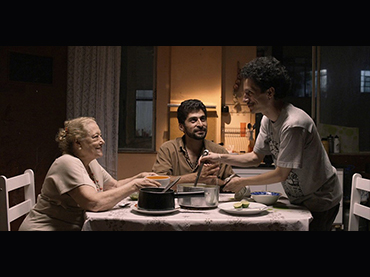
In 2012 the abandoned Hotel Cambridge building was occupied by MSTC (Movimento Sem-Teto do Centro). Inside the building live 170 families, not just from Brazil but also immigrants and refugees from countries like Bolivia, Haiti, Palestine, Cameroon and the Dominican Republic. Their way of organising goes beyond the obligations required to live together and continue squatting; here the creation of bonds is a priority. Film-maker and activist Eliane Caffe films community life in the hotel — the threat of eviction permanently looming — with a mix of professional actors and the actual residents.
-
Friday, 17 August 2018
Aki Kaurismäki
Toivon tuolla puolen (The Other Side of Hope), 2016
Finland, colour, original version with Spanish subtitles, 98'Presented by: Red Solidaria de Acogida, a citizen platform which defends human rights linked to people’s free movement.
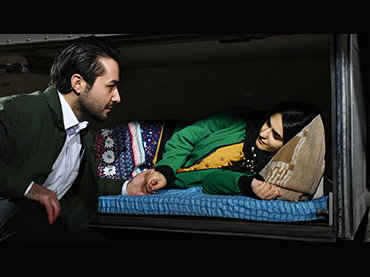
In the latest film by one of the most important directors in recent times, a young Syrian refugee seeks asylum in Finland, but comes up against the cruelty and absurdity of the legal system. From this point on, he will have to live from the solidarity of others, characters that have featured heavily in Kaurismäki’s films, and who also face new first-world problems: the disappearance of certain trades, futile globalisation, isolation, a lack of empathy and cruelty as the predominant form of behaviour.
-
Saturday, 18 August 2018
Christian Rouaud
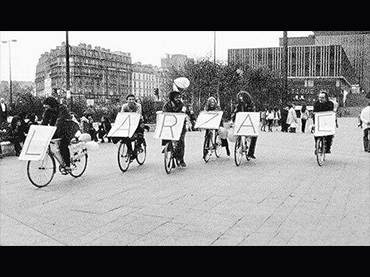
Tous au Larzac! (Leadersheep), 2011
France, colour, original version with Spanish subtitles, 120'Presented by: the people in charge of Muestra de Cine de Lavapiés, an event which screens free films in different spaces (squares, empty lots, bookshops, social centres, bars...) around Lavapiés every year in June and July.
This feature-length film recounts a struggle. In 1971, the announcement of the expansion of a military base signals the start of the ‘self-taught militancy’ of 103 male and female farmers who, under the threat of expropriation and to defend their land, change sides and join hippies and insubordinates with different ideologies. The Larzac Committees group together the left-wing working class and farmers, anarcho-syndicalists, Maoists, and Catholic farmers. An unconventional melange in which the assets of each group serve the common good, thus creating a productive anomaly that the Lavapiés community has likened to life in the neighbourhood.
-
Friday, 24 August 2018
Fabrizio Terranova
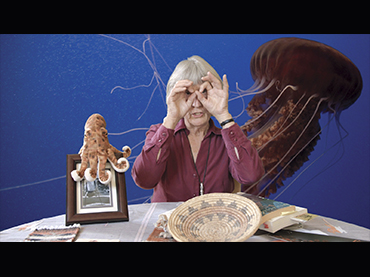
Donna Haraway: Story Telling for Earthly Survival, 2016
Belgium, colour, original version with Spanish subtitles, 90’Presented by: Fabrizio Terranova and Fefa Vila, a professor of Gender Relations in Contemporary Society at the Complutense University of Madrid and a queer-feminist activist.
The main premise of the film is how activism is no longer linked to an idea or territory, but to the defence of diverse ways of life, amply demonstrated in Lavapiés in recent years. Haraway, an impassioned speaker, discusses this and other issues: capitalism and Anthropocene, science fiction as philosophical writing, unconventional sexual and family relations, the suppression of women writers, the relationship between species and the need for new post-colonial and post-patriarchal narratives: “With her inimitable brilliance and wit, Donna Haraway takes us on an exhilarating journey that combines sharp theoretical insights and moving personal moments. An intellectual giant comes to life as never before. Enjoy the ride!” (Rosi Braidotti).
-
Saturday, 25 August 2018
Youssef Chahine
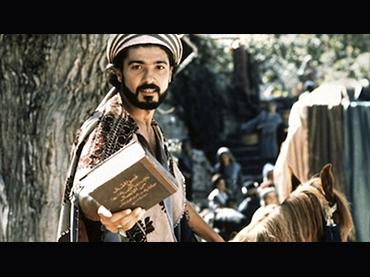
Al-Massir (Destiny), 1997
France-Egypt, colour, original version with Spanish subtitles, 138'Presented by: Pepa Torres, theologist, social educator and aid worker in migrant movements.
Destiny is Youssef Chahine’s vehement reaction to the attacks of Egypt’s Islamic fundamentalists after the censorship of his previous film Al-Mohager (The Emigrant) and the assassination attempt on his friend, the writer Naguib Mahfuz. Through an open interpretation of the life of Averroes, an Andalus philosopher, and with the spirit of classic adventure, Chahine demonstrates that fundamentalism is not exclusive to our era or to Islam, and nor is tolerance and intellectual curiosity exclusive to Europe. The film, a coda to the series, sets forth religious difference as a source of vital and intellectual wealth, in lieu of its associations with fundamentalism and misery, a common representation in the media.
Lavapiés, Lavapiés. Just Look at You Now
Held on 14, 20, 21, 27, 28 Jul, 03, 04, 10, 11, 17, 18, 24, 25 Aug 2018
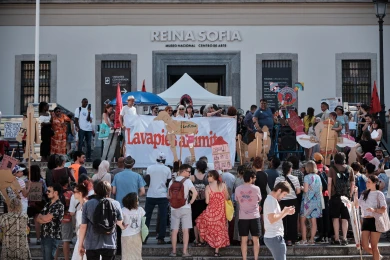
This summer’s film season explores the idea of neighbourhood cinema as an open, local space, in which images prompt a dialogue on the history, local residents, aspirations and desires inhabiting Madrid’s Lavapiés barrio. Not only is this neighbourhood the home of the Museo, it is also an example of a historic quarter transformed by the complex dynamics of real-estate speculation and a large influx of tourists, a similar story in numerous international-scale city centres. Lavapiés, authentic and outspoken, refuses to fade, reaffirming itself again and again as a space of opposition and social reinvention. To put it another way, the neighbourhood it has always been.
The history of Lavapiés is the history of Madrid, but its most working-class, low-income, tumultuous and rebellious side, the town detached from the royal courts, the seat of power. The opening sessions in the series show early films which focus on and are shot in this neighbourhood: Lavapiés, tough and subversive (Esencia de verbena and Domingo de Carnaval); the first disembarkation point for rural exodus (Surcos), and abashed in its misery (El verdugo); its conception as a brittle paradise (Bajarse al moro) and a repository of rebellion and local memory (Madrid); the search for local resistance (A ras del suelo) where others only sniff get-rich-quick opportunities (Las manos sobre la ciudad).
The second half of the series moves away from Madrid, looking to other geographical and mental coordinates for its identity, unearthing the sprawling imagery and sensibilities that shape and mould the neighbourhood. The desires and limits of the capacity to embrace human beings (The Other Side of Hope and Hotel Cambridge); recollecting the junction between activism and contemporary art (The Yes Men); and, in the final stretch, extolled snippets of better worlds to which the cultures running through the neighbourhood have contributed: the creative defence of territory and ways of life from ideological and generational confluence (Tous au Larzac!); the experience of subjects, love and care demonstrated by ecofeminism and hacktivism (Donna Haraway: Story Telling for Earthly Survival); and the generous, open and united tradition of Islam (Al-Massir).
The films will be introduced by members of collectives, artists, and intellectuals – local residents, ultimately – who will relate their field of work with the theme of each session, illustrating the richness of the barrio’s associative network. The series opens with a concert by the group Variedades Azafrán and their contemporary take on authentic popular music from Madrid.
With the support of
Programme
Ana Useros and Chema González
Organised by
Museo Reina Sofía
Lavapiés, Lavapiés. Just Look at You Now
Más actividades
![Isabel Coixet, 100 Years and You Everywhere [100 años y tú en todos los sitios], 2026, película](https://recursos.museoreinasofia.es/styles/small_landscape/public/Actividades/2.diseminar-mundo.jpg.webp)
John Berger and Isabel Coixet. Continued Ways of Seeing
Thursday, 17 September 2026 at 7pm
Ways of Seeing (1972) is one of the most revolutionary television series on art history, the museum and contemporary critical culture. Across four episodes, an articulate, enthusiastic John Berger unpacks the relationships between classical art through the gaze and new technology, the nude and feminism, the oil painting and commodity fetichism, advertising and consumerism. In essence, a level of critical commitment only comparable to its capacity for dissemination. Unsurprisingly, the series, and the book that would distil it, continues to forge vocations. This session sees art historians Alberto López Cuenca and Modesta Di Paola carry out an analysis of Berger’s audiovisual work, placing the stress on episodes one and four of the series. In the first episode, Berger reflects on the connection between the act of seeing, looking and being in light of new technology, such as the film camera. At the same time, it analyses how the culture of reproduction is turning paintings into messages or fragments of communication while stressing the importance of silence when observing historical paintings. In the fourth and final episode, he introduces advertising as a new iconic-verbal language that shares certain principles with the message of oil painting as a luxury item.
The session opens with the premiere of a filmic letter from Isabel Coixet, one of Spain’s most internationally acclaimed directors, to John Berger, with whom she maintained a long friendship and deep admiration. The short film is testament to the ubiquitous and long-lasting presence of the author of Ways of Seeing, even after his death in 2017.
![Chantal Akerman, Woman Sitting after Killing [Mujer sentada después de matar], 2001, instalación. Museo Reina Sofía](https://recursos.museoreinasofia.es/styles/small_landscape/public/Actividades/chantal-akerman-mujer-sentada-despues-matar.jpg.webp)
On Your Screen: Art History and the Museum Facing the Audiovisual Challenge
18, 19 SEP 2026
The conference On Your Screen: Art History and the Museum Facing the Audiovisual Challenge sparks debate around the transformations of art history and museum space upon embracing the audiovisual format. Its starting point is John Berger’s emblematic television series Ways of Seeing (1972), a landmark in the democratisation of art-historical discourse. In the series, Berger illustrated how the transfer of a work such as Goya’s Los fusilamientos del 3 de mayo (The Third of May 1808 or the Executions) from museum gallery to home TV screen completely changed the viewer’s experience, allowing the image to travel to straight to the viewer.
In the twenty-first century, this screen-based ecosystem has expanded exponentially, with museums not only physically integrating screenings and devices into their galleries— following in the wake of many exhibitions on the moving image — but also deploying complex virtual strategies. Equally, numerous en vez de a multitudeof historians, students and creators use digital platforms to circulate their ideas and projects. This audiovisual shift opens access to ignored materials and democratises knowledge, as well as challenging traditional hierarchies and the interpretive authority of institutions. The conference, promoted by the research project ATLAS AV: The Audiovisualisation of Art History and the Museum, seeks to analyse this vast audiovisual material, its archives, and its capacity to transform the memory of art.
Godard and Miéville: Time and Ruin
Friday, 18 September 2026 - 7pm
Inside the framework of the conference On Your Screen: Art History and the Museum Facing the Audiovisual Challenge, this film series sets forth three critical visions of the museum via three sessions featuring the works of John Berger, Jean-Luc Godard and Anne-Marie Miéville, Ariella Azoulay, Alan Resnais and Chris Marker, Kwate Nee-Owoo, and the premiere of short films by Isabel Coixet and La Vulcanizadora (Maria Rojas Arias and Andrés Jurado). In classical theory, the museum gives the world meaning; it contains fragments of the past, granting them a history, a narrative that explains preterite time and the present. Today, there is an implicit assumption that this function hides and legitimises forms of power, yet what if the museum, instead of explaining the world, multiplied it through radical ideas, silenced periods and repressed subjects? Such is the approach of the film-makers and artists in this film season.
In 1972 the writer John Berger opened the landmark television series Ways of Seeing with an iconoclastic gesture: slicing Sandro Botticelli’s painting Venus and Mars (1485) in London’s National Gallery. A transgressive act that recalls contemporary attacks on the museum by dissident youth and with which Berger, after revealing it was a reproduction, sought to ignite debate around the idea of an original artwork and a copy. In this, the hundredth anniversary of his birth, the first session pays homage to one of the great art writers of the twentieth century. Starting with a review of Berger’s audiovisual work by art historians Alberto López Cuenca and Modesta Di Paola, the series begins with the premiere of 100 Years and You Everywhere (2026), an unreleased short film by Isabel Coixet composed as a beautifully crafted letter to Berger, and continues with an analysis of fragments of Ways of Seeing in relation to the museum and contemporary art.
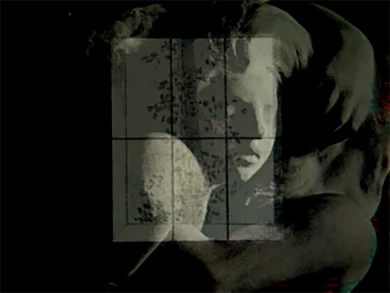
The second session screens two medium-length films by Jean-Luc Godard and Anne-Marie Miéville on time, ruin and museum. In The Old Place. Small Notes Regarding the Arts at Fall of 20th Century (1999), both film-makers consider what remains of that “old place”, the museum, at the close of a century of wars and totalitarianism, and ask whether it should be more of a legend or desire than a place. This same driving principle leads Godard to build his own imaginary museum in Reportage amateur (maquette expo) (2006), a rickety toy museum which, paradoxically, contains the great film-maker’s full power of thought on history and images.
Finally, the third session explores one of the major challenges of recent years: the decolonisation of the museum, the recognition of its link to imperialist discourses of power and the need to situate a new silenced or repressed subject at the centre of the Western narration of history. Under the title Museums and Restitution, it includes the film Undocumented. Unlearning Imperial Plunder (2019), by theorist Ariella Azoulay, Statues Also Die, by Alan Resnais and Chris Marker (1953), Kwate Nee-Owoo’s You Hide Me (1970) and the first screening of the short film Quinto verso, parte de Tonada (Fifth Verse, Part of Tonada), by La Vulcanizadora (Maria Rojas Arias and Andrés Jurado), filmed at the Museo de América in Madrid.
![Ariella Azoulay, Un-documented. Unlearning Imperial Plunder [Indocumentados. Desaprendiendo el saqueo imperial], 2019, película](https://recursos.museoreinasofia.es/styles/small_landscape/public/Actividades/5.diseminar-mundo.jpg.webp)
Museums and Restitution
Saturday, 19 September 2026 - 7pm
Centuries of plundering, decades of amnesia, years of living with unmitigated extractivist power… Does a museum, as we know it, have a raison d'être in a postcolonial society?
This session expounds the operations of the museum as a colonial machine, while putting forward ideas, in narration, for a more just, equal and inclusive institution of the future via society’s marginalised and minority voices. The session begins with the international premiere of Quinto verso, parte de Tonada (Fifth Verse, Part of Tonada), which presents a vision of the Quimbaya Collection (fifth and sixth centuries CE) from the Museo de América in Madrid. It is constructed with the voices and chants of Wayúu mourners and guides, not only as a way of reinstating the role of these gold idols — anthropomorphic figures of men and women used as vessels in ritual practices — but also to imagine that what must be exhibited is not the gold itself. It is the ritual’s own chant. In the classic film You Hide Me (1970), Ghanaian film-maker Kwate Nee-Owoo accesses the British Museum’s collection of African art, located in the building’s basement, to question the meaning behind a museum plundering and nullifying. A fine exercise of first-person institutional critique screened for the first time in Spain. Almost seventy years since Resnais and Marker made Statues Also Die (1953), a reflection on the aura-bearing value of the museum opposite the identity-based and cultural belonging of African art, theorist Ariella Azoulay films the same statues again at the Musée du Trocadéro (today the Musée du Quai Branly), which survive and wait to be reunited with their people. Azoulay, whose wholly original undertaking is a lesson to the museum of the future, connects the forced migration of these sculptures with the mass transit of people crossing borders artificially imposed by the same system that has plundered their culture.
The School of Transformative Institutionalism and Local Organisation
From 21 to 24 September 2026
The School of Transformative Institutionalism and Local Organisation (S.T.I.L.O.) is a programme of joint learning and join strategy which sets in motion a process for the exchange of questions, methodologies and experiences between cultural organisations. The overall aim is to create, circulate and prototype tactics, tools and collective knowledge on institutional practices that open new channels for defending culture and advocating structural transformation in divergent geographical contexts.
The project is part of the Laboratorio de Institucionalidad Compartida (The Laboratory of Shared Institutionalism, LIC), a space for the Museo Reina Sofía’s research, work and advocacy centred on developing, experimenting with and systemising practices, protocols and tools which contribute to a fairer and more liveable cultural ecosystem.
For many years now, so-called infrastructural critique in museums questions material, legal and economic infrastructures, among others, as well as the forms of solidarity and practices required to sustain the cultural ecosystem. By approaching current debates, S.T.I.L.O. raises questions on the ways in which organisations define and interpret their practices, organise their relations and respond to the social contexts in which they operate.
The school gathers four cultural organisations that work via different institutional models – scale, contexts, conditions, different working models — with the goal of pooling common strategies and tools of organisation, advocacy and relationships with local communities.
The programme is conceived as a collaborative process with the participation of Arika, La Revuelta, BAK Basecamp and The Tentacular Museum (Museo Reina Sofía) and is structured around preparatory online sessions and an in-person seminar in Madrid.
S.T.I.L.O. is an activity framed inside the working strand of Situated Organisations from L'Internationale’s Museum of the Commons project, which reflects on the role of museums and art organisations as actors within complex social networks and ecosystems, with a view to exploring new ways to democratise institutions and make them more open, inclusive and useful.