-
April 28, 2016
Rafael Gil. El hombre que se quiso matar (The Man Who Wanted to Kill Himself)
1942, original version, b/w, 93´
With a presentation by María Dolores Jiménez-Blanco, the curator of Campo Cerrado. Spanish Art 1939–1953 and professor of Art History at the Complutense University of Madrid.
In this film bitterness and critique seeps through the social fabric of comedy without hesitation, establishing an initial symbiosis of realism, costumbrismo and fantasy that would characterise a large part of post-war film texts.
Freed from social conventions after publicly deciding to commit suicide, Federico Solá, a young and brilliant architect without a future, becomes a danger and a source of irritation to the social fabric, comprising a journalist, an entrepreneur, a shopkeeper and an bourgeois loafer, who all come together as they anxiously await the consummation of the final promise. The afflictions of an isolated country in moral and economic collapse is, time and again, laid bare and exploited with the construction of this uncontrollable character which nothing can deny, and through dialogues – halfway between a one-act farce and the grotesque - that help to understand the masterly consideration of Wenceslao Fernández Flórez, the author of the novel which inspired the film, by the comedians of La Codorniz.
-
April 29, 2016
Carlos Arévalo
Ya viene el cortejo… (Here Comes the Parade…) 1939, original version, b/w, 11´
Rojo y negro (Red and Black), 1942, original version, b/w, 80´
The joint screening of both films affords a glimpse into the difficulties facing the new Regime in mobilising propaganda cinema, due to both the different ideological trends behind the military uprising and the syncretic and contradictory sources of Spanish fascism.
Ya viene el cortejo… shows the 1939 Victory March as it searches for its roots in the historical and iconographical motifs that seek to become immemorial. The film sets out to explain how the perfect and triumphant military formations in the march – seen in high-angle avant-garde shots – reach their fullest sense with fades back to an eternal past of medieval castles, cathedrals, religious symbols, and stereotypes of women wearing regional Spanish garments.
Rojo y negro, on the other hand, maintains Carlos Arévalo’s extreme experimental volition. Lost for over forty years and turned into an example of formal radicalism by historiography, the film bears witness to the extraordinary density of a genuinely Falangist work, whose visual findings and extreme formal avant-gardism see it become a kind of cinema substantiated by certain revolutionary sectors inside the Falange, before its ultimate domestication by the Regime. Written and directed by Arévalo, the film deploys dialectic and visual mechanisms of Eisenstein’s intellectual montage, even incorporating images from Battleship Potemkin (1925) to give filmic shape to the “need” for revolt.
-
May 5, 2016
Edgar Neville
Verbena (Madrid Carnival), 1941, original version, b/w, 30´
La torre de los siete jorobados (The Tower of the Seven Hunchbacks), 1944, original version, b/w, 99´
With a presentation by José Luis Castro de Paz, curator of the series and professor of Audiovisual Communication at the University of Santiago de Compostela.
The work of Edgar Neville, perhaps the most important film-maker from this decade, adopted a process which appropriated elements of popular culture in Spain, reformulating them into a new mode of expression. The joint screening of Verbena (1941) and La torre de los siete jorobados (1944) notes how minor popular forms, the serialised novel, the police novel, purist costumbrismo, and the one-act farce, with direct allusions to avant-garde movements, co-exist in these films.
Verbena, produced within a series of small cinematic dramatizations inspired by popular songs, describes a dark and touching microcosm comprising the anomalous alliance between the working classes and eccentric artists from circus. The other screening, La torre de los siete jorobados, synthesises a purist criminal tale with traits that are directly rooted in German Expressionism. The film combines two opposite worlds: on one side, the nocturnal, fantastical and bizarre, embodied in this inverted underground tower inhabited by deranged sages, dwarfs and hunchbacks exiled from the light. And on the other, the costumbrista and comic sketch from Madrid, much-loved by the film-maker; this time set in the last third of the 19th century.
-
May 6, 2016
Ignacio F. Iquino. Los ladrones somos gente honrada (We Thieves Are Honourable)
1943, original version, b/w, 102´
This film constitutes a paradigmatic example of the paradoxical and reflexive trend cultivated in the first post-war period and emerging from the complex melange between film and comical and visual resources stemming from absurd and avant-garde humour. With filmic precedents already in the Republican period, the model reached its definitive formulation at a time that coincided with the appearance of the renowned humorous magazine La Codorniz.
Deliberately artful and farcical, Los ladrones somos gente honrada is a parody of the plausibility of classical cinema as it breaches each of its norms. Everything operates in double meanings, paradox, antithesis and two faces that are entangled to fever pitch - “this house is a film”, one of the characters even utters. In a meandering and scattered way, the film pulls us out as viewers and drops us into the scene, or, similarly, dismantles the transparency of orthodox narrative to benefit our strengthened role as participants in an artificial and distant event.
-
May 12, 2016
Arturo Ruiz-Castillo. Las inquietudes de Shanti Andía (The Restlessness of Shanti Andía)
1946, original version, b/w, 121´
A collaborator of Federico García Lorca in La Barraca, art director of the publishing house Biblioteca Nueva and cultural spokesperson during the Republic, Arturo Ruiz-Castillo already had vast experience as a documentary-maker before debuting as a feature-film director with the adaptation of Las inquietudes de Shanti Andía (1946).
The film displays eye-catching discursive and formal strategies (narratological rigour, the deployment of the storyline in independent sequences that match the character’s psychological development, ornamental and compositional symbolism, inter-textual traits…) which bear witness to the artistic ambition of a director encompassed in the generation of “reformist” film-makers who, with vivid and bold aesthetic preoccupations, made their debut in the second half of the first decade under the France regime. Audaciously using Pío Baroja’s novel to discuss the present, the film turns oedipal conflicts and anxieties of desire into effective narrative copies of an unlivable time.
-
May 13, 2016
Carlos Serrano de Osma. Embrujo (The Spell)
1947, original version, b/w, 80´
Carlos Serrano de Osma is the visible leading figure in the self-styled “telluric” cinema, an informal circle of friends brought together around the magazine Cine experimental (1944–1946). A film-maker of enunciation and point of view, his films from this period incorporate the European legacy of Eisenstein and Pabst, and the American legacy of Welles, Siodmak and, above all, Hitchcock in a dense corpus of literary references and iconographic, autochthonous references, creating a poetic narrative style strongly imprinted with psychoanalysis.
Embrujo manages to – in the film-maker’s declared intention – “reach the shadows of the unconscious through the brilliant routes of folklore.” The film, a musical drama that is explicitly surreal, heart-rending and a moving reflection on desire and delirious passion, pieces together a highly risky operation in the film industry: combining the popular and the avant-garde, using the former as a cushion for the second.
-
May 19, 2016
Lorenzo Llobet-Gràcia. Vida en sombras (Life in the Shadows)
1948, original version, b/w, 90´
Punished to the point of ostracism by the censorship that would classify it as “inconceivable, unacceptable, inadmissible and disgraceful”, Vida en sombras is perforated by the trauma of the Civil War, which fights to make itself present. The beginnings of the conflict are narrated from the Republican side: news fragments from the time and a speech in Catalan by the president Companys are heard on the radio. In this milieu, the loss of the object of desire, embodied by the character Ana, who dies in the first skirmishes on the Barcelona streets, is bound up with unique force; thus tracing the stark identification between the harsh post-war period and the loss and scarring of the subject.
War, death, the incurable wound of desire: upon these three pillars, inextricably linked by the mise en scène, the film articulate its strategies of meaning. And further still, in a new, all-engulfing circle, cinema appears as a place where the subject’s desire (film-maker, protagonist, viewer) is radically affected.
-
May 20, 2016
Rafael Gil. La calle sin sol (The Sunless Street)
1948, original version, b/w, 95´
In an audacious mix of film noir, veristic will, and a costumbrista background, this distinctive thriller joins a series of obsessive and dense post-war films with sharp psychoanalytical resonances. Set in the desolate and poverty-stricken night-time of Barcelona’s Chinatown, inhabited by long-suffering survivors without hope, the story delves into dark crimes and destroyed families, and stresses the recreation of lumpen settings in the Catalan capital, depicted as a place of prostitution and illegal trade, where the residents represent at once the danger of extortion and the possibility of help. What ultimately emerges, via the film’s formal density, is a textual fabric torn at its seams, and understood as a symptom of the unconscious repression in the ruling classes in the face of social decomposition and rotting morals after the war.
-
May 26, 2016
Juan de Orduña. Locura de amor (Madness for Love)
1948, original version, b/w, 112´
The historical works directed by Juan de Orduña are the most original, complex and contradictory confluence of ideological interests from the Regime, from the eagerness for pomp and majesty from the producer CIFESA and from the tastes of the actual spectators. Locura de amor would constitute the greatest audience success of the season and one of the greatest in this decade; the “Spanishness” of these sorts of films was favoured by a large number of critics who saw in the historical literary, and not folkloric, adaptation a place in which film would have to redefine itself. The reasons for its undeniable popular allure were in its markedly melodramatic volition, characterised by the prominence of the suffering female figure. Built as a monumental and literal succession of living paintings, Locura de amor seeks to breathe life, not into events in History with a capital H but into the signs that have gone some way to building a romantic and timeless legend of the love story of Juana la Loca and Felipe el Hermoso.
-
May 27, 2016
José Antonio Nieves Conde. Surcos (Furrows)
1951, original version, b/w, 99´
The direct appearance of questions related to a lack of housing, unemployment, prostitution and rural exodus, in addition to the direct relationship with models of film such as Italian Neo-realism, define the exceptional nature of Surcos, both in this decade and generally throughout the history of Spanish cinema. The film’s emotional tension places it in the orbit of the film seasons that narrate the vicissitudes of a group of characters in a hostile environment, in an occupied country, a besieged city, an idea that manifests itself through the reiterated visual motif of furrows (prison bars, farmyard steps, an open grave, a ploughed field). On one side, claustrophobic confinement in small, shared spaces that are overpopulated or inhospitable; and on the other, an urban prison in which one cannot settle, feel at home and rest. Each sequence is structured through an exit or arrival, repeating the transition to nowhere that underpins the film to the grave, the final furrow.
Life in the Shadows. Spanish Cinema in a Labyrinth (1939–1953)
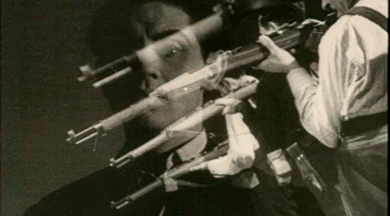
Held on 28, 29 Apr, 05, 06, 12, 13, 19, 20, 26, 27 May 2016
This film series, organised in conjunction with the exhibition Campo Cerrado. Spanish Art 1939–1953, focuses on post-war Spanish cinema, moving beyond the clichés that have buried it for a number of decades to present a dark yet fascinating filmic and historical labyrinth displaying conflicts, searches and objectives from the main narratives in a melancholic period, wounded and confrontational period.
The dictatorial regime organised film production in a diametrical opposite to the Republican period as it developed a system of economic autarchy and staunch ideological censorship. Nevertheless, contrary to widespread assertions, it also searched for continuity in the cultural traditions that had been put in place during the Second Republic. The new State failed, however, in its aim to construct “fascist” cinema on account of the disparity of conflicting views, thus demonstrated in the differences between long-standing conservatism in Raza (Race), by José Luis Sáenz de Heredia (1942), and the Falangist and Eisensteinian modernity of Rojo y negro (Red and Black), by Carlos Arévalo (1942). It would also err in its attempts to remove the folkloric and popular substrata which, despite fierce opposition by those who saw such elements as an abominable Popular Front-esque inheritance, managed to remain and was depicted in the work of director Edgar Neville - a pragmatic and measured cultural opposition with authentic and subversive titles like Verbena (Madrid Carnival, 1941), La torre de los siete jorobados (The Tower of the Seven Hunchbacks, 1944) and the Solanesque Domingo de carnaval (Carnival Sunday, 1945).
Despite the darkness of the period, comedy would become the most common genre. Drawing influences from the modern and absurd humour found in the magazine La Codorniz (founded in 1941 by Miguel Mihura), this decade’s filmography was predominated by a decidedly reflexive and meta-cinematic volition, expounding the difficulty facing fiction when it came to addressing the dark reality that had begun after the Civil War.
Dissidents in their own way, the films by the so-called “reformists” (Jose Antonio Nieves Conde, director of the transcendental Surcos (Furrows) in 1951; Arturo Ruiz-Castillo and Manuel Mur Oti) and the “tellurics” (Carlos Serrano de Osma, Lorenzo Llobet-Gràcia y Enrique Gómez), demonstrated a pronounced social concern and a striking “aesthetic commitment” – with European and avant-garde roots yet also strongly influenced by Hollywood – in addition to profound psychoanalytical concerns, conveying harrowing discourses about the life and times and the destructive consequences.
The irreparable loss of the loved object, often portrayed by a murdered, forbidden or missing woman, the ensuing melancholy and even madness and the narrative junctions that were customarily employed at the time can be read as metaphors of a devastated country, inhabited by sombre memories which carried an uncontrollable guilt complex. Thus, sadness, destruction and historical solitude became lucid “wounds of desire”.
Curatorship
José Luis Castro de Paz
Acknowledgments
Filmoteca Española
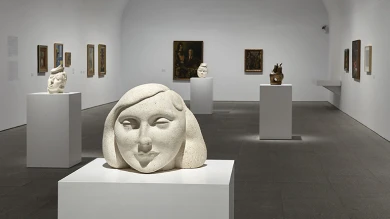
Más actividades
![Isabel Coixet, 100 Years and You Everywhere [100 años y tú en todos los sitios], 2026, película](https://recursos.museoreinasofia.es/styles/small_landscape/public/Actividades/2.diseminar-mundo.jpg.webp)
John Berger and Isabel Coixet. Continued Ways of Seeing
Thursday, 17 September 2026 at 7pm
Ways of Seeing (1972) is one of the most revolutionary television series on art history, the museum and contemporary critical culture. Across four episodes, an articulate, enthusiastic John Berger unpacks the relationships between classical art through the gaze and new technology, the nude and feminism, the oil painting and commodity fetichism, advertising and consumerism. In essence, a level of critical commitment only comparable to its capacity for dissemination. Unsurprisingly, the series, and the book that would distil it, continues to forge vocations. This session sees art historians Alberto López Cuenca and Modesta Di Paola carry out an analysis of Berger’s audiovisual work, placing the stress on episodes one and four of the series. In the first episode, Berger reflects on the connection between the act of seeing, looking and being in light of new technology, such as the film camera. At the same time, it analyses how the culture of reproduction is turning paintings into messages or fragments of communication while stressing the importance of silence when observing historical paintings. In the fourth and final episode, he introduces advertising as a new iconic-verbal language that shares certain principles with the message of oil painting as a luxury item.
The session opens with the premiere of a filmic letter from Isabel Coixet, one of Spain’s most internationally acclaimed directors, to John Berger, with whom she maintained a long friendship and deep admiration. The short film is testament to the ubiquitous and long-lasting presence of the author of Ways of Seeing, even after his death in 2017.
![Chantal Akerman, Woman Sitting after Killing [Mujer sentada después de matar], 2001, instalación. Museo Reina Sofía](https://recursos.museoreinasofia.es/styles/small_landscape/public/Actividades/chantal-akerman-mujer-sentada-despues-matar.jpg.webp)
On Your Screen: Art History and the Museum Facing the Audiovisual Challenge
18, 19 SEP 2026
The conference On Your Screen: Art History and the Museum Facing the Audiovisual Challenge sparks debate around the transformations of art history and museum space upon embracing the audiovisual format. Its starting point is John Berger’s emblematic television series Ways of Seeing (1972), a landmark in the democratisation of art-historical discourse. In the series, Berger illustrated how the transfer of a work such as Goya’s Los fusilamientos del 3 de mayo (The Third of May 1808 or the Executions) from museum gallery to home TV screen completely changed the viewer’s experience, allowing the image to travel to straight to the viewer.
In the twenty-first century, this screen-based ecosystem has expanded exponentially, with museums not only physically integrating screenings and devices into their galleries— following in the wake of many exhibitions on the moving image — but also deploying complex virtual strategies. Equally, numerous en vez de a multitudeof historians, students and creators use digital platforms to circulate their ideas and projects. This audiovisual shift opens access to ignored materials and democratises knowledge, as well as challenging traditional hierarchies and the interpretive authority of institutions. The conference, promoted by the research project ATLAS AV: The Audiovisualisation of Art History and the Museum, seeks to analyse this vast audiovisual material, its archives, and its capacity to transform the memory of art.
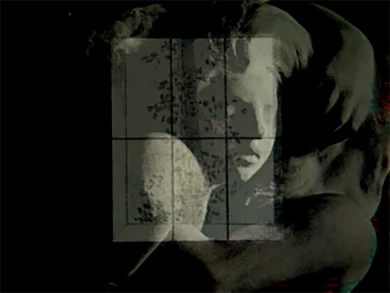
Godard and Miéville: Time and Ruin
Friday, 18 September 2026 - 7pm
Inside the framework of the conference On Your Screen: Art History and the Museum Facing the Audiovisual Challenge, this film series sets forth three critical visions of the museum via three sessions featuring the works of John Berger, Jean-Luc Godard and Anne-Marie Miéville, Ariella Azoulay, Alan Resnais and Chris Marker, Kwate Nee-Owoo, and the premiere of short films by Isabel Coixet and La Vulcanizadora (Maria Rojas Arias and Andrés Jurado). In classical theory, the museum gives the world meaning; it contains fragments of the past, granting them a history, a narrative that explains preterite time and the present. Today, there is an implicit assumption that this function hides and legitimises forms of power, yet what if the museum, instead of explaining the world, multiplied it through radical ideas, silenced periods and repressed subjects? Such is the approach of the film-makers and artists in this film season.
In 1972 the writer John Berger opened the landmark television series Ways of Seeing with an iconoclastic gesture: slicing Sandro Botticelli’s painting Venus and Mars (1485) in London’s National Gallery. A transgressive act that recalls contemporary attacks on the museum by dissident youth and with which Berger, after revealing it was a reproduction, sought to ignite debate around the idea of an original artwork and a copy. In this, the hundredth anniversary of his birth, the first session pays homage to one of the great art writers of the twentieth century. Starting with a review of Berger’s audiovisual work by art historians Alberto López Cuenca and Modesta Di Paola, the series begins with the premiere of 100 Years and You Everywhere (2026), an unreleased short film by Isabel Coixet composed as a beautifully crafted letter to Berger, and continues with an analysis of fragments of Ways of Seeing in relation to the museum and contemporary art.
The second session screens two medium-length films by Jean-Luc Godard and Anne-Marie Miéville on time, ruin and museum. In The Old Place. Small Notes Regarding the Arts at Fall of 20th Century (1999), both film-makers consider what remains of that “old place”, the museum, at the close of a century of wars and totalitarianism, and ask whether it should be more of a legend or desire than a place. This same driving principle leads Godard to build his own imaginary museum in Reportage amateur (maquette expo) (2006), a rickety toy museum which, paradoxically, contains the great film-maker’s full power of thought on history and images.
Finally, the third session explores one of the major challenges of recent years: the decolonisation of the museum, the recognition of its link to imperialist discourses of power and the need to situate a new silenced or repressed subject at the centre of the Western narration of history. Under the title Museums and Restitution, it includes the film Undocumented. Unlearning Imperial Plunder (2019), by theorist Ariella Azoulay, Statues Also Die, by Alan Resnais and Chris Marker (1953), Kwate Nee-Owoo’s You Hide Me (1970) and the first screening of the short film Quinto verso, parte de Tonada (Fifth Verse, Part of Tonada), by La Vulcanizadora (Maria Rojas Arias and Andrés Jurado), filmed at the Museo de América in Madrid.
![Ariella Azoulay, Un-documented. Unlearning Imperial Plunder [Indocumentados. Desaprendiendo el saqueo imperial], 2019, película](https://recursos.museoreinasofia.es/styles/small_landscape/public/Actividades/5.diseminar-mundo.jpg.webp)
Museums and Restitution
Saturday, 19 September 2026 - 7pm
Centuries of plundering, decades of amnesia, years of living with unmitigated extractivist power… Does a museum, as we know it, have a raison d'être in a postcolonial society?
This session expounds the operations of the museum as a colonial machine, while putting forward ideas, in narration, for a more just, equal and inclusive institution of the future via society’s marginalised and minority voices. The session begins with the international premiere of Quinto verso, parte de Tonada (Fifth Verse, Part of Tonada), which presents a vision of the Quimbaya Collection (fifth and sixth centuries CE) from the Museo de América in Madrid. It is constructed with the voices and chants of Wayúu mourners and guides, not only as a way of reinstating the role of these gold idols — anthropomorphic figures of men and women used as vessels in ritual practices — but also to imagine that what must be exhibited is not the gold itself. It is the ritual’s own chant. In the classic film You Hide Me (1970), Ghanaian film-maker Kwate Nee-Owoo accesses the British Museum’s collection of African art, located in the building’s basement, to question the meaning behind a museum plundering and nullifying. A fine exercise of first-person institutional critique screened for the first time in Spain. Almost seventy years since Resnais and Marker made Statues Also Die (1953), a reflection on the aura-bearing value of the museum opposite the identity-based and cultural belonging of African art, theorist Ariella Azoulay films the same statues again at the Musée du Trocadéro (today the Musée du Quai Branly), which survive and wait to be reunited with their people. Azoulay, whose wholly original undertaking is a lesson to the museum of the future, connects the forced migration of these sculptures with the mass transit of people crossing borders artificially imposed by the same system that has plundered their culture.
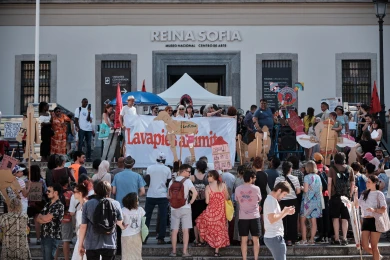
The School of Transformative Institutionalism and Local Organisation
From 21 to 24 September 2026
The School of Transformative Institutionalism and Local Organisation (S.T.I.L.O.) is a programme of joint learning and join strategy which sets in motion a process for the exchange of questions, methodologies and experiences between cultural organisations. The overall aim is to create, circulate and prototype tactics, tools and collective knowledge on institutional practices that open new channels for defending culture and advocating structural transformation in divergent geographical contexts.
The project is part of the Laboratorio de Institucionalidad Compartida (The Laboratory of Shared Institutionalism, LIC), a space for the Museo Reina Sofía’s research, work and advocacy centred on developing, experimenting with and systemising practices, protocols and tools which contribute to a fairer and more liveable cultural ecosystem.
For many years now, so-called infrastructural critique in museums questions material, legal and economic infrastructures, among others, as well as the forms of solidarity and practices required to sustain the cultural ecosystem. By approaching current debates, S.T.I.L.O. raises questions on the ways in which organisations define and interpret their practices, organise their relations and respond to the social contexts in which they operate.
The school gathers four cultural organisations that work via different institutional models – scale, contexts, conditions, different working models — with the goal of pooling common strategies and tools of organisation, advocacy and relationships with local communities.
The programme is conceived as a collaborative process with the participation of Arika, La Revuelta, BAK Basecamp and The Tentacular Museum (Museo Reina Sofía) and is structured around preparatory online sessions and an in-person seminar in Madrid.
S.T.I.L.O. is an activity framed inside the working strand of Situated Organisations from L'Internationale’s Museum of the Commons project, which reflects on the role of museums and art organisations as actors within complex social networks and ecosystems, with a view to exploring new ways to democratise institutions and make them more open, inclusive and useful.