Picasso from Cultural Studies. The Dream and Lie of Spain (1898–1922)
International Congress
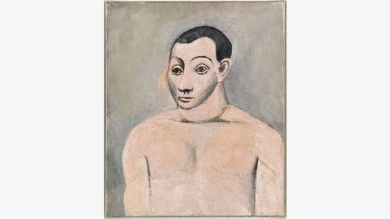
Held on 01, 02 Dec 2022
This international congress is the first event to be held inside the framework of the Commemoration of the 50th Anniversary of Pablo Picasso’s Death. Its title alludes to Picasso’s renowned prints under the title Sueño y mentira de Franco (The Dream and Lie of Franco, 1937), and investigates, from the field of Cultural Studies, Picasso’s relationship with the challenges, crises and transformations that shook Spain in the period stretching from the 1898 Disaster to the end of the Rif War in the 1920s.
[dropdown]
In early twentieth-century Spain, the crossroads of modernity was expressed with remarkable intensity and the art forms of the time initiated a genuine revolution of sensibility. After the independence of the final transatlantic assets in 1898, the country wrestled with the panic of foreign occupation, collective mourning, mass despair, new African colonial undertakings and the reinvention — as the eternal nation — of an East-West syncretism of Iberian art. Country and city, nature and industry, big city and territory, contradictions that would invoke collective reactions oscillating between despair and utopia — a rich context of solidarity networks, spaces of autonomy and dreams of worlds to come. The fight against hunger and repression, a nascent class and artistic bohemia forged the country’s own image while its bodies were processed inside a dense lattice of modern institutions. Working women were also the subject of new, specific forms of violence and trade in the home, in the brothel and in the psychiatric hospital, three spaces belonging to an institutional complex which repressed and subjugated the feminine condition as the nineteenth century made way for the twentieth.
Picasso at the turn of the twentieth century, the focal point of this congress, is at once a product and producer of this historical juncture. Inhabiting the interstices of the time, his living environment and aesthetic sensibility arose from the conflicts and desires that built the industrial city and the ways of imagining alternatives that materialised from it, for instance anarchism. Lifestyles which bohemia took to cabarets and workshops, visionary pharmacology and the forms of sociability that characterised that era’s artistic milieu plotted the coordinates of a new style that dubbed Picasso avant-garde. It was in a complex network of travel — Madrid, Barcelona, Gósol, Paris — in a grid, where the imagery of a nation and its ghosts was articulated and looked to replace a mixed-race transatlantic identity in an expansive North African mission.
This congress contends that Picasso’s Spanish identity does not lie in references to the painting of El Greco, Velázquez and Murillo, or in the influence of Iberian sculpture, or even in the traces of Spain’s popular culture, as previously upheld. These references are instead symptoms of the deep-seated redefinition of Spanishness that occurred from 1898 to 1922, between the independence of nations from the Americas and the Picasso File, a report signed by the soldier Juan Picasso — the painter’s great uncle — condemning the Disaster of Annual in the Rif War and marking the start of Primo de Rivera’s dictatorship. It sets out, through the prism of Cultural Studies, to assert that Picasso was not only aware of these historical processes and transformations, but also that his work played a determining role in them. Bohemia, nationalism-colonialism, anarchism, and repressive institutional policies in relation women are the ideas that run along the four elements articulating the congress and look to shed more light on this period.
[/dropdown]
[dropdown]
Carlos Alberdi (1956) is a commissioner for the Commemoration of the 50th Anniversary of Picasso’s Death
Josep Casals (1955) is a lecturer in Aesthetics and Art History at the University of Barcelona. His publications most notably include El expresionismo. Orígenes y desarrollo de una nueva sensibilidad (Montesinos, 1982), Constelación de pasaje. Imagen, experiencia, locura (Anagrama, 2015) and Crónica crítica. Periodismo, universidad, burocracia, política, nación, (Anagrama, 2020). He was awarded the 31st Anagrama Essay Prize for his work Afinidades vienesas. Sujeto, lenguaje, arte (Anagrama, 2003).
Chris Ealham (1965) is a British historian and hispanist who currently lectures in History at Saint Louis University in Madrid. He has published numerous articles in different languages on the history of anarcho-syndicalism and social protest and is the author of Class, Culture and Conflict in Barcelona, 1898–1937 (Routledge, 2004) and Living Anarchism: José Peirats and the Spanish Anarcho-syndicalist Movement (AK Press, 2016) and the co-editor, with Mike Richards, of The Splintering of Spain. Cultural History and the Spanish Civil War, 1936–1939 (Cambridge University Press, 2005).
Pura Fernández (1964) is a research professor at the Institute of Language, Literature and Anthropology from the CSIC Centre of Human and Social Science, director of Editorial CSIC, and head of the Scientific Culture and Citizen Science Area and joint vice-president of Scientific Culture in the same institution. Her recent publications most notably include Engaging the Emotions in Spanish Culture and History (18th Century to the Present) (with E. Delgado and Jo Labanyi; Vanderbilt Press, 2015) and 365 relojes. La Baronesa de Wilson (Taurus, 2022).
Chema González (1979) is head of the Museo Reina Sofía’s Cultural and Audiovisual Activities.
Rafael Jackson-Martín is a lecturer in Art History at the University of Puerto Rico, Recinto de Río Piedras. He has published a number of works linked to the realm of Pablo Picasso, for instance Picasso y las poéticas surrealistas (Alianza Forma, 2003), “Tres hombres líricos: Picasso, Breton, la sombra de Apollinaire y el surrealismo en 1925” (in La balsa de la medusa, No. 33, 1995) and the translation of Dictionnaire abrégé du surréalisme by André Breton and Paul Eluard (Siruela, 2003).
Jèssica Jaques Pi (1967) is a lecturer in Aesthetics and Art Theory at the Autonomous University of Barcelona and joint director of the Picasso PhD (Museo Picasso de Barcelona). She is the author of Picasso en Gósol, 1906: un verano para la modernidad (Antonio Machado, 2007) and head researcher on the project Los escritos de Picasso: textos teatrales, 2016-2018 from Spain’s Ministry of Science and Innovation.
Raquel Jimeno (1985) is coordinator of the Museo Reina Sofía’s Cultural Activities.
Germán Labrador (1980) is director of the Museo Reina Sofía’s Public Activities Department.
Dolors Marín (1957) is a historian and researcher specialised in contemporary European social movements. Her publications most notably include Anarquismo: una introducción (Ariel, 2014) and Espiritistes i lliurepensadores: dones pioneres en la lluita pels drets civils (Angle, 2018).
Eloy Martín Corrales (1949) is the head lecturer of Modern History in the Humanities Department of Universidad Pompeu Fabra, and specialises in Euro-Islamic relations, with a particular interest in economic, political and cultural spheres between the sixteenth and twentieth centuries. He has most notably written the books Comercio de Cataluña con el Mediterráneo musulmán (Siglos XVI-XVIII). El comercio con los “enemigos de la fe” (Bellaterra, 2001) and La imagen del magrebí en España. Una perspectiva histórica, siglos XVI-XX (Bellaterra, 2002), and has edited Marruecos y el colonialismo español (1859-1912). De la guerra de África a la penetración pacífica (Bellaterra, 2002) and La Conferencia de Algeciras en 1906: un banquete colonial (Bellaterra, 2007).
Julia Mirabal (1950) is a journalist and producer. She lectures at the Universidad de Medios Audiovisuales Veritas (Costa Rica) and the Universidad de La Habana, and works in cultural journalism on Cuban television. She directed the documentary Picasso en blanco y negro (2000), among other works.
Rosario Peiró (1968) is head of the Museo Reina Sofía’s Collections Area.
Elsa Plaza (1950) holds a PhD in Art History and is a teacher and writer. She has published the novels Rojiza penumbra (Barataria, 2006); El cielo bajo los pies (Marlow, 2009); Jacqueline o el eco del tiempo (Mecenix, 2012); and El magnetismo del viento nocturno (Ediciones B, 2014), and the research essays Desmontando el caso de la vampira del Raval. Misoginia y clasismo en la Barcelona modernista (Antrazyt, 2014) La calle olvidada. Sant Antoni de Pàdua en el Raval (El Lokal, 2017) and La vieja cárcel de la calle Amalia. Historia y vida cotidiana (El Lokal, 2020).
Julia Ramírez-Blanco (1985) is a researcher and lecturer at the University of Barcelona. She works at the crossroads between art, utopia and activism and has published Artistic Utopias of Revolt. Claremont Road, Reclaim the Streets, and the City of Sol (Palgrave, 2018), 15M. El tiempo de las plazas (Alianza, 2021) and Amigos, disfraces y comunas. Las hermandades de artistas del siglo XIX (Cátedra, 2022).
Servando Rocha (1974) is a writer and the editor of La Felguera Ediciones and the magazine Agente Provocador. Notable among his publications is Historia de un Incendio. Arte y revolución en los tiempos salvajes: de la Comuna de París al advenimiento del punk (La, 2006) and Agotados de esperar el fin. Subculturas, estéticas y políticas del desecho (Virus Editorial, 2008). In 2021, he curated the exhibition The Mask Never Lies (CCCB, Barcelona).
Conxa Rodríguez (1958) is a journalist specialised in the art market and the author of numerous articles for El País and Público. She has published Los Thyssen. Por amor al arte (Ediciones B, 1997) and El ángel de Picasso. Historia de un bebedor de absenta (Parsifal, 2003), among other works.
José María Rodríguez García (1964) is head lecturer in the Department of Romance Studies at Duke University, where he gives courses and seminars on the political-intellectual history of Mexico and Cuba, and on Iberian Cultural Studies from the nineteenth and twentieth centuries. His book The City of Translation: Poetry and Ideology in Nineteenth-Century Colombia (Springer, 2010) received the PROSE Award in 2010 from the Association of American Publishers.
Abigail Solomon-Godeau (1948) is a professor emeritus in the department of Art History at the University of California Santa Bárbara. She is the author of Photography at the Dock: Essays on Photographic Histories, Institutions and Practices (University of Minnesota Press, 1992); Male Trouble: A Crisis in Representation (Thames & Hudson, 1997); Chair à Canons: Photographie, discours, féminisme (Textuel, 2015); and Photography After Photography: Gender, Genre and History(Duke University Press, 2017). Her essays on photography, eighteenth- and nineteenth-century art, and feminism and contemporary art have been broadly compiled and translated.
[/dropdown]
Thursday, 1 December 2022
Session 1. Bohemian Glass: Picasso and New Lifestyles
11am Presentation
―Conducted by Chema González, Germán Labrador and Rosario Peiró
11:10am ¿Picasso, Noir? Bohemian Madrid at the Turn of the Century
―Conducted by Servando Rocha
11:30am The Catalan Window Open to Europe
―Conducted by Conxa Rodríguez
12pm Bohemia and Modernity: Poets, Artists and Critics in Montmartre and Montparnasse
―Conducted by Josep Casals
12:30pm Picasso “dit Pau de Gósol”: Matriarchy and Revolution
―Conducted by Jèssica Jaques Pi
1pm Round-table Discussion and Talk
―Moderated by: Raquel Jimeno
Session 2. Iberian-Colonial Picasso: From Cuba to Rif
5pm The Past as Future: Iberian Atavism in Modern Picassian Imagery
―Conducted by Rafael Jackson-Martín
5:30pm Was Picasso’s Work Influenced by the Colonial Wars? From the War of Melilla (1893) to the Spanish Civil War (1936–1939), via Annual (1921)
―Conducted by Eloy Martín Corrales
6pm Screening of Picasso en blanco y negro by Julia Mirabal
Cuba and Spain 2000, colour and b/w, original version in Spanish, DA, 40’. Documentary on the Afro-Cuban Relations of the Picasso family
7pm Round-table Discussion and Talk
―Moderated by: Germán Labrador
Friday, 2 December 2022
Session 1. Anarchism and Body Politics
11am The Social, Anarchist and Intellectual Pathways of a Young Picasso (Barcelona, 1895–1906): “Let the Orators Fall Silent and the Chemists Speak”
―Conducted by Dolors Marín
11:30am The Anarcho-Syndicalist Public Sphere and the Creation of a Workers’ City in Picasso’s Barcelona (1902–1917)
―Conducted by Chris Ealham
12pm Picasso and Libertarian Naturism
―Conducted by Julia Ramírez-Blanco
12:30pm The Circus Represented by Picasso as a Model for an Anarchist Society
―Conducted by José María Rodríguez García
1pm Round-table Discussion and Talk
―Moderated by: Chema González
Session 2. Picasso Inside the Framework of the Denouncement of Institutional Policies Against Women
5pm Presentation to commemorate the 50th anniversary of Pablo Picasso’s death
―Presentation by Carlos Alberdi, commissioned to commemorate the 50th anniversary of Pablo Picasso’s death
17:10 h The Case of the “Vampire of El Raval” and Sexual Violence in Modernist Barcelona
―Conducted by Elsa Plaza
5:30pm The Literary Genealogy of Les Demoiselles d'Avignon or Cultural Discourses on Sex Work Between Centuries
―Conducted by Pura Fernández
6:15pm Closing Lecture. Les Demoiselles d'Avignon through the Feminist Prism
―Conducted by Abigail Solomon-Godeau
7:15pm Round-table Discussion and Talk
―Moderated by: Rosario Peiró
Academic coordination
Chema González, Germán Labrador and Rosario Peiró
Organised by
Museo Reina Sofía
Inside the official programme Celebrating Picasso 1973–2023
The National Commission to Commemorate the 50th Anniversary of Pablo Picasso’s Death
Organised by

With the support of
Participating company in Spain

Participants
Participants
Más actividades
![Isabel Coixet, 100 Years and You Everywhere [100 años y tú en todos los sitios], 2026, película](https://recursos.museoreinasofia.es/styles/small_landscape/public/Actividades/2.diseminar-mundo.jpg.webp)
John Berger and Isabel Coixet. Continued Ways of Seeing
Thursday, 17 September 2026 at 7pm
Ways of Seeing (1972) is one of the most revolutionary television series on art history, the museum and contemporary critical culture. Across four episodes, an articulate, enthusiastic John Berger unpacks the relationships between classical art through the gaze and new technology, the nude and feminism, the oil painting and commodity fetichism, advertising and consumerism. In essence, a level of critical commitment only comparable to its capacity for dissemination. Unsurprisingly, the series, and the book that would distil it, continues to forge vocations. This session sees art historians Alberto López Cuenca and Modesta Di Paola carry out an analysis of Berger’s audiovisual work, placing the stress on episodes one and four of the series. In the first episode, Berger reflects on the connection between the act of seeing, looking and being in light of new technology, such as the film camera. At the same time, it analyses how the culture of reproduction is turning paintings into messages or fragments of communication while stressing the importance of silence when observing historical paintings. In the fourth and final episode, he introduces advertising as a new iconic-verbal language that shares certain principles with the message of oil painting as a luxury item.
The session opens with the premiere of a filmic letter from Isabel Coixet, one of Spain’s most internationally acclaimed directors, to John Berger, with whom she maintained a long friendship and deep admiration. The short film is testament to the ubiquitous and long-lasting presence of the author of Ways of Seeing, even after his death in 2017.
![Chantal Akerman, Woman Sitting after Killing [Mujer sentada después de matar], 2001, instalación. Museo Reina Sofía](https://recursos.museoreinasofia.es/styles/small_landscape/public/Actividades/chantal-akerman-mujer-sentada-despues-matar.jpg.webp)
On Your Screen: Art History and the Museum Facing the Audiovisual Challenge
18, 19 SEP 2026
The conference On Your Screen: Art History and the Museum Facing the Audiovisual Challenge sparks debate around the transformations of art history and museum space upon embracing the audiovisual format. Its starting point is John Berger’s emblematic television series Ways of Seeing (1972), a landmark in the democratisation of art-historical discourse. In the series, Berger illustrated how the transfer of a work such as Goya’s Los fusilamientos del 3 de mayo (The Third of May 1808 or the Executions) from museum gallery to home TV screen completely changed the viewer’s experience, allowing the image to travel to straight to the viewer.
In the twenty-first century, this screen-based ecosystem has expanded exponentially, with museums not only physically integrating screenings and devices into their galleries— following in the wake of many exhibitions on the moving image — but also deploying complex virtual strategies. Equally, numerous en vez de a multitudeof historians, students and creators use digital platforms to circulate their ideas and projects. This audiovisual shift opens access to ignored materials and democratises knowledge, as well as challenging traditional hierarchies and the interpretive authority of institutions. The conference, promoted by the research project ATLAS AV: The Audiovisualisation of Art History and the Museum, seeks to analyse this vast audiovisual material, its archives, and its capacity to transform the memory of art.
Godard and Miéville: Time and Ruin
Friday, 18 September 2026 - 7pm
Inside the framework of the conference On Your Screen: Art History and the Museum Facing the Audiovisual Challenge, this film series sets forth three critical visions of the museum via three sessions featuring the works of John Berger, Jean-Luc Godard and Anne-Marie Miéville, Ariella Azoulay, Alan Resnais and Chris Marker, Kwate Nee-Owoo, and the premiere of short films by Isabel Coixet and La Vulcanizadora (Maria Rojas Arias and Andrés Jurado). In classical theory, the museum gives the world meaning; it contains fragments of the past, granting them a history, a narrative that explains preterite time and the present. Today, there is an implicit assumption that this function hides and legitimises forms of power, yet what if the museum, instead of explaining the world, multiplied it through radical ideas, silenced periods and repressed subjects? Such is the approach of the film-makers and artists in this film season.
In 1972 the writer John Berger opened the landmark television series Ways of Seeing with an iconoclastic gesture: slicing Sandro Botticelli’s painting Venus and Mars (1485) in London’s National Gallery. A transgressive act that recalls contemporary attacks on the museum by dissident youth and with which Berger, after revealing it was a reproduction, sought to ignite debate around the idea of an original artwork and a copy. In this, the hundredth anniversary of his birth, the first session pays homage to one of the great art writers of the twentieth century. Starting with a review of Berger’s audiovisual work by art historians Alberto López Cuenca and Modesta Di Paola, the series begins with the premiere of 100 Years and You Everywhere (2026), an unreleased short film by Isabel Coixet composed as a beautifully crafted letter to Berger, and continues with an analysis of fragments of Ways of Seeing in relation to the museum and contemporary art.
The second session screens two medium-length films by Jean-Luc Godard and Anne-Marie Miéville on time, ruin and museum. In The Old Place. Small Notes Regarding the Arts at Fall of 20th Century (1999), both film-makers consider what remains of that “old place”, the museum, at the close of a century of wars and totalitarianism, and ask whether it should be more of a legend or desire than a place. This same driving principle leads Godard to build his own imaginary museum in Reportage amateur (maquette expo) (2006), a rickety toy museum which, paradoxically, contains the great film-maker’s full power of thought on history and images.
Finally, the third session explores one of the major challenges of recent years: the decolonisation of the museum, the recognition of its link to imperialist discourses of power and the need to situate a new silenced or repressed subject at the centre of the Western narration of history. Under the title Museums and Restitution, it includes the film Undocumented. Unlearning Imperial Plunder (2019), by theorist Ariella Azoulay, Statues Also Die, by Alan Resnais and Chris Marker (1953), Kwate Nee-Owoo’s You Hide Me (1970) and the first screening of the short film Quinto verso, parte de Tonada (Fifth Verse, Part of Tonada), by La Vulcanizadora (Maria Rojas Arias and Andrés Jurado), filmed at the Museo de América in Madrid.
![Ariella Azoulay, Un-documented. Unlearning Imperial Plunder [Indocumentados. Desaprendiendo el saqueo imperial], 2019, película](https://recursos.museoreinasofia.es/styles/small_landscape/public/Actividades/5.diseminar-mundo.jpg.webp)
Museums and Restitution
Saturday, 19 September 2026 - 7pm
Centuries of plundering, decades of amnesia, years of living with unmitigated extractivist power… Does a museum, as we know it, have a raison d'être in a postcolonial society?
This session expounds the operations of the museum as a colonial machine, while putting forward ideas, in narration, for a more just, equal and inclusive institution of the future via society’s marginalised and minority voices. The session begins with the international premiere of Quinto verso, parte de Tonada (Fifth Verse, Part of Tonada), which presents a vision of the Quimbaya Collection (fifth and sixth centuries CE) from the Museo de América in Madrid. It is constructed with the voices and chants of Wayúu mourners and guides, not only as a way of reinstating the role of these gold idols — anthropomorphic figures of men and women used as vessels in ritual practices — but also to imagine that what must be exhibited is not the gold itself. It is the ritual’s own chant. In the classic film You Hide Me (1970), Ghanaian film-maker Kwate Nee-Owoo accesses the British Museum’s collection of African art, located in the building’s basement, to question the meaning behind a museum plundering and nullifying. A fine exercise of first-person institutional critique screened for the first time in Spain. Almost seventy years since Resnais and Marker made Statues Also Die (1953), a reflection on the aura-bearing value of the museum opposite the identity-based and cultural belonging of African art, theorist Ariella Azoulay films the same statues again at the Musée du Trocadéro (today the Musée du Quai Branly), which survive and wait to be reunited with their people. Azoulay, whose wholly original undertaking is a lesson to the museum of the future, connects the forced migration of these sculptures with the mass transit of people crossing borders artificially imposed by the same system that has plundered their culture.
The School of Transformative Institutionalism and Local Organisation
From 21 to 24 September 2026
The School of Transformative Institutionalism and Local Organisation (S.T.I.L.O.) is a programme of joint learning and join strategy which sets in motion a process for the exchange of questions, methodologies and experiences between cultural organisations. The overall aim is to create, circulate and prototype tactics, tools and collective knowledge on institutional practices that open new channels for defending culture and advocating structural transformation in divergent geographical contexts.
The project is part of the Laboratorio de Institucionalidad Compartida (The Laboratory of Shared Institutionalism, LIC), a space for the Museo Reina Sofía’s research, work and advocacy centred on developing, experimenting with and systemising practices, protocols and tools which contribute to a fairer and more liveable cultural ecosystem.
For many years now, so-called infrastructural critique in museums questions material, legal and economic infrastructures, among others, as well as the forms of solidarity and practices required to sustain the cultural ecosystem. By approaching current debates, S.T.I.L.O. raises questions on the ways in which organisations define and interpret their practices, organise their relations and respond to the social contexts in which they operate.
The school gathers four cultural organisations that work via different institutional models – scale, contexts, conditions, different working models — with the goal of pooling common strategies and tools of organisation, advocacy and relationships with local communities.
The programme is conceived as a collaborative process with the participation of Arika, La Revuelta, BAK Basecamp and The Tentacular Museum (Museo Reina Sofía) and is structured around preparatory online sessions and an in-person seminar in Madrid.
S.T.I.L.O. is an activity framed inside the working strand of Situated Organisations from L'Internationale’s Museum of the Commons project, which reflects on the role of museums and art organisations as actors within complex social networks and ecosystems, with a view to exploring new ways to democratise institutions and make them more open, inclusive and useful.