-
Thursday, 24 January
Session 1
Radical Citizen and Aesthetic Politics
An introduction to the Spanish Transition as a critical device. The myth and its different counternarratives. The conceptual aporias of the 1970s: citizen/State, history/memory, aesthetics/history, politics/culture, counterculture/official culture. Five transitional models: heroic, melancholic, civic-popular, memorial and necropolitical. Networks of counterculture and the civic-popular paradigm: relationships between social movements and cultural actionism in the 1970s. Citizen forms and ephemeral aesthetics. Documentary devices and memory.
-
Friday, 25 January
Session 2
Poetics of Democracy
This session is structured around a conversation between the Museo Reina Sofía’s Rosario Peiró, Lola Hinojosa and Carla Giachell.
Architecture from the exhibition The Poetics of Democracy. Images and Counter-Images from the Spanish Transition. The Venice Pavilion of 1976 and mutations from the Anti-Franco cultural field. Curatorial archaeology and exhibition machines. Street documents: artistic forms of social movements. The new transitional left and its historical subjects: feminisms, neighbourhood associations, neighbourhood culture and the libertarian movement. Counterculture and its spaces: festivals, hangouts and magazines. A transitional subject: dangers to society, psychiatric patients and gender dissidents. Vampire imagery from the Transition. Figures and forms of constitutional culture.
-
Monday, 28 January
Session 3
The Sides of Shadows. Critical Aesthetics from the 1970s
This session is structed around a conversation with Anxo Rabuñal, curator of O lado da sombra: sedición gráfica e iniciativas raras ou desacreditadas entre 1971 e 1989 (A Coruña, Seoane Foundation, 2005).
A curatorial history of Iberian countercultures (i). The Sides of Shadows: the story of a Galicia-based exhibition project. Alternative genealogies: centre-periphery dynamics in the transitional archive. Seville, Galicia, Barcelona and the Basque Country: centrifugal and centripetal logics of 1970s countercultures. Artistic and exhibition devices from counterculture in Galicia, between the popular and the avant-garde: publishing, poetry, music and performing arts. Félix Guattari and Allen Ginsberg in Santiago: the history of Conxo and the impossible archive of transitional anti-psychology. Iberian-Galician machines for living: the curatorial circulation of Llorenç Soler, Anna Turbau and César Portela.
-
Wednesday, 30 January
Session 4
Prohibited Archives. The Impossible Imaginary of the Democracy
Memory and form in post-Francoism: the formal construction of hegemonic accounts of the Transition and capturing civil imaginaries from the 1970s. Co-opting, erasing, displacing and resemantization: formal mechanisms of the foundational discourse of democracy. The privatisation and nationalisation of collective heritage. A curatorial history of Iberian countercultures (ii). Lines of shadow: underground continuities, interposed inheritances and civil re-appropriations of 1970s forms. Ephemeral Transition archives today: online archivists, citizen memories and network culture in the crisis of the 1978 regime. Other transitions: remakes and revivals.
-
Thursday, 31 January
Session 5
Oral Memories and the Democracy to Come
This session constitutes a survey of urban space in the Transition, in the form of a critical-memorial wander around Madrid’s Malasaña neighbourhood with a testimony mediation.
The Transition and its (non)places of memory. Institutional memory and underground memories of the (post)transitional city. The visible and invisible marks of counterculture in public space. The Movida Movement and the city-Movida: an urban account of the spatial metamorphoses from the Maravillas neighbourhood to present-day Malasaña. From neighbourhood struggles to fights against gentrification: political mutations of space in the shift towards immaterial capitalism. Plaza Dos de Mayo and its civic and national monumentalities. Archaeologies of the glance and the poetics of testimony: accounts and figures of 2 May 1977. The history and memory of a transitional icon: the photography of Félix Lorrio.
A Change of Aesthetics: Citizen Ruptures in the Spanish Transition
A course conducted by Germán Labrador
Held on 24, 31 ene 2019
This course, with its design rooted in the exhibition The Poetics of Democracy. Images and Counter-Images from the Spanish Transition, explores the imaginary of 1970s Spain from a central hypothesis: the articulation, in the confrontation with Francoism and post-Francoism, of citizens’ breakaway resulting from an upsurge in certain aesthetic practices. Through these practices, new political subjects were shaped in opposition to the regime’s institutions and forms of discipline. This other society included women, young people, neighbourhood groups and “dangers to society”, the last of which refer to the Francoist Law that stigmatised those considered a menace to the regime, from beggars to homosexuals. In parallel, the emergence of this multifarious civil society and its struggles for emancipation questions the limits of the dictatorship and the transition to democracy, its practices producing and organising alternative forms of culture and social and urban models, in addition to ways of life referred to here inside this framework as ‘transitional’. The documents of such actions and proposals constitute a democratic archive, susceptible to questioning, in exhibition terms, and intervened in from the present. Thus, to think about the transitional legacy means to reflect upon the origins, devices and limits of democracy, and imagine its possible transformations.
Across five sessions and in conversation with other voices, Germán Labrador Méndez, a professor and researcher of Cultural Studies at Princeton University, sets forth a critical survey of the accounts of democracy founded through the tension between archive and myth, challenging predominant expectations surrounding the period through diverse analytical strategies. Oral memory and documents from other transitions which occurred at the time (neighbourhood, youth, autonomous, psychiatric, gender…) speak of unrepresented historical experiences in the official foundational discourse of post-Francoism and the utopian potential they possess with respect to an alternative citizen genealogy.
Consequently, drawing on the exhibition The Poetics of Democracy. Images and Counter-Images from the Spanish Transition as a critical and methodological tool, this course explores aesthetic mechanisms from 1970s Spain to focus on their transformative potential. Approaching the crossroads between culture and politics in the framework of a democracy still to come, discussions will revolve around notions of public space, the urban experience, aesthetic ruptures, the subversion of daily life, bio-literature, civil imagination, generational destruction and ephemeral memory. Moreover, the issue of transient cultural forms – minor and often anonymous – will thread together the different sessions, each analysing the way in which a time of civil conversation, the occupation of public space, the affirmation of subaltern political subjects or aesthetic disputes involve the questioning of democracy.
The sessions will take place both in the Museo, in a lecture room and in different exhibition rooms, and in Madrid’s Malasaña neighbourhood, in wanderings around and explorations of the city. Upon the conclusion of the course, on Friday 1 February, the Museo will go on to hold the conference Abductions of the Imagination. A Conference on Post-Francoism Counterculture, a public activity centred on examining Spanish counterculture during the Transition.
Organised by
Museo Reina Sofía
Participants
Course director
Germán Labrador Méndez is head professor in the Spanish and Portuguese Department at Princeton University. His research in the field of cultural history specialises in the relationship between aesthetics and politics, citizenship and memory in a contemporary Iberian context. He is the author of Letras arrebatadas. Poesía y química en la transición española (Devenir, 2009) and Culpables por la literatura. Imaginación política y contracultura en la transición española (1968-1986) (Akal, 2017), and is currently writing a paper on the political and cultural responses to the 2008 crisis and working on an anthology of underground poetry. He is also one of the curators of the exhibition The Poetics of Democracy. Images and Counter-Images from the Spanish Transition.
Participants
Carla Giachello is an intern in the Museo Reina Sofía Collections Department and assistant curator of the exhibition The Poetics of Democracy. Images and Counter-Images from the Spanish Transition.
Lola Hinojosa is a curator of Performing Arts and Intermedia at the Museo Reina Sofía and co-curator of the exhibition The Poetics of Democracy. Images and Counter-Images from the Spanish Transition.
Rosario Peiró is head of the Museo Reina Sofía Collections Department and co-curator of the exhibition The Poetics of Democracy. Images and Counter-Images from the Spanish Transition.
Anxo Rabuñal is a curator and researcher. He is the curator of O lado da sombra: sedición gráfica e iniciativas ignoradas, raras ou desacreditadas entre 1971 e 1989 (Luis Seoane Foundation, 2005), a show which seeks to trace popular culture in the non-institutional scene in Galicia at the end of Francoism and during the Transition.

![Miguel Brieva, ilustración de la novela infantil Manuela y los Cakirukos (Reservoir Books, 2022) [izquierda] y Cibeles no conduzcas, 2023 [derecha]. Cortesía del artista](https://recursos.museoreinasofia.es/styles/small_landscape/public/Actividades/ecologias_del_deseo_utopico.jpg.webp)
![Ángel Alonso, Charbon [Carbón], 1964. Museo Reina Sofía](https://recursos.museoreinasofia.es/styles/small_landscape/public/Actividades/perspectivas_ecoambientales.jpg.webp)
Más actividades

Oliver Laxe. HU/هُوَ. Dance as if no one were watching you
Tuesday, 16 December 2025 – 7pm
As a preamble to the opening of the exhibition HU/هُوَ. Dance as if no one were watching you, film-maker Oliver Laxe (Paris, 1982) engages in conversation with the show’s curators, Julia Morandeira and Chema González, touching on the working processes and visual references that articulate this site-specific project for the Museo Reina Sofía. The installation unveils a new programme in Space 1, devoted from this point on to projects by artists and film-makers who conduct investigations into the moving image, sound and other mediums in their exhibition forms.
Oliver Laxe’s film-making is situated in a resilient, cross-border territory, where the material and the political live side by side. In HU/هُوَ. Dance as if no one were watching you, this drift is sculpted into a search for the transcendency that arises between dancing bodies, sacred architectures and landscapes subjected to elemental and cosmological forces. As a result, this conversation seeks to explore the relationship the piece bears to the imagery of ancient monotheisms, the resonance of Persian Sufi literature and the role of abstraction as a resistance to literal meaning, as well as looking to analyse the possibilities of the image and the role of music — made here in collaboration with musician David Letellier, who also works under the pseudonym Kangding Ray — in this project.
These inaugural conversations, part of the main working strands of the Museo’s Public Programmes Area, aim to explore in greater depth the exhibition narratives of the shows organised by the Museo from the perspective of artists, curators and specialists.
Manuel Correa. The Shape of Now
13 DIC 2025
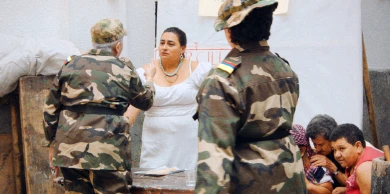
The Shape of Now is a documentary that explores the challenges and paradoxes of memory, reparation and post-conflict justice, extending a defiant and questioning gaze towards the six-decade armed conflict in which the Colombian State, guerrillas and paramilitary groups clashed to leave millions of victims in the country. The screening is conducted by the Aesthetics of Peace and Desertion Tactics study group and includes a presentation by and discussion with the film’s director, Manuel Correa.
The film surveys the consequences of the peace agreements signed in 2016 between the Colombian State and the FARC guerrilla organisation through the optics of different victims. It was recorded shortly after this signing, a time in which doubts lingered over the country’s future, with many groups speculating in the narration. Correa harnesses the power of images, visual and bodily memory, fiction and re-staging as tools for understanding the conflict, memory and healing, as well as for the achievement of a just peace that acknowledges and remembers all victims.
The activity is framed inside the research propelled by Aesthetics of Peace and Desertion Tactics, a study group developed by the Museo’s Study Directorship and Study Centre. This annual group seeks to rethink, from a theoretical-critical and historical-artistic perspective, the complex framework of concepts and exercises which operate under the notion of pacifism. A term that calls on not only myriad practices ranging from anti-militarism and anti-war movements to activism for non-violence, but also opens topical debates around violence, justice, reparation and desertion.
Framed in this context, the screening seeks to reflect on propositions of transitional and anti-punitive justice, and on an overlapping with artistic and audiovisual practices, particularly in conflicts that have engendered serious human rights violations. In such conflicts, the role played by audiovisual productions encompasses numerous challenges and ethical, aesthetic and political debates, among them those related to the limits of representation, the issue of revictimisation and the risks involved in the artistic commitment to justice. These themes will be addressed in a discussion held after the session.
Francisco López and Barbara Ellison
Thursday, 11 December - 8pm
The third session in the series brings together two international reference points in sound art in one evening — two independent performances which converse through their proximity here. Barbara Ellison opens proceedings with a piece centred on the perceptively ambiguous and the ghostly, where voices, sounds and materials become spectral manifestations.
This is followed by Francisco López, an internationally renowned Spanish sound artist, who presents one of his radical immersions in deep listening, with his work an invitation to submerge oneself in sound matter as a transformative experience.
This double session sets forth an encounter between two artists who, from different perspectives, share the same search: to open ears to territories where sound becomes a poetic force and space of resistance.
Long Live L’Abo! Celluloid and Activism
4, 5, 6 DIC 2025
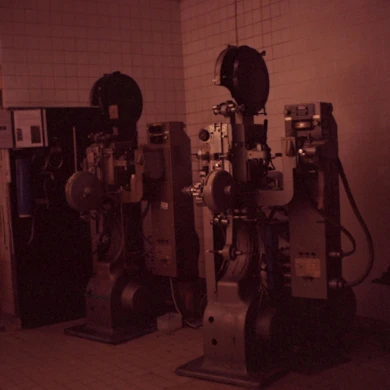
The third instalment of Cinema Commons, a research, programming and publishing project which explores how film articulates interpretive communities, fosters collective debate and devises proposals for common spaces, presents L’Abominable, an artist- and film-maker-run independent film-lab founded in 1996 on the outskirts of Paris. The programme is structured around three sessions: a lecture-workshop on L’Abominable, conducted by film-makers Pilar Monsell and Camilo Restrepo; a session of short films in 16mm produced in L’Abominable; and the feature-length film Une île et une nuit (An Island and One Night), made by the Les Pirates des Lentillères collective.
Better known by the shortened version of L’Abo, the artist-run laboratory emerged in response to disappearing infrastructures in artisan film-making and endeavours to offer the creative community a self-managed space in which to produce, develop and screen films in analogue formats such as Super8, 16mm and 35mm. With this underpinning, L’Abo champions the aesthetic and political experimentation of analogue cinema opposite digital hegemony.
L'Abominable, more than a simple work tool, has become a space of artistic and social exchange which has knitted together a community. It is characterised by endowing technique with a poetic dimension, in a community that manufactures its own film devices, and situates pedagogy at its core — the film-makers and artists train one another on common ground. Further, it seeks to forge an opening to all experimental languages around celluloid, for instance installation and film performance, while constituting a place of preservation and conservation in the history of the medium.
L'Abominable is an example of how, at the height of the digital age, artists and film-makers are recovering cinematography and vindicating the production process in its entirety. This autonomy invents alternative routes in the industry as it creates new tools, develops other forms of expression and explores unknown cinematic territories.
Estrella de Diego Lecture. Holding Your Brain While You Sleep
Wednesday, 3 December 2025 – 7pm
Framed inside the Museo Reina Sofía’s retrospective exhibition devoted to Maruja Mallo, this lecture delivered by Estrella de Diego draws attention to the impact of the artist’s return to Spain after her three-decade exile in Latin America.
Committed to values of progress and renewal in the Second Republic, Mallo was forced into exile to Argentina with the outbreak of the Civil War and would not go back to Spain to settle definitively until 1965 — a return that was, ultimately, a second exile.
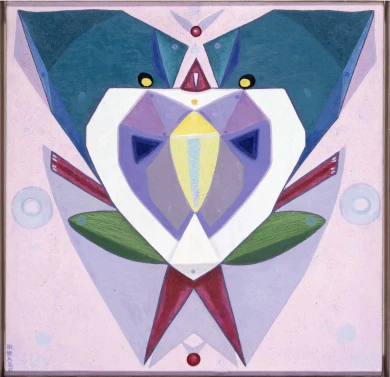
Mallo saw out her prolific artistic trajectory with two impactful series: Moradores del vacío (Dwellers of the Void, 1968–1980) and Viajeros del éter (Ether Travelers, 1982), entering her most esoteric period in which she drew inspiration from her “levitational experiences” of crossing the Andes and sailing the Pacific. Her travels, both real and imaginary, became encounters with superhuman dimensions.
In parallel, her public persona gained traction as she became a popular figure and a key representative of the Generation of ‘27 — the other members of which also started returning to Spain.
This lecture is part of the Art and Exile series, which seeks to explore in greater depth one of the defining aspects of Maruja Mallo’s life and work: her experience of exile. An experience which for Mallo was twofold: the time she spent in the Americas and her complex return to Spain.