-
4 October - 30 November 2023 Sabatini Building, Protocol Room
Laboratories
These laboratories are articulated from the concept of ruin, interweaving the temporal patterns of adults-senior citizens and adolescents-young people with the aim of making a third transitory, mutant and anachronistic place emerge. As part of this consideration, the aim is to advocate the communication between the bodies we were, the bodies we are and the bodies we are not. From the sensitive dimension of touch, we transmit, from one body to another, the visible and the invisible aspect of “things” (materials, structures, surfaces, affects, sensations, images). Moreover, we experience the material and sound dimensions of things that have all but disappeared or been forgotten. Things detained, those whose “scarcity awaits”; things whose survival allows for two vital attitudes: attention and listening. vitales: la atención y la escucha.
The laboratories are structured around six sessions aimed at two age groups. In the first phase, each group will work separately and, in the second, both temporalities/groups will come together to continue the practices generated with a view to carrying out a stage experiment to be shared with visitors on the final day of the laboratory. escénico que compartiremos con el público el último día del laboratorio.
Wednesday, 4, 18, and 25 October - from 5pm to 8:30pm
Laboratory Phase 1 for teenagers and young people from the ages of 15 to 25Tuesday, 3, 17, and 24 October - from 10:30am to 2pm
Laboratory Phase 1 for people from the ages of 60 to 80Wednesday, 15, 22, and 29 November – 5pm to 8:30pm
Laboratory Phase 2 with both groups together -
Wednesday, 29, and Thursday, 30 November Sabatini Building, Protocol Room
Encounter. Not Yet, Still
Over the past year, artists Paz Rojo, Javier Cruz, Paulina Chamorro, José Luis Baringo and physicist Álvaro García have been meeting once a month around the book Prophetic Culture: Recreation for Adolescents (Bloomsbury Academic, 2021), by philosopher Federico Campagna. This encounter sees the group opening its doors to other people with an interest. (Enclave de Libros, 2022), del filósofo Federico Campagna. En este encuentro, el grupo abre sus puertas a personas interesadas.
From art, and more specifically from the sphere of performing arts and dance, and in the company of the metaphysical imagination offered both by Campagna’s text and other frames of reference, this reading day prompts a questioning of the modes of possible “worldification” (referring to world-building). Mindful of the fact that the job of art is not to predict the future but be capable of “seeing” the present or understanding future potentiality, what do we need to make it possible? Therefore, the encounter constitutes an invitation to think about this question and to ruminate on its ethical implications, going back to the sphere of the intuitive sensation of aesthetics and, consequently, picking up once again the Greek meaning of theatron, which alludes to a “place to see and listen rather than communicate”. To worldify, we need a theatre which enables us to develop forms of “opening our eyes” to reality after having “closed” them. Also bearing in mind that, far from being an active and conscious process, “seeing” is the capacity to recognise in us the wonder and mystery produced by listening to a terribly silent field: the encounter with an interior that was hitherto unknown to us.
-
Wednesday, 29 November Sabatini Building, Room 102
Stage Experiment
TicketsThis experiment brings together the retrospective memory of senior citizens and the projects and plans that are inherent in adolescence and youth with the aim of establishing visions around a spectral future. Participants seemingly destroy-build a set design around them: joining useless objects or those which have become isolated from use, abandoned things, things that are waiting, forgotten objects or other objects accompanying them right now. Materials which make up a skein of cultural memories, of dances which are scarcely the shadow of a tenuous recollection, of voices and sounds that allow the melody to be heard, in which the lived, that which survives and that which is to be lived emerge.
The experiment is the result of laboratories developed within the framework of Not Yet, Still, and features Nilo Gallego’s soundscape in collaboration
-
Thursday, 30 November Sabatini Building, Protocol Room
Open Conversation between Federico Campagna and Paz Rojo
TicketsMorir Bien is the alternative philosopher Federico Campagna puts forward while contemplating a cosmological landscape in ruins: our reality is being demolished and will be replaced with a new one, yet to be foretold. Our task, therefore, is to leave fertile ruins for those to come.
Morir Bien is the alternative philosopher Federico Campagna puts forward while contemplating a cosmological landscape in ruins: our reality is being demolished and will be replaced with a new one, yet to be foretold. Our task, therefore, is to leave fertile ruins for those to come.
The idea of prophetic culture articulates this open conversation between Federico Campagna and Paz Rojo, together with the reading group and audience in attendance, to unpick the reflections and practices embodied during the programme Not Yet, Still.
Language: English
Held on 04 Oct 2023
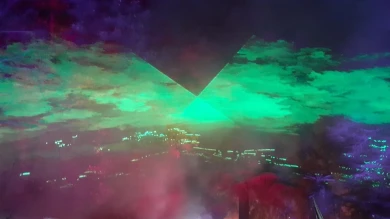
Across the months of October and November 2023, the artistic investigation Not Yet, Still will be developed inside the Museo Reina Sofía. The project by artist and researcher Paz Rojo is articulated via two laboratories, an encounter, a stage experiment and a conversation, research that is part of Rojo’s broader project Morir Bien (Die Well), which draws inspiration from contemporary materialism and ecological thought to explore the encounter with declining historicity in the present time by way of the relationship between dance, the unknown and aesthetic experience. de la historicidad de la época actual, a través de la relación entre la danza, lo desconocido y la experiencia estética.
In the current context, besieged by crisis thinking and successive forms of epistemic violence, Not Yet, Still seeks to explore the dismantling of our time from the conceptual figure of ruin. What senses are opened before the presence of a time, a body and a stage on the verge of falling? Through ruin, we can delve deeper into the aesthetic scope of a time which, catastrophically and tragically, does not belong to us. As temporal and material figuration, ruin dissolves time for us, allowing us to start after the end: to listen to the remains, to what is left in spite of it all. Through ruin we let ourselves fall and contribute to the demolition of narratives and paradigms which weave our era; we open ourselves to the time of everything we are not and situate ourselves on a post-contemporary stage, ultimately experiencing an encounter with the aesthetics of a strange and immensely open time: a time which has, at the same time, a future and spectral quality.
Morir Bien Morir Bien is a project funded by Madrid City Council’s grants for contemporary creation. With the support of the residencies programme Notar, promoted by the MAR Platform (Museo Reina Sofía, hablarenarte and Fundación Daniel and Nina Carasso, Madrid); Radicantes (IVAM, Valencia); Festival Citemor (Portugal); Live Arts Laboratory, Tenerife Lab (Tenerife); the Los Barros Centre of Artists’ Residencies (Madrid) and the Notes for a Time Apart programme (Museo Reina Sofía).
Organised by
Museo Reina Sofía
Programme
Participants
Federico Campagna is a philosopher, and the author of The Last Night (Zero Books, 2013), Technic and Magic: The Reconstruction of Reality (Bloomsbury, 2018) and Prophetic Culture: Recreation for Adolescents (Bloomsbury Academic, 2021). He is an associate fellow of the Warburg Institute (London), a critical fellow of Royal Academy Schools (London) and a lecturer in Intellectual History at ECAL (Lausana), as well as the host of the literary podcast Overmorrow's Library, produced by the Centre d'Art Contemporain Genève. Furthermore, he works as a rights director at the UK/US radical publisher Verso Books and is the co-founder of the Italian philosophy publisher Timeo.
Paulina Chamorro works in the field of performing arts as a producer, performer and programme co-ordinator for theatres and institutions in Chile and Spain. Since 2009, she has worked independently and in collaborative pieces-projects which explore the creation of sensitive knowledge through experimental stage formats, with a particular interest in the relationship between representation, capitalism, expanded stage practices and post-modernism. Notable among her works are Ser Paisaje (NAVE, Santiago de Chile, 2021), Exuberante Hueco Hacer Lugar (Bosque Real, Madrid, 2022), VAHO (The Online Platform of Ongoing Research, 2022) and Una vibración casi imperceptible (CA2M, Móstoles, 2023).
Javier Cruz is an artist who develops his work through collaborative projects, both in his individual practice and as part of collective structures such as Elgatoconmoscas and PLAYdramaturgia. He also works with performing arts professionals, normally as a performer. Alongside Jacobo Cayetano (Zuloark), he created Bosque Real, a platform to safeguard forgotten heritage and to once again narrate it from multiple perspectives of retrieval. Moreover, with Fernando Gandasegui, he runs Bar Yola, an intersection between live art and pedagogies. His work has been part of collective shows such as Querer parecer noche (CA2M, Móstoles, 2018) and individual exhibitions like Trémula (CA2M, Móstoles, 2021), and has featured in art centres, festivals and national and international theatres. (CA2M, Móstoles, 2021), así como en centros de arte, festivales y teatros nacionales e internacionales.
Nilo Gallego is a musician and artist whose work always contains a playful strand, searching for interaction with the environment and everyday life. He designs tools and conducts education workshops based on listening and sound creation. cotidiano. Diseña herramientas e imparte talleres educativos basados en la escucha y la creación sonora.
Álvaro García holds a degree in physics from the University of Salamanca (2011). He is currently an associate professor in the area of Applied Physics at the Rey Juan Carlos University (Madrid). His research work pivots round non-linear physics and chaos theory, classic electrodynamics and the foundations of quantum mechanics, as well as stochastic processes with applications to biology. His most recent works have focused on studying how extensive electrodynamic bodies generate electromagnetic waves through the phenomenon of self-oscillation. His research has been published in journals such as Chaos Solitons & Fractals and forums that include NoLineal 20-21 (Madrid) and NODYCON 2023 (Rome).
Paz Rojo is a choreographer, dancer and researcher whose interests revolve around dance and its potential to create alternative ecologies that include debates on the ontology of dance in late capitalism and the aesthetics of dance after the end of the future. She attained a PhD in Performance Practices, specialising in Choreography, from the Stockholm University of the Arts with the research thesis The Decline of Choreography and Its Movement: a Body's (path)Way (2019). As part of this research, she published the book To Dance in the Age of No-Future (Circadian, 2020).
Más actividades

Aesthetics of Peace and Desertion Tactics
8 October 2025 – 24 June 2026
The study group Aesthetics of Peace and Tactics of Desertion: Prefiguring New Pacifisms and Forms of Transitional Justice proposes a rethinking—through both a theoretical-critical and historical-artistic lens—of the intricate network of concepts and practices operating under the notion of pacifism. A term not without contestation and critical tension, pacifism gathers under its name a multiplicity of practices—from anti-militarism and anti-war movements to non-violence activism—while simultaneously opening urgent debates around violence, justice, reparation, and desertion. Here, pacifism is not conceived as a moral doctrine, but as an active form of ethical and political resistance capable of generating aesthetic languages and new positions of social imagination.
Through collective study, the group seeks to update critical debates surrounding the use of violence and non-violence, as well as to explore the conflict of their representation at the core of visual cultures. In a present marked by rearmament, war, genocide, and the collapse of the social contract, this group aims to equip itself with tools to, on one hand, map genealogies and aesthetics of peace—within and beyond the Spanish context—and, on the other, analyze strategies of pacification that have served to neutralize the critical power of peace struggles. Transitional and anti-punitive justice proposals will also be addressed, alongside their intersections with artistic, visual, and cinematic practices. This includes examining historical examples of tribunals and paralegal activisms initiated by artists, and projects where gestures, imaginaries, and vocabularies tied to justice, reparation, memory, and mourning are developed.
It is also crucial to note that the study programme is grounded in ongoing reflection around tactics and concepts drawn, among others, from contemporary and radical Black thought—such as flight, exodus, abolitionism, desertion, and refusal. In other words, strategies and ideas that articulate ways of withdrawing from the mandates of institutions or violent paradigms that must be abandoned or dismantled. From feminist, internationalist, and decolonial perspectives, these concepts have nourished cultural coalitions and positions whose recovery today is urgent in order to prefigure a new pacifism: generative, transformative, and radical.
Aesthetics of Peace and Tactics of Desertion, developed and led by the Museo Reina Sofía’s Studies Management, unfolds through biweekly sessions from October to June. These sessions alternate between theoretical discussions, screenings, work with artworks and archival materials from the Museo’s Collection, reading workshops, and public sessions. The group is structured around sustained methodologies of study, close reading, and collective discussion of thinkers such as Judith Butler, Elsa Dorlin, Juan Albarrán, Rita Segato, Sven Lütticken, Ruth Wilson Gilmore, and Franco “Bifo” Berardi; historical episodes such as the anti-nuclear and anti-arms race movement in Spain; and the work of artists and activists including Rojava Film Commune, Manuel Correa and the Oficina de Investigación Documental (Office for Documentary Investigation), and Jonas Staal, among other initial cases that will expand as the group progresses.
Institutional Decentralisation
Thursday, 21 May 2026 – 5:30pm
This series is organised by equipoMotor, a group of teenagers, young people and older people who have participated in the Museo Reina Sofía’s previous community education projects, and is structured around four themed blocks that pivot on the monstrous.
This fourth and final session centres on films that take the museum away from its axis and make it gaze from the edges. Pieces that work with that which is normally left out: peripheral territories, unpolished aesthetics, clumsy gestures full of intent. Instead of possessing an institutional lustre, here they are rough, precarious and strange in appearance, legitimate forms of making and showing culture. The idea is to think about what happens when central authority is displaced, when the ugly and the uncomfortable are not hidden, when they are recognised as part of the commons. Film that does not seek to be to one’s liking, but to open space and allow other ways of seeing and inhabiting the museum to enter stage.
Intergenerationality
Thursday, 9 April 2026 – 5:30pm
This series is organised by equipoMotor, a group of teenagers, young people and older people who have participated in the Museo Reina Sofía’s previous community education projects, and is structured around four themed blocks that pivot on the monstrous.
The third session gazes at film as a place from which to dismantle the idea of one sole history and one sole time. From a decolonial and queer perspective, it explores films which break the straight line of past-present-future, which mix memories, slow progress and leave space for rhythms which customarily make no room for official accounts. Here the images open cracks through which bodies, voices and affects appear, disrupting archive and questioning who narrates, and from where and for whom. The proposal is at once simple and ambitious: use film to imagine other modes of remembering, belonging and projecting futures we have not yet been able to live.
Remedios Zafra
Thursday March 19, 2026 - 19:00 h
The José Luis Brea Chair, dedicated to reflecting on the image and the epistemology of visuality in contemporary culture, opens its program with an inaugural lecture by essayist and thinker Remedios Zafra.
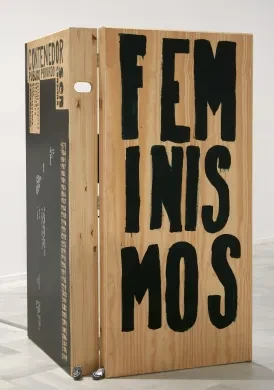
“That the contemporary antifeminist upsurge is constructed as an anti-intellectual drive is no coincidence; the two feed into one another. To advance a reactionary discourse that defends inequality, it is necessary to challenge gender studies and gender-equality policies, but also to devalue the very foundations of knowledge in which these have been most intensely developed over recent decades—while also undermining their institutional support: universities, art and research centers, and academic culture.
Feminism has been deeply linked to the affirmation of the most committed humanist thought. Periods of enlightenment and moments of transition toward more just social forms—sustained by education—have been when feminist demands have emerged most strongly. Awareness and achievements in equality increase when education plays a leading social role; thus, devaluing intellectual work also contributes to harming feminism, and vice versa, insofar as the bond between knowledge and feminism is not only conceptual and historical, but also intimate and political.
Today, antifeminism is used globally as the symbolic adhesive of far-right movements, in parallel with the devaluation of forms of knowledge emerging from the university and from science—mistreated by hoaxes and disinformation on social networks and through the spectacularization of life mediated by screens. These are consequences bound up with the primacy of a scopic value that for some time has been denigrating thought and positioning what is most seen as what is most valuable within the normalized mediation of technology. This inertia coexists with techno-libertarian proclamations that reactivate a patriarchy that uses the resentment of many men as a seductive and cohesive force to preserve and inflame privileges in the new world as techno-scenario.
This lecture will address this epochal context, delving into the synchronicity of these upsurges through an additional parallel between forms of patriarchal domination and techno-labor domination. A parallel in which feminism and intellectual work are both being harmed, while also sending signals that in both lie emancipatory responses to today’s reactionary turns and the neutralization of critique. This consonance would also speak to how the perverse patriarchal basis that turns women into sustainers of their own subordination finds its equivalent in the encouraged self-exploitation of cultural workers; in the legitimation of affective capital and symbolic capital as sufficient forms of payment; in the blurring of boundaries between life and work and in domestic isolation; or in the pressure to please and comply as an extended patriarchal form—today linked to the feigned enthusiasm of precarious workers, but also to technological adulation. In response to possible resistance and intellectual action, patriarchy has associated feminists with a future foretold as unhappy for them, equating “thought and consciousness” with unhappiness—where these have in fact been (and continue to be) levers of autonomy and emancipation.”
— Remedios Zafra
27th Contemporary Art Conservation Conference
Wednesday, 4, and Thursday, 5 March 2026
The 27th Contemporary Art Conservation Conference, organised by the Museo Reina Sofía’s Department of Conservation and Restoration, with the sponsorship of the Mapfre Foundation, is held on 4 and 5 March 2026. This international encounter sets out to share and debate experience and research, open new channels of study and reflect on conservation and the professional practice of restorers.
This edition will be held with in-person and online attendance formats, occurring simultaneously, via twenty-minute interventions followed by a five-minute Q&A.