-
30 June - 16 December 2023 Sabatini Building, Floor 3
The Institute of Suspended Time
Exhibition at the Office of the Instituto del Tiempo Suspendido and Activations
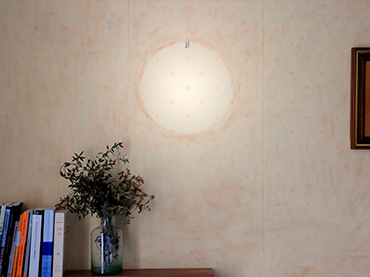
The Instituto del Tiempo Suspendido (Institute of Suspended Time, ITS) was founded in 2020 as a critique of the chrono-normativity that underpins our society. Straddling art and philosophy, politics and poetics, ITS looks to question the predominant temporal regime with the aim of recovering the time that is taken from us by the speeding-up of work and social media, a time expropriated by the temporal consensus that governs our lives today.
The ITS office is located on the third floor of the Sabatini Building, where Raquel Friera and Javier Bassas welcome those wishing to suspend time…
-
Saturday, 1 July 2023 Sabatini Building, Garden
Dance Hall to Wobble Time
Performance with Elena Córdoba, Nilo Gallego, Julián Mayorga, Christian Pérez Yates and Laura Ramírez Ashbaugh
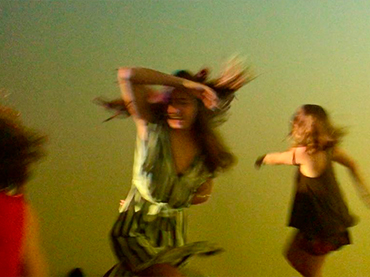
TicketsBefore using seconds, time was measured with the heartbeat. The length of time a beat took to repeat itself was an intimate and sound-based measurement of time. Beats were introduced into music to mark the rhythm of the body in dance, just as the heartbeat does in life.
This dance hall looks to invoke a time made from the softness of the palpitations of the blood in the veins, time which sways our bodies, beat by beat; a muscular, happy time. It puts forward a journey from bolero to rave, from cumbia to disco, a journey danced so that time runs behind our bodies and sticks to our hips like breath on glass.
-
Saturday, 15 July 2023 Retiro Park, Palacio de Velázquez
The Life of Las Niñas. The History of Poppies that Escaped Among the Wheat
Performance by Las Niñas
TicketsThe Andalusian drag collective Las Niñas move their patio-house over to the Retiro Park to offer a folkloric catharsis, where all spectrums of their unique imaginary take shape, from their background as a collective to the individual paths of their members.
Mixing the modern and the traditional — from copla and flamenco to electronic music and techno — the performance by Las Niñas merges into the same space in time and transvestite experience. A queer, transvestite and Andalusian incentive in an era when there is barely space for listening, observation and artistic experience.
Additional material: Programme

-
20 July - 5 November 2023 Retiro Park, Palacio de Velázquez
Bayanihan Re-existence
An Installation by Husos arquitecturas
The work of Husos arquitecturas — an architecture and urbanism office operating between Spain and Colombia — explores the possibilities of the quotidian from an ecological approach and looks for a more responsible and circular management of the material, reusing theoretically disposable elements. Re-existencias Bayanihan (Bayanihan Re-existence), their installation in the Retiro Park’s Palacio de Velázquez, invites rest, reading and shared time and reflection around the colonial narratives that loom over the building.
Thus, the stage created to host events and activities in the Notes for a Time Apart programme redraws the inside of the nineteenth-century building via recycled elements, for instance the old set designs from the storerooms of the Centro Dramático Nacional. The piece also features a collaboration with designer Nayare Soledad Otorongx and writer Karessa M. Ramos.

-
Saturday, 16 September 2023 Sabatini Building, Garden
Sound Cuts
Others to the Front with Fefa Vila
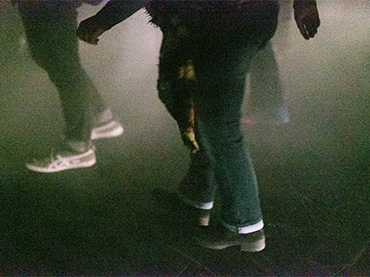
TicketsSound Cuts is an out-of-sync, political and danceable manifesto: a three-hour assemblage based on three hours of rhythmic, spoken and danced sound cuts to a house cadence which shapes an exquisite sound corpse. A time where dance, politics and life are expressed in different and analogous proportions, and can hopefully occur at the same time.
This activity sets out to activate collective corporal practices, experiences and impressions which are at odds with normative forms of feeling, assessing, ordering and experimenting with time; time that comes from afar, from the deep sound cut stemming from underground house culture, and which in this encounter is folded and creased to remind us we do not all occupy the same now.
-
Friday, 22 September 2023 Retiro Park, Palacio de Velázquez
This Line Is a Reciprocal Line of Exchange
Performance Poetry Action
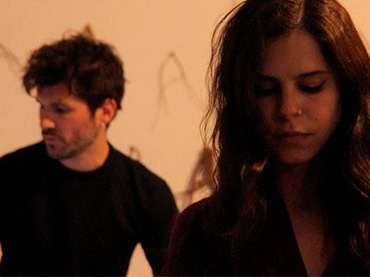
TicketsPoetry is a free and independent territory, a refuge for human beings’ individual and collective reflection opposite their time in search of giving meaning to and narrating existence.
In this performance poetry action, poet Helena Mariño and musician Enri La Forêt suspend us in an elastic, bended time to explore other possible durations of language from poetry and sound.
-
Saturday, 23 September 2023 Retiro Park, Palacio de Velázquez
The Hills Are Yours (Live Set)
Performance by Alberto Cortés
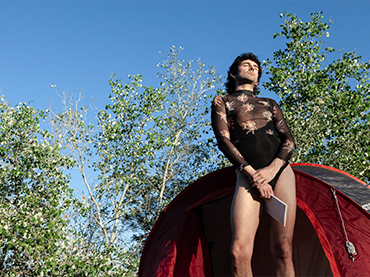
TicketsThe performance Los montes son tuyos (Live-set) (The Hills Are Yours. Live Set) imagines campfires in a room, hall or corridor turned into a fictional forest, where we gather around light to hear without barely seeing, searching for introspection.
Although it appears to be a reading, the encounter looks for the narrated story to return to its original covenant, ending, essentially, with the idea of a dramatized reading. It puts forward a space in which to listen and inhabit the imagined and passes through Los montes son tuyos (Continta Me Tienes, 2022) without being a stage or book.
-
Wednesday, 27 September 2023 Sabatini Building, Garden
Elise Florenty and Marcel Türkowsky. Time and Delirium; Dream and Resistance
Screening and Talk
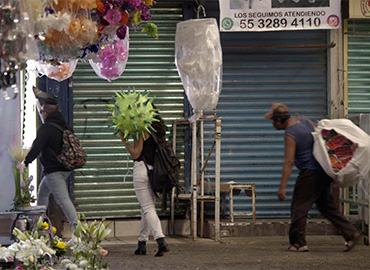
Artist/film-maker duo Elise Florenty and Marcel Türkowsky — currently participants in the Museo Reina Sofía’s Joaquim Jordá Residencies programme — present in this screening and conversation extracts from their films, shot over the past decade in different geographical locations: Donetsk, the island of Lemnos, the Tehuacán Valley, Tokyo and the northern part of the Mississippi River. Pivoting around these images, the film-makers reflect on the TDDR concept (Time and Delirium; Dream and Resistance) as a productive and transformative process which alters set identities and opens the way for new subjectivities to emerge. Delirium is conceived as the ability to connect with the cosmic, moving beyond hierarchical thought; Dream is the chance to break the temporal linearity of reasoning that is thought of as progress; Resistance is a constant echo through time.
-
4 October - 30 November 2023
Not Yet, Still
Probationary Stage Practice with Paz Rojo
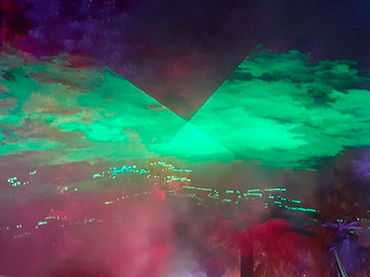
Ha sido aún no, todavía (Not Yet, Still) investigates the encounter with the time we live in. Drawing inspiration from contemporary materialism and ecological thought, this project explores the relationship between dance, the unknown and aesthetic experience and what could be sensed as a decline in the present’s historicity.
This proposal by artist and choreographer Paz Rojo is articulated in three laboratories with adults and teenagers, in a stage iteration and seminar.
-
14 October – 23 November 2023
ISHUWEI MØSIK KØSHPUNINUK (Female Spirit Dance)
Julieth Morales, artist in residence
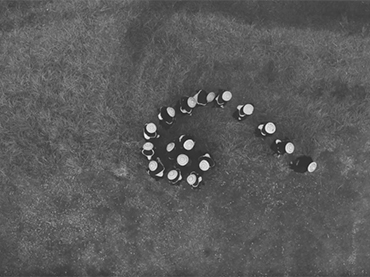
On account of the experimental and essay-based approach that underpins the Notes for a Time Apart programme, Misak artist Julieth Morales (Cauca, Colombia, 1992) has been invited to hold a residency in the Museo.
Morales’s practice is situated at the intersection between gender and decoloniality and focuses specifically on notions of Indigenous identity and ritual. During her residency, she will carry out research into other possible temporalities.
-
Friday, 20 October 2023 Retiro Park, Palacio de Velázquez
Learn to Rub (Time to Write)
Performance with Jérémie Bennequin
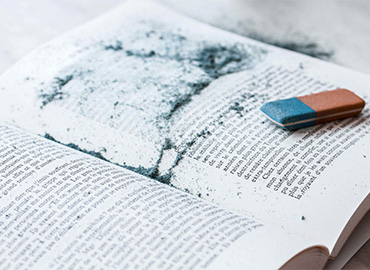
TicketsIn 2008, artist Jérémie Bennequin started to erase Marcel Proust’s work In Search of Lost Time. Following a stringent ritual, he rubbed out one page a day over ten years using an eraser, eliminating this literary monument. A long-term undertaking, exacting work, an absurd obsession: an apparent waste of time. In this intervention, the artist repeats part of this gesture, inviting us to reflect on memory, literature and temporality, central themes in his practice.
-
25 October – 4 December 2023 Nouvel Building, Roof
Still Remains
An Installation by elii [oficina de arquitectura] and Orkan Telhan
The installation Still Remains puts forward, from a position which is distanced from Anthroprocentrism, research on the microbiome: the community of micro-organisms inhabiting a set environment, both inside and outside the human body, and governed by characteristic temporal logics and scales. In these life forms — bacteria, fungi and viruses that are invisible to the naked eye — our interspecies identities are hidden in a continuous mutation.
This project from the elii architecture office and artist Orkan Telhan approaches this intimate space via a series of conserved remains, from prolonged “conversations” between micro-organisms and people to highlight a temporality that belongs to no-one.
![elii [oficina de arquitectura] and Orkan Telhan, Still Remains, 2023. Photograph: ImagenSubliminal](https://recursos.museoreinasofia.es/legacy_programs/restos_suspenso_snippet_0.jpg "elii [oficina de arquitectura] and Orkan Telhan, Still Remains, 2023. Photograph: ImagenSubliminal")
-
Wednesday, 25 October 2023 Retiro Park, Palacio de Velázquez
What Resonates (Writing a River)
Writing Workshop Around the Reading Club Other Books and So, with Romina Casile
The reading club Other Books and So, inside the Museo Reina Sofía’s Almost Books programme, has been articulated in the last two years via expanded temporalities, gradually shaping a like-minded community of readers. This workshop with Romina Casile invites participants from the club’s previous editions to encounter each other once again in an exercise of collaborative writing which uses as a substrate the readings proposed in the most recent calls and the reverberations that unfolded within them.
![Romina Casile, Otras formas de contar(nos) y reafirmar(nos) (Other Forms of Talking [About] and Reaffirming [Ourselves]), workshop, Matadero Madrid, 2023. Photograph: Estudio Perplejo](https://recursos.museoreinasofia.es/legacy_programs/romina_casile.jpg "Romina Casile, Otras formas de contar(nos) y reafirmar(nos) (Other Forms of Talking [About] and Reaffirming [Ourselves]), workshop, Matadero Madrid, 2023. Photograph: Estudio Perplejo")
-
Saturday, 4 November 2023 Retiro Park, Palacio de Velázquez
Pixel Play
Workshop with Juan Alonso
This workshop with Juan Alonso prompts experimentation with generative art; that is, artistic creation based on rules, as in Sol LeWitt’s Wall Drawings. The dynamic involves proposing a series of instructions to create different pieces, using the walls of the Palacio de Velázquez as a canvas and post-it notes as pixels. The aim of the exercise, developed both individually and in groups, is to fashion an ephemeral gallery of shared creations, where each piece bears witness to a possible interpretation of the instructions provided.

-
Tuesday, 7 November 2023 Retiro Park, Palacio de Velázquez
Walking Is Defensive Magic
Drift with BRUTALISTAS
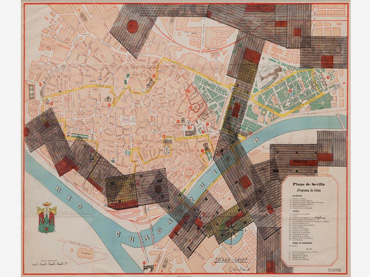
TicketsThe Ruta emocional de Madrid (Emotional Route of Madrid, 1935) is the great guide — or anti-guide — of old Madrid, a beautiful anthology on a major city that was withdrawn to make way for new times. The person behind it was Emilio Carrere, a poet, bohemian and mystical flâneur who, through the work, was situated at the dawn of psychogeography and a defence of wandering as a method of reflection and the search for new perspectives.
Taking Carrere’s book as his point of departure and with time as an overriding focal point, Servando Rocha and David Bizarro, hosts of Editorial La Felguera’s podcast BRUTALISTAS, puts forward a route around Madrid’s Retiro Park to visit some of its innermost spaces and also some of its most illustrious, all through a noir and “brutalist” gaze.
-
Tuesday, 12 December 2023 Nouvel Building, Auditorium 200
Fearing It’s Too Late
Encounter with Women Artists
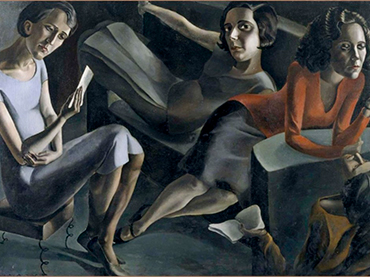
TicketsTime in our present is marked by certain rhythms, devices and structures that regulate all spheres of life (work, family, leisure, social relationships…) in a way that is alienating and standardised. Women, as subaltern or dissident subjects of the heteropatriarchy, are affected largely by overloads imposed by today’s frenetic rhythms.
This multidisciplinary encounter between writer Azahara Alonso, anthropologist Adela Franzé and philosopher Elena Castro Córdoba puts forward a search for escape routes and solutions to temporality and the demands of over-production in contemporary society. It sets out a dialogue around non-productive cadence, queer temporalities and the possibilities of confronting the speed of contemporary rhythms.
-
Friday, 15 December, 2023 Nouvel Building, Auditorium 200
TIME
The recording of a new episode of the BRUTALISTAS podcast
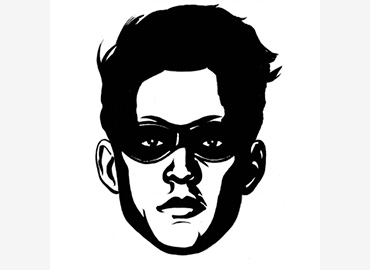
TicketsBRUTALISTAS (BRUTALISTS) is a podcast by Editorial La Felguera, whereby Carlos Arévalo, David Bizarro and Servando Rocha make use of an old guerrilla transmitter, letting their noir and brutalist imaginary loose. The activity observes the recording of a new episode of this podcast, in which its hosts reflect and speculate on time and its possibilities and contradictions.
Held on 30 Jun, 06, 13, 20, 27 Jul, 03, 10, 17, 24, 31 Aug, 07, 14, 21, 28 Sep, 05, 12, 19, 26 Oct, 02, 16, 23, 30 Nov, 07, 14 Dec 2023
Notes is a new Museo Reina Sofía project which aims to explore other formats and methodologies to accommodate devices and projects which transversally make disciplines hybrid and ensure they are capable of working on processes from erraticism as a possibility.
Its first edition, Notes for a Time Apart, sets forth a reflection on the customary conceptions of time and its registers, scales and rhythms. From different perspectives — philosophy, decolonial thought, queer theory, physics and biology — other modes of conceiving time are approached, beyond its normative and purely metric side.
Under these premises, artistic and architectural installations, film and live arts, publications, workshops, seminars and other devices take shape over six months from and in different spaces inside the Museo.
Organiza
Museo Reina Sofía
Patrocina
Participants
Azahara Alonso holds a degree in Philosophy and is the author of the book of aphorisms Bajas presiones (Ediciones Trea, 2016) and the poetry collection Gestar un tópico (RIL Editores, 2020). She has been coordinator of the writing school Hotel Kafka and a cultural manager in the José Hierro Poetry Centre Foundation. Currently, she conducts literary workshops and publishes specialised critique, and in her most recent work Gozo (Siruela, 2023) she reflects on themes such as work, tourism, the body, rest and leisure.
Juan Alonso holds a degree in IT, with an MA in Sound and Music Computing from Aalborg Universitet (Denmark). In his work he combines technology teaching from a humanist point of view with the creation of works that re-imagine reality through the prism of social critique, technology and humour. He is the author En mi casa lo decimos así (Arranca Editorial, 2022).
Javier Bassas is a philosopher, translator and editor. He holds a PhD in French Philology and Philosophy from the Université Paris-Sorbonne, Paris IV, and from the University of Barcelona, where he currently lectures in the Department of French Studies. His work focuses on the relationship between language, politics and aesthetics, and the translation of contemporary French thought.
Jérémie Bennequin is an artist who develops his multi-disciplinary practice around themes of memory and time. In his plastic work, literature is a raw and privileged material with which to create ambiguous works that sit at the crossroads between the legible and the visual. He gained acclaim with Ommage, developed between 2008 and 2016, his own homage to Marcel Proust’s In Search of Lost Time. His subsequent work has commonly adopted the format of the artist’s book, for instance Le Hasard n'abolira jamais un coup de dés (Yvon Lambert, 2014) and Les Lesbiennes (Éditions Dilecta, 2016), while his latest book Les Ommes (Manuella Éditions, 2022) received an honourable mention from the jury at the Prix Bob Calle du livres d’artiste in 2023.
Romina Casile is an artist, researcher and teacher. She holds a degree in Fine Arts from the Universidad Nacional de Rosario, Argentina, and an MA in Research in Artistic and Visual Practices from the University of Castilla-La Mancha (UCLM), where she is currently studying a PhD in Humanities, Art and Education. She is part of UCLM’s research group ARTEA: Research and Stage Creation.
Elena Castro Córdoba holds a qualification in Philosophy from the Complutense University of Madrid and an MA in Gender, Media and Culture from Goldsmiths University in London. Moreover, she is a pre-doctoral FPU contract researcher at the Complutense University of Madrid, a cultural researcher and the co-founder of Ontologías Feministas (Feminist Ontologies), a collective of cultural production specialised in virtuality and education programmes from a feminist perspective.
Elena Córdoba is a dancer and choreographer whose work is built from a detailed observation of the body, the core part and subject matter of her work. She vindicates sensoriality as a form of knowledge and the act of dancing as one of its manifestations. Dance, understood as a human manifestation, forms the backbone of the collective projects Bailar ¿es eso lo que queréis? (2012–2017), Déjame entrar (2017) and ¿Bailamos? (2018–2020).
Alberto Cortés is a stage director, playwright and performer. He started his journey in stage in 2009 from, as he describes it, “a bastard and peripheral dramaturgy that has been getting wilder with the passage of time, towards a freedom that doesn’t arrive”. He creates pieces in different formats and disciplines, in an attempt to keep on having hope in the intangible, mystery and the human. He is the author of Los montes son tuyos (Continta Me Tienes, 2022).
elii is an architecture office founded in 2006 in Madrid by Uriel Fogué, Eva Gil and Carlos Palacios. Its professional practice encompasses teaching, research and publishing, and its projects have been part of the Spanish Pavilion at the Venice Architecture Biennale in 2016 (awarded the Golden Lion) and 2023, and the exhibition Home Stories 100 Years, 20 Visionary Interiors (2020) in the Vitra Design Museum and at the Fifth Istanbul Design Biennial (202–2021). They have also written different publications, for instance What is Home Without a Mother (HIAP – Matadero Madrid, 2015) and Super Petites Maisons (EPFL, 2022) and are the co-editors of UHF, included in the Archive of Madrid Creators.
Elise Florenty and Marcel Türkowsky are an artist/film-maker duo who live between Berlin and Paris. Their short and medium-length films explore socio-political and historical contexts through the prism of altered states of consciousness (lucid insanity, hallucinations, dreams), exhibiting the multiplicity of the self through a spiral of metamorphosis that interrogates the relationship with the Other. They were awarded the EMAF Award for The Sun Experiment (Ether Echoes) (2013–2014) and Conversation with a Cactus (2017), and the Prix Cinéma du Réel for Back to 2069 (2019) and Don’t Rush (2020).
Adela Franzé is head professor in the Department of Social Anthropology and Social Psychology at the Complutense University of Madrid. In her strands of research she reflects on time devices, such as the watch, which regulate and mark our day-to-day rhythm.
Raquel Friera is an artist. With a degree in Economics and Fine Art, her projects combine a critical gaze of economy, gender awareness, historical re-readings and themes such as work and the production of subjectivities. In recent years, she has exhibited her work at different institutions such as CentroCentro (Madrid), MUSAC (León), Casal Solleric (Palma), Fundació Tàpies (Barcelona), Virreina (Barcelona) and MUAC (Mexico). With Javier Bassas, she founded the Instituto del Tiempo Suspendido (ITS).
Nilo Gallego is a musician and artist. In his work, always with a playful element, he looks for an interaction with the environment and the quotidian, and designs tools and conducts educational workshops based on listening and sound creation.
Husos arquitecturas is an office and platform of architecture, gardening and urbanism which explores the possibilities of these practices as tools for social transformation. It was founded in Madrid in 2003 by Colombians Diego Barajas (Bogotá) and Camilo García (Cali). Their work has been on display at the Venice Biennale of Architecture, the Quito Biennale, Rotterdam Biennale, the Oslo Architecture Triennale, Fundación Tàpies and Ecovisionarios. They are the authors of the books Urbanismos de remesas, viviendas (Re)productivas de la dispersión (Caniche, 2017) and Dispersion: A Study of Global Mobility and the Dynamics of a Fictional Urbanism (Episode, 2003).
Enri La Forêt is a musician and producer. He has been artist-in-residence at the Etopia Centre of Art and Technology, and develops performance and sound research with the poet Helena Mariño, with whom he has performed at La Casa Encendida, the Marpoética Festival, Teatro del Barrio and Cruce Contemporáneo, among others.
Helena Mariño is a poet and translator who has published Los bañistas (RIL Editores, 2022) and Este frío no es nuestro (Entropía Ediciones, 2019) and translated the poetry collection Los hijos de enero (Visor, 2022), by Safia Elhillo. She is part of the research and creation collective Una Fiesta Salvaje.
Roberto Martínez is an artist, dancer and stage director who studied Fine Arts at the University of the Basque Country and trained at the Andalusian Dance Centre in Seville and the Centre de Développement Chorégraphique in Toulouse. His interests revolve around the visual arts, botany and performance, and in his practice he explores the association between dance and different artistic expressions such as drawing, painting, sculpture and textile creation. His works most notably include El pintor y la modelo (2007), Me, the son (2014) and Tratado Botánico de Ilustración Coreográfica (2021). As a performer, he has collaborated with Christian Rizzo and Meg Stuart, among others, and as an artistic director, set designer and wardrobe artist he has worked with artists such as the singer-songwriter Rocío Márquez and the producer Bronquio on his record Tercer Cielo (2022).
Julián Mayorga is a musician, producer and artist who lives in Madrid. His music, which emerges from the riskiest wing of the new Latin American tropicalia scene, draws from and explores elements of popular Andean and Antillean music, electronic music, sound experimentation and Colombian folklore. He is part of the Poetas Menores collective and the experimental pop group Flash Amazonas.
Julieth Morales is an artist who defines herself as a “Misak artist by birth and mixed-race by context” and situates her work at the intersection between gender and decoloniality. Her practice, spanning performance, video, photography, painting and drawing, challenges representations of the Indigenous subject and critically reformulates the rituals of her community. She has recently exhibited work in the El Dorado space in Bogotá, the Museo de Arte Moderno in Medellín and the Museo de Arte Contemporáneo in Panama, among others.
Las Niñas is an artist’s collective created in Seville in 2018. Focused on stage and performance arts, transvestiteness and drag, it aims to recover and vindicate Andalusian culture from all artistic and vital areas. Its members are Agu de Barbate, Belial, Josefita Belladona, Berrenga, Carvento, Rosario Molina, Pakita, La Susi, Laca Udilla and Xess.
Christian Pérez Yates is a musician who was born in Florida. He studied jazz in Washington D.C. and moved to Madrid in 2004. His perspective is both open and broad: from the roots of tradition to the most innovative and experimental.
Laura Ramírez Ashbaugh is a choreographer, dancer and DJ who was born in Spain and has Ecuadorian and North American roots. Her research centres on dance, choreography and sound practices, and currently she is immersed in a long-term choreographic research project called serenity rave.
Servando Rocha is a writer and the editor of Editorial La Felguera and the publication Agente Provocador, as well as the BRUTALISTAS podcast he hosts with Carlos Arévalo and David Bizarro. He has published numerous works, most notably La Facción Caníbal. Historia del Vandalismo Ilustrado (Editorial La Felguera, 2012); Nada es verdad, todo está permitido. El día que Kurt Cobain conoció a William Burroughs (Alpha Decay, 2014); Algunas cosas oscuras y peligrosas (Editorial La Felguera, 2019); and Todo el odio que tenía dentro (Editorial La Felguera, 2021).
Paz Rojo is a choreographer, dancer and researcher. Her interests revolve around dance and its potential to create alternative ecologies that include debates on the ontology of dance in late capitalism and the aesthetic of dance after the end of the future. She studied her PhD in Performance Practices, specialising in Choreography at the Stockholm University of the Arts with the research thesis The Decline of Choreography and Its Movement: a Body's (path)Way (2019). As part of this research, she published the book To Dance in the Age of No-Future (Circadian, 2020).
Orkan Telhan is an artist, designer, teacher and researcher who holds a PhD in Design and Computing from MIT’s (Massachusetts Institute of Technology) Architecture Department. He investigates critical questions of cultural, environmental and social responsibility, and his work has been displayed at different editions of the Istanbul Biennial (2013, 2022), the Istanbul Design Biennial (2012, 2016, 2021), Ars Electronica, ISEA, LABoral, Matadero Madrid, the Museum of Contemporary Art Detroit and the New Museum of Contemporary Art in New York.
Others to the Front is a collective that started in January 2021 through the desire to create a non-existent and necessary space to make a critique possible, from music and dance, of a system that oppresses and which dictates policies that exclude the queer community. A political commitment towards transformation, intervention and action from the dancefloor, the club, music and mixing. With different formats and different friends, the collective looks to build a queer-rave community from self-management and autonomy to dance to exhaustion.
Fefa Vila (aka Fefus) is a writer, activist and queer feminist who promotes the artivist dyke-queer collective LSD (Madrid, 1993–1998). She has also been a professor of Sociology in the Methodology and Theory Department at the Complutense University of Madrid since 2008 with her areas of research encompassing cultural studies and gender. She has directed projects as a curator and independent artistic director, for instance El porvenir de la revuelta. Memoria y Deseo LGTBI_Q in 2017. She is a follower of Others to the Front on the political floor of dancing-queering the city.
Más actividades
![Isabel Coixet, 100 Years and You Everywhere [100 años y tú en todos los sitios], 2026, película](https://recursos.museoreinasofia.es/styles/small_landscape/public/Actividades/2.diseminar-mundo.jpg.webp)
John Berger and Isabel Coixet. Continued Ways of Seeing
Thursday, 17 September 2026 at 7pm
Ways of Seeing (1972) is one of the most revolutionary television series on art history, the museum and contemporary critical culture. Across four episodes, an articulate, enthusiastic John Berger unpacks the relationships between classical art through the gaze and new technology, the nude and feminism, the oil painting and commodity fetichism, advertising and consumerism. In essence, a level of critical commitment only comparable to its capacity for dissemination. Unsurprisingly, the series, and the book that would distil it, continues to forge vocations. This session sees art historians Alberto López Cuenca and Modesta Di Paola carry out an analysis of Berger’s audiovisual work, placing the stress on episodes one and four of the series. In the first episode, Berger reflects on the connection between the act of seeing, looking and being in light of new technology, such as the film camera. At the same time, it analyses how the culture of reproduction is turning paintings into messages or fragments of communication while stressing the importance of silence when observing historical paintings. In the fourth and final episode, he introduces advertising as a new iconic-verbal language that shares certain principles with the message of oil painting as a luxury item.
The session opens with the premiere of a filmic letter from Isabel Coixet, one of Spain’s most internationally acclaimed directors, to John Berger, with whom she maintained a long friendship and deep admiration. The short film is testament to the ubiquitous and long-lasting presence of the author of Ways of Seeing, even after his death in 2017.
![Chantal Akerman, Woman Sitting after Killing [Mujer sentada después de matar], 2001, instalación. Museo Reina Sofía](https://recursos.museoreinasofia.es/styles/small_landscape/public/Actividades/chantal-akerman-mujer-sentada-despues-matar.jpg.webp)
On Your Screen: Art History and the Museum Facing the Audiovisual Challenge
18, 19 SEP 2026
The conference On Your Screen: Art History and the Museum Facing the Audiovisual Challenge sparks debate around the transformations of art history and museum space upon embracing the audiovisual format. Its starting point is John Berger’s emblematic television series Ways of Seeing (1972), a landmark in the democratisation of art-historical discourse. In the series, Berger illustrated how the transfer of a work such as Goya’s Los fusilamientos del 3 de mayo (The Third of May 1808 or the Executions) from museum gallery to home TV screen completely changed the viewer’s experience, allowing the image to travel to straight to the viewer.
In the twenty-first century, this screen-based ecosystem has expanded exponentially, with museums not only physically integrating screenings and devices into their galleries— following in the wake of many exhibitions on the moving image — but also deploying complex virtual strategies. Equally, numerous en vez de a multitudeof historians, students and creators use digital platforms to circulate their ideas and projects. This audiovisual shift opens access to ignored materials and democratises knowledge, as well as challenging traditional hierarchies and the interpretive authority of institutions. The conference, promoted by the research project ATLAS AV: The Audiovisualisation of Art History and the Museum, seeks to analyse this vast audiovisual material, its archives, and its capacity to transform the memory of art.
Godard and Miéville: Time and Ruin
Friday, 18 September 2026 - 7pm
Inside the framework of the conference On Your Screen: Art History and the Museum Facing the Audiovisual Challenge, this film series sets forth three critical visions of the museum via three sessions featuring the works of John Berger, Jean-Luc Godard and Anne-Marie Miéville, Ariella Azoulay, Alan Resnais and Chris Marker, Kwate Nee-Owoo, and the premiere of short films by Isabel Coixet and La Vulcanizadora (Maria Rojas Arias and Andrés Jurado). In classical theory, the museum gives the world meaning; it contains fragments of the past, granting them a history, a narrative that explains preterite time and the present. Today, there is an implicit assumption that this function hides and legitimises forms of power, yet what if the museum, instead of explaining the world, multiplied it through radical ideas, silenced periods and repressed subjects? Such is the approach of the film-makers and artists in this film season.
In 1972 the writer John Berger opened the landmark television series Ways of Seeing with an iconoclastic gesture: slicing Sandro Botticelli’s painting Venus and Mars (1485) in London’s National Gallery. A transgressive act that recalls contemporary attacks on the museum by dissident youth and with which Berger, after revealing it was a reproduction, sought to ignite debate around the idea of an original artwork and a copy. In this, the hundredth anniversary of his birth, the first session pays homage to one of the great art writers of the twentieth century. Starting with a review of Berger’s audiovisual work by art historians Alberto López Cuenca and Modesta Di Paola, the series begins with the premiere of 100 Years and You Everywhere (2026), an unreleased short film by Isabel Coixet composed as a beautifully crafted letter to Berger, and continues with an analysis of fragments of Ways of Seeing in relation to the museum and contemporary art.
The second session screens two medium-length films by Jean-Luc Godard and Anne-Marie Miéville on time, ruin and museum. In The Old Place. Small Notes Regarding the Arts at Fall of 20th Century (1999), both film-makers consider what remains of that “old place”, the museum, at the close of a century of wars and totalitarianism, and ask whether it should be more of a legend or desire than a place. This same driving principle leads Godard to build his own imaginary museum in Reportage amateur (maquette expo) (2006), a rickety toy museum which, paradoxically, contains the great film-maker’s full power of thought on history and images.
Finally, the third session explores one of the major challenges of recent years: the decolonisation of the museum, the recognition of its link to imperialist discourses of power and the need to situate a new silenced or repressed subject at the centre of the Western narration of history. Under the title Museums and Restitution, it includes the film Undocumented. Unlearning Imperial Plunder (2019), by theorist Ariella Azoulay, Statues Also Die, by Alan Resnais and Chris Marker (1953), Kwate Nee-Owoo’s You Hide Me (1970) and the first screening of the short film Quinto verso, parte de Tonada (Fifth Verse, Part of Tonada), by La Vulcanizadora (Maria Rojas Arias and Andrés Jurado), filmed at the Museo de América in Madrid.
![Ariella Azoulay, Un-documented. Unlearning Imperial Plunder [Indocumentados. Desaprendiendo el saqueo imperial], 2019, película](https://recursos.museoreinasofia.es/styles/small_landscape/public/Actividades/5.diseminar-mundo.jpg.webp)
Museums and Restitution
Saturday, 19 September 2026 - 7pm
Centuries of plundering, decades of amnesia, years of living with unmitigated extractivist power… Does a museum, as we know it, have a raison d'être in a postcolonial society?
This session expounds the operations of the museum as a colonial machine, while putting forward ideas, in narration, for a more just, equal and inclusive institution of the future via society’s marginalised and minority voices. The session begins with the international premiere of Quinto verso, parte de Tonada (Fifth Verse, Part of Tonada), which presents a vision of the Quimbaya Collection (fifth and sixth centuries CE) from the Museo de América in Madrid. It is constructed with the voices and chants of Wayúu mourners and guides, not only as a way of reinstating the role of these gold idols — anthropomorphic figures of men and women used as vessels in ritual practices — but also to imagine that what must be exhibited is not the gold itself. It is the ritual’s own chant. In the classic film You Hide Me (1970), Ghanaian film-maker Kwate Nee-Owoo accesses the British Museum’s collection of African art, located in the building’s basement, to question the meaning behind a museum plundering and nullifying. A fine exercise of first-person institutional critique screened for the first time in Spain. Almost seventy years since Resnais and Marker made Statues Also Die (1953), a reflection on the aura-bearing value of the museum opposite the identity-based and cultural belonging of African art, theorist Ariella Azoulay films the same statues again at the Musée du Trocadéro (today the Musée du Quai Branly), which survive and wait to be reunited with their people. Azoulay, whose wholly original undertaking is a lesson to the museum of the future, connects the forced migration of these sculptures with the mass transit of people crossing borders artificially imposed by the same system that has plundered their culture.
The School of Transformative Institutionalism and Local Organisation
From 21 to 24 September 2026
The School of Transformative Institutionalism and Local Organisation (S.T.I.L.O.) is a programme of joint learning and join strategy which sets in motion a process for the exchange of questions, methodologies and experiences between cultural organisations. The overall aim is to create, circulate and prototype tactics, tools and collective knowledge on institutional practices that open new channels for defending culture and advocating structural transformation in divergent geographical contexts.
The project is part of the Laboratorio de Institucionalidad Compartida (The Laboratory of Shared Institutionalism, LIC), a space for the Museo Reina Sofía’s research, work and advocacy centred on developing, experimenting with and systemising practices, protocols and tools which contribute to a fairer and more liveable cultural ecosystem.
For many years now, so-called infrastructural critique in museums questions material, legal and economic infrastructures, among others, as well as the forms of solidarity and practices required to sustain the cultural ecosystem. By approaching current debates, S.T.I.L.O. raises questions on the ways in which organisations define and interpret their practices, organise their relations and respond to the social contexts in which they operate.
The school gathers four cultural organisations that work via different institutional models – scale, contexts, conditions, different working models — with the goal of pooling common strategies and tools of organisation, advocacy and relationships with local communities.
The programme is conceived as a collaborative process with the participation of Arika, La Revuelta, BAK Basecamp and The Tentacular Museum (Museo Reina Sofía) and is structured around preparatory online sessions and an in-person seminar in Madrid.
S.T.I.L.O. is an activity framed inside the working strand of Situated Organisations from L'Internationale’s Museum of the Commons project, which reflects on the role of museums and art organisations as actors within complex social networks and ecosystems, with a view to exploring new ways to democratise institutions and make them more open, inclusive and useful.