Room 202.01
Model Cities, New Architecture
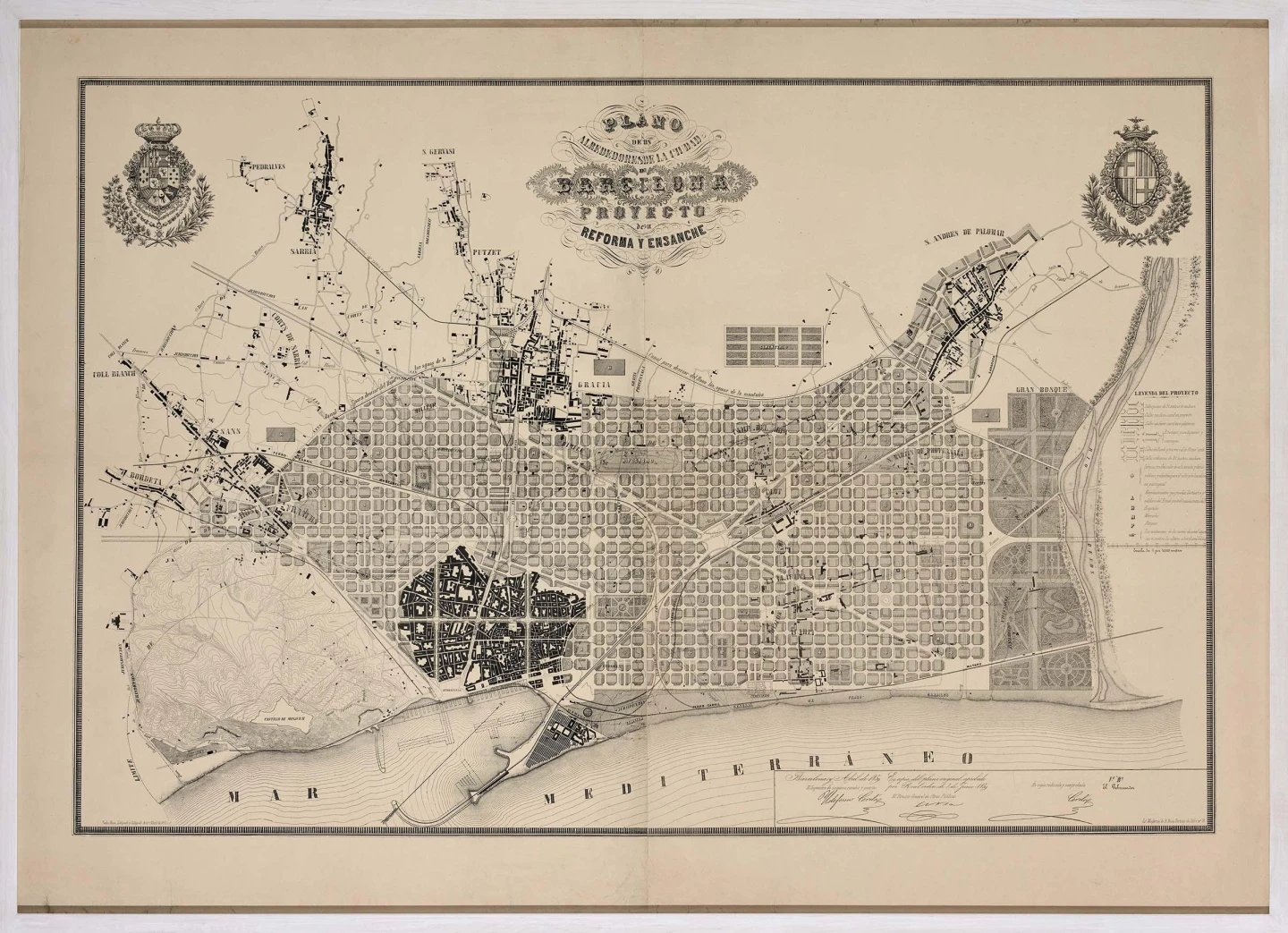
In the late nineteenth century, the European city had become an anachronistic accumulation of buildings which had mostly grown concentrically around an original nucleus that was at once cluttered and stifling. The situation would require a reshaping of the city for a society and way of living that were hitherto unprecedented.
The emergence of new means of transportation and communication, the zoning of the city according to different uses and the proliferation of new leisure habits, such as culture and sport, would be factors considered by architects and theorists like Ildefonso Cerdá, Arturo Soria, Ebenezer Howard and Tony Garnier, among many others. Their studies were based on the objectivity of scientific data and the analytical observation of pre-existing conditions to, thereupon, put forward different ways to develop the modern city.
Out of this context of study and experimentation emerged new forms of working with materials such as iron and glass, both becoming the centrepieces of a new architecture which would, accordingly, have a say in the co-existence of different styles framed within historicism and the avant-garde.
6 artworks


Room 201.04
José Ortiz Echagüe
Room 202.02
New York. Skyscrapers and Modernity