Room 205.01
GATEPAC
Spanish architecture has become part of the European avant-garde through the work of a group of young architects who demanded “hygiene, soundness, comfort, rationality and economy; everything but decoration” from their works, as one of them, José Manuel Aizpurúa, asserted in an article published in La Gaceta Literaria in March 1930, in a similar vein to that which Le Corbusier and Amédée Ozenfant had already advocated. In October of that same year, they gathered in Zaragoza to draft the founding charter of the Group of Spanish Architects and Technicians for the Progress of Contemporary Architecture (GATEPAC).
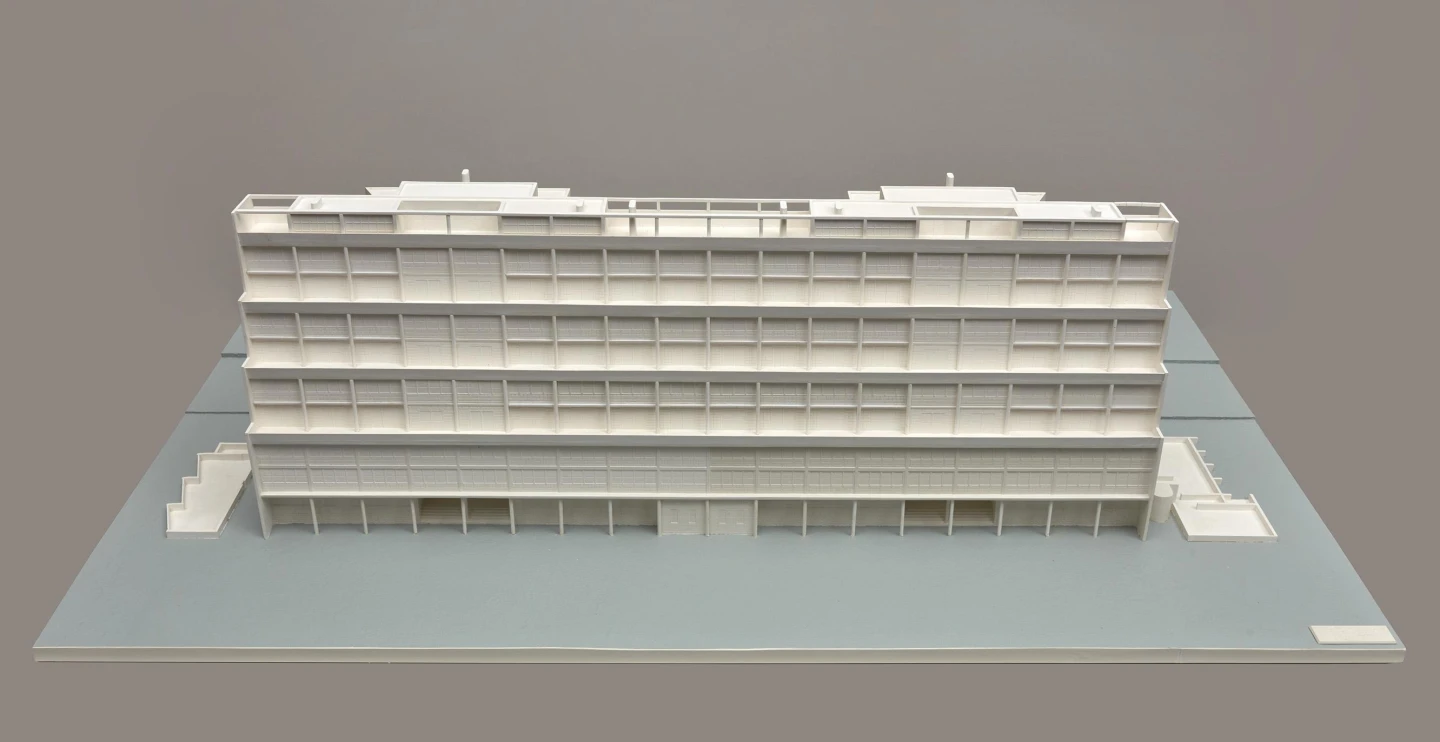
The proclamation of the Second Republic in Spain paved the way for these architects to pursue the common goals they shared with the new administration: mass housing to improve existing living conditions; cultural infrastructures facilitating access to education and the development of society; spaces for workers’ paid holidays — compulsory after the approval of the Employment Contract Law — and hospitals guaranteeing access to healthcare. This would all quickly bring to light the amenities the country urgently required to endow cities with a new formal and ethical dimension.
1 artwork


Room 204.03
After Cubism
Room 205.02
GATEPAC, The Urgency of Facilities