My name is T.J. Demos. I'm visiting Madrid these days for a seminar at the Reina Sofia Studies Center on Gaza and aestheticide. I'm a professor and teacher at the University of California Santa Cruz. I've been there for about eleven years now. Before that, I taught in London for ten years.
My training is in art history and visual culture. I work on contemporary art politics, radical politics and environmental studies and political ecology. I run a center for creative ecologies at the University of California Santa Cruz. That's a place for, or a platform really, for the intersectional study of contemporary art and visual culture… political ecology and politics more broadly. I've been doing that for also about ten years. I'm also a visiting professor at the University of Johannesburg these days. So, I write, I write books, I research on these topics. My most recent book is called Radical Futurisms, where I'm thinking about how artists are imagining an emancipatory future beyond the disaster of the present.
So, there are many reasons to study art history, and some of them interest me more than others. For me, I think the study of history has to do a lot with how we want to intervene in the present and imagine different futures. What kind of stories do we want to tell about the past? What is the reason for doing that? What are the stakes? How might they recall hidden past knowledge of creative experiments in living otherwise that might serve as resources for present political options. I think that's really a crucial approach to art history.
Art history can also be very conservative. It can be about writing histories that tell the stories of the powerful and those who have the privilege and luxury to collect objects as forms of ownership and property to add to their wealth. In this sense, art history can be a handmaiden into the powerful and wealthy. For me, that's the most conservative approach to art history.
I think of my practice of art history as something that cultivates criticality, is dedicated to an emancipatory struggle ultimately. What does it mean, the broad question we might ask, what does it mean to practice art history at a time of environmental breakdown, of political collapse, of genocide and ecocide, the polycrisis that we're living through in the present? What does it mean to dedicate ourselves to the history of art in that context? For me, art represents radical genealogies of practice that are attempting to decolonize, to take down patriarchal power, to contest racism, to challenge the histories of colonization, all of which continue in the present. So how can we think critically with the resources of past generations of artists who have also done this during past moments, say, of European fascisms, during past times of colonization in the Americas, during past forms of environmental and climate violence. We can draw on those resources to build an art history. And there's many people who are trying to do that today. And I count myself among their numbers. How can we draw on these histories to continue to formulate challenges to the gross forms of inequality and forms of social injustice that exist today? So, I think that gives art history a critical and emancipatory mandate. So, it's part of a broader historical study of our collective heritage. And it's a place where we can ask questions about what kind of stories do we want to tell to inspire what kind of futures. And in this way, we can intervene in the present, dedicated to liberation and questions of political, economic, and social emancipation.
Yeah, it is most appropriate to say art histories instead of art history. It's not a monolithic discipline. It itself is internally interdisciplinary. It's contestatory and contradictory. It's a site of struggle, as I mentioned before, between conservative energies and radical ones that are attempting to challenge conditions of inequality and oppression. So yeah, art histories is the more appropriate term to get at the plurality and the heterogenous elements of what the practice means, especially as a discipline that deals with art, which is inherently interdisciplinary. Art is about everything. It's about religion. It's about politics. It's about society, technology, economy, visual appearance, aesthetics. It's about all these things in so many different, even infinite ways. So, it's necessarily interdisciplinary and it's necessarily without limits.
So that the Center for Creative Ecologies attempts to mobilize the generativity or the plurality of these approaches… So, in that sense, creative ecologies, if we start with ecology, ecology is a term that is about relationality. Relationality in the web of life, the human and more than human world, natural world. So creative ecologies is about looking at ecology as a place of creativity, of generative expressivity, that in one way is life, that is what life is. It's continually existing in a state of becoming and developing. So creative ecologies in the sense that I'm using it in the center is looking at practices of creativity as artistic forms, as sites of relationality and becoming and generative types of practices. It's also meant to be, this was my motivation, it's meant to be a place that creates new ecologies through social relationships and interactions that are again, cross or interdisciplinary. So that literally means, you know, thinking about how we can bring different voices together, voices that are within the academy, say from environmental studies and visual culture, within sociology, within anthropology, within the sciences, the biological and physical sciences and more, right? The university is really a pluriversity. It's a site of multiplicity and plurality, but it can also be, as we know, very isolated and rarefied and exclusive even, especially these days and especially in the States where we're experiencing and living through the continuing commodification of education that is making it increasingly a privileged site of learning.
So, the Center for Creative Ecologies is attempting to break down that divide as well through providing and cultivating a place where academics, students, grad students can interact with others who are coming from outside the university. So, community organizers, people who are working in non-governmental organizations or politics more broadly or community members doing stuff like urban gardening or thinking about the politics of justice or they might be environmental and climate justice activists or they might be indigenous decolonial water defenders and so on.
So the center has been a place where I've tried to invite people in to have these kinds of discussions that are open and inclusive, that hopefully provide a model for how to challenge some of these borders, because we're living increasingly, it seems, in this world of enforced and policed borders that are separating people and creating more and more inequalities. These are some of the ways that the center is dedicated to creativity of the possibilities of different ecologies.
Radical Futurisms, my last book, addresses questions of possibility of the future at a time when many of us are experiencing not just the end of history, but it seems the end of the world in multiple ways. The end of democracy, the end of liberal values, the end of an international rules-based order, the end of justice as a meaningful term. The book was written a couple years ago before the current situation of genocide in Gaza. But that situation makes this analysis all the more relevant, I feel. Many people are suggesting this, that what's happened in Gaza, the way it's been enabled by the international order, shows just the complete bankruptcy of international law, of rules-based order, of systems of justice, of human rights, everything that has to do with hundreds of years of liberal democracy, that is now shown to be completely and terribly hypocritical.
And that is clear if we research the origins of modernity, founded in indigenous genocide and colonization and in anti-black transatlantic slavery. Those contradictions are built into the system that we're living in, that we've inherited in the present today, which Gaza is a continuation of in many ways. So, against that very dark backdrop, which invites all sorts of feelings of pessimism and nihilism, I'm looking at, and inspired by, all sorts of artistic practices that are refusing that negativity. The title of the book, Radical Futurisms, is meant to propose radical in the sense of radical politics, anti-capitalism, but also an ecological sense of radical going to the roots of things. As Angela Davis, the black activist and political theorist and teacher writes, radical has to do with going to the structure of things, going beyond superficial analysis, but also going to the roots. So, it draws on an ecological element. But ultimately radical for me involves a necessarily anti-capitalist premise. So, what does it mean to think beyond the conditions of the domination of capitalism today? Futurism comes out of, and also is inspired by, artistic practices like black quantum futurism and other projects like that. There's lots of artistic and political and discursive and performance-based socially engaged practices that are dedicated to thinking about futurity, imagining different kinds of futures. So, there's all these practices internationally that are coming out of these traditions, the traditions of the oppressed, as I cite Walter Benjamin who talks about this in some of his late work, when he was writing at a time of European fascisms in the early 1940s. The traditions of the press for me means traditions that are coming out of anti-capitalist labor and social struggles, anti-racist, Afro-Diasporic struggles, indigenous decolonial struggles.
So, thinking about all these artistic practices that are embedded within these traditions, for me is deeply inspiring and leads to the type of analysis that I do in that book. So, the question of a futurity is, what does it mean to think about the future at the end of the world? But even before we get to that question, we have to ask, what is the end of the world? When did that happen? According to whom? And if you look more into this and research this, it turns out that many people, many communities understand themselves as living beyond the end of the world already. For many indigenous peoples, they consider themselves to be post-apocalyptic already. The end of the world was in 1492, or the end of the world was over the long 16th century and the inauguration of transatlantic slavery. Right, the radical ending of worlds for people living in Central Africa when they were suddenly kidnapped by colonial forces and sold as property across the ocean. This is effectively a world ending and a world beginning for these people.
So, to ask the question what comes after the end of the world is deeply complex. And yet we continue to live through apocalypse today. So, the question, one analytic question is “how can we think history through connecting the dots between these multiple apocalypses? How can we think multiple endings together?” Not as identical, but as differential, yet nonetheless connected in different specific cultural and historical ways.
So Radical Futurisms then is an attempt to think about how artists are taking up politics, ways of thinking and politicizing time itself, to liberate ourselves from a capitalist time, from a racialized time, from forms of temporal oppression, and create new spaces of becoming and being beyond the conditions of the racial colonial capitalists present.
So, as I've been saying, artistic practices like the indigenous artist, the queer indigenous artist TJ Cuthand, who makes films, very much about these ideas that I'm talking about, black quantum futurism; the Otolith Group; Jonas Stahl, the Dutch artist, and many, many more are some of the ones that feature in my book, where I'm challenged to attempt to think along with these artists: What this means and what kind of engaged and non-naive hopefulness is represented by these practices that are again resisting that temptation toward a kind of pessimism? Or even just like an all-pervasive ontological nihilism that exists today? Given the sense of impotency and lack of agency that many of us have in the face of these vast complex global systems of violence that seem to be overtaking life in every way: from technology to social media, to military forms, to the breakdown of international politics and genocidal aggression internationally.
My recent work has addressed the visual conditions that attend to the ongoing genocide in Gaza carried out by Israeli military and enabled by the US in really crucial fundamental ways by the US financial, technological, military and diplomatic aid that is backed up by an international order that has largely supported and been complicit in the genocide. So, the massive killing and violence of Palestinians in Gaza has been accompanied by the systematic destruction of the natural world in Gaza as well. So, that means the bombing of greenhouses, of agricultural fields, of water sources, of any areas of land that can be used to sustain and reproduce life.
We have to recognize, I argue, along with many others, including for instance Forensic Architecture, that ecocide is a modality of genocide in this case. It's not simply about destroying in whole or in part the Palestinian population in Gaza. It's also about destroying Palestinian reproducibility through targeting the larger environment in which Palestinians live and depend on their existence.
Going further, a part of this is how the way in which Israel and its international collaborators, corporations and institutions have targeted the knowledge and representation and visual forms and images and archives about Gaza and its destruction. So that means literally the way the IOF has targeted journalists operating in Gaza. The destruction of journalists is the worst case of this kind of targeted killing in modern history. The killing of journalists in Gaza is more than the killing of journalists in World War I, World War II, Vietnam, Korea, Iraq combined. I mean it's absolutely astounding. In addition, Israel has destroyed all universities, archives, museums, mosques, churches, sites, in other words, of transgenerational knowledge and archives of Palestinian cultural heritage.
So, what this means is that there's the destruction of the representational medium in which Palestinian-ness is known and sensed. The term for this, for me, is aestheticide, the destruction of aesthetics. If we define aesthetics as the organization of sensibility, so how we organize our ability, our collective ability to sense. If we ask that within the Gazan context, how do Palestinians sense, how do they make sense of the world? This ability, this collective ability has itself been targeted and destroyed. This is echoed in international campaigns of censorship and deplatforming and the controlling of speech and representation to the point where anything that attempts to expose these conditions of violence or to use terms like genocide or ecocide, is itself attacked and negated continually and systematically.
So, aestheticide, and I'm thinking here as a visual cultural analyst and historian, is something that comes along with the invention of other terms like scholasticide, the mass killing of those involved in the university system or genocide, there's ecocide. There are other forms: domicide, the destruction of domesticity, of homes, in Gaza. This isn't an abstract rhetoric. For me, the fact is that the conditions in Gaza have come up against the limits of language and our ability to express what's going on. And therefore, we need new words. Maybe these aren't the best words, but they should signal that language is inadequate to describe the enormity of violence in Gaza and what this represents. It's an attack on symbolic systems themselves.
So that aside is something that I offer and I'm thinking with as an analytic tool to understand what's going on in order to say what one vector of destruction is, which is the destruction of Palestinian collective sensibility, as well as now what we're seeing with the proposed real estate speculation and development in Gaza, the destruction of the traces of destruction, right? The erasure of erasure. So that it's like what we're witnessing is the construction of a tabula rasa. So, the whole history of genocide is being itself erased and destroyed.
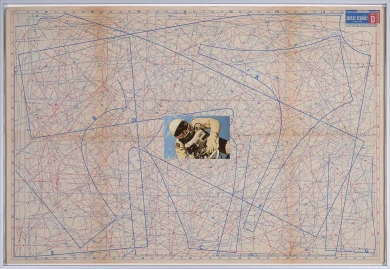
The follow-up point to this is that I want to really emphasize that this project of aestheticide is itself a failure. I want to challenge the completion of this project by saying that there's innumerable instances of collective resistance to this attempted erasure. So I've been looking at Palestinian artists, for instance, Vivien Sansour or Jumana Manna or Emily Jassir or the Eltiqa Collective, coming from Gaza, to look at how Palestinian artists are themselves attempting to mobilize forms of creative expression in order to insist on their testimonies and their expressions of experience of what they've been living through, to insist on a response, even if that ability to respond has been debilitated in profound ways by the military assault.
So, this itself is really a complex field of creative expression and really tenuous approaches to representation because there's no easy ways to represent this kind of trauma. This trauma does violence to language itself. So, in some cases, the way artists and others have attempted to express some of this is through the actual fracturing of language. It's breakdown, even though silence. Silence becomes over-determined and expressive in all sorts of ways of the attack on the symbolic order. So, this is all part of aestheticide. It comes up in some of my recent work, and I continue to think about it and this term.
As we're seeing public speech and free inquiry is itself becoming a casualty of this systemic destruction of a democratic open society. As we're experiencing waves of repression that could be and have been related to the emergence of new modalities of fascism that are using military force. For instance, and lawfare, institutional power, anticipatory obedience to attack speech, including anti-genocide speech, including pro-Palestinian speech, including pro-human rights discourse, LGBTQ+ speech, speech related to environmental and climate justice, speech against warfare and military aggression, speech against capitalism, right? All these modes of oppression… they're really focused within the weaponization of antisemitism.
There is the work, the research of Lara Friedman, who I find very important. She's participated in podcasts and discussions within this new institution called the Institute for the Critical Study of Zionism. This is based in California and New York. It's a really important place for very thoughtful, critical approaches that are resisting this tide of censorship and oppression and attempting to theorize conditions of Zionism as a longstanding logic of settler colonialism, which I think is really important. But for Lara Friedman, she refers to the way antisemitism is being politically instrumentalized as a weapon of mass destruction. So, it's being used as a vector of destruction to target organizations, universities, the media, journals, journalists, academics, right? It's a way if you get accused of anti-Semitism which is often a type of weaponization that is simply attempting to erase and delegitimize critical speech and public discourse. This can really carry dramatic effects. People have been deplatformed. People have lost their jobs. People have been canceled, within the European context, especially within Germany, Germany has its own specific problems with this owing to their history, but also in the States.
So, it's crucial to analyze these conditions and to develop collector resources to challenge it and be able to speak and to say why anti-Zionism is not anti-Semitism, to refuse that suggested collapse, which is itself incredibly dangerous and we might even say is anti-Semitic. The idea that proposes that all Jewish people are supportive without question of Israel is itself a form of stereotyping that is anti-Semitic.
So, I think it's really crucial to deconstruct that formulation and insist on the validity of an anti-Zionist politics that is not anti-Semitic, that is actually ultimately anti-racist. And here I'm following and in solidarity with all of the really important Jewish organizations that are anti-Zionist, like Jewish Voice for Peace, or If Not Now, and many others that have come and courageously stood up to the propaganda of the Zionist Israeli state in challenging these terms and supporting an anti-racist political community across different religions and ethnicities and races. That is really a crucial political struggle to reformulate the public sphere in a way that supports diversity and difference and openness and criticality.
So, as I keep arguing, we have to understand that this is all deeply connected to the larger historical order that we could call in short, say, colonial racial capitalism, in existence for hundreds of years. So, until we radically overturn the system, which we know prioritizes profit and the accumulation of wealth above all else, until we do that, we will live with these incredibly destructive, violent conditions. So, we have to ask, what would it mean to prioritize instead of wealth and profits and property, instead of all that, what if we prioritize relationalities, what many indigenous peoples and communities call right relations, ethical relations between people. Between, for instance, Jews and Muslims. Between people of different races, but also between the human world and the more-than-human world. This is a matter of relationality. Until we create a world that celebrates and prioritizes and centers the intrinsic value of ethical relationality, we are destined to struggle with this incredibly destructive killing machine of capitalism.
So that's ultimately what I think. Those are the stakes of what it means to reconstruct the public sphere at a time when we are seeing that it's part of the logic of fascism to shut down free inquiry and specifically university research, independent studies as well as the way that cultural discourse exists in museums and the spaces of publicness that are increasingly at threat of being privatized and again, turned over to capital and its interests. So, it's a long-term struggle. I'm thinking of the famous lines of the Communist Manifesto: “the history of the world is the history of class struggle”. I think that continues today and I would add, in an intersectional sense, in a way that is necessarily, must be anti-racist, must be anti-colonial. This is the kind of world that is at stake. So, I'm dedicated myself to doing what I can to participate in speaking up against all the threats that exist and insist that that is the ethical principled position to take against these forces of destruction and cancellation and erasure.
In the face of this continued genocide that we're confronting, and this is connected to other forms of mass violence and genocidal conditions, for instance in Sudan, in Yemen, in other places that are continuing to unfold and are connected to this vast logistical infrastructural network of militarism and aggression and political authoritarianism.
The question that I want to ask is “how do we think about the ongoing restructuring of aesthetics and politics and their relational connection?” It's a beginning question that opens onto massive complexity and challenges. So, one way to think about that is by tracing practices of artistic expression. And I'm trying to do that, for instance, by conducting a series of interviews with artists that are coming from and have a relation to the Palestinian situation, including artists that had been based and lived in Gaza. And to ask what they're doing with these conditions, how are they approaching questions of aesthetics and art, not as a site of privileged expression or luxury commodity production or anything like that, but as a site of survival where art is a kind of survival where a claim on humanity can be maintained against the forces of profound dehumanization. So that's one way. Another is to look at how art institutions themselves are threatened with privatization, with capitalist property relations, with increasing pressures from donors, wealthy individuals and collectors to shut down criticality because it might threaten their interests or it might offend their sensibilities when it comes to critiques of Zionism, for instance, or institutional critique or decolonization.
So, we are seeing many instances of this internationally. So, if we ask, “what is the current convergence of aesthetics and politics?” we have to take into account the ongoing colonization of cultural institutions by private capital and its interests. That leads to questions of what area remains and where and how for critical discourse and critical artistic practice. It's ever challenged, also increased. Its urgency can't be greater right now. And then lastly, there's much more to be said but one last point I'll make is we're living at a time of new forms of technology and mediation, which is crucial to current life. Social media and algorithmic governance are really important if we're thinking about aesthetics and politics today. So how is the world of relationality being increasingly mediated by machinery of automation and algorithmic AI technology? Where those forms of technology are also owned by incredibly wealthy billionaires and people with massive resources. We know that the ownership of the means of production in relationship to media is increasingly located in a few hands of wealthy individuals. So, what does that mean? That kind of consolidation of platform capitalism, globally in relationship to media technology? What does that mean for aesthetics and politics and critical discussions, ways of thinking about challenging the system and thinking otherwise about alternative ways of living?
Radio shows, podcasts, independent media organizations are increasingly important as we're seeing legacy media fall increasingly into the hands of these wealthy individuals, like for instance, TikTok being bought by Larry Ellison, a MAGA billionaire, a Zionist, a supporter of Israel. And the structural changes in the media platform that happened as a result of that. So, we're seeing the algorithmic reconfiguration of TikTok with this new acquisition. Or the way, you know, Facebook or Instagram or others in the States, CBS News, you know, the legacy media is completely controlled by ruling class interests. So independent media sources and discussions like this that are happening under the radar or through independent means are so important. So that's a site of struggle and contest within the current order of aesthetics and politics that I would want to point to as well.
There’re many questions here, but maybe that provides some opening into it. Ultimately, we want to say, we want to demand collectively an end to the violence, the end to the killing in Gaza. Say that can be a really concrete question. And that leads then to: How can we contribute to that, even through our limited, humble means that we have each of us individually and collectively at our disposal? How can we mobilize an agitational art? How can we rely on and reinvent conditions of a decolonial, militant image today? How can we engage in institutional critique that can lead to divestment? And boycott and sanction as in BDS, for instance? How can we contribute to an emancipatory visual culture that can put pressure on these questions, both analytically and also in terms of making progress toward shutting down these conditions of oppression and inventing a new world? These are ongoing, massively complex, but urgent questions these days.
RRS Museo Reina Sofia Radio.
![Basel Abbas y Ruanne Abou-Rahme, At Those Terrifying Frontiers Where the Existence and Disappearance of People Fade Into Each Other [En esas fronteras aterradoras donde la existencia y la desaparición de personas se disuelven entre sí], 2019](https://recursos.museoreinasofia.es/styles/small_landscape/public/Colecci%C3%B3n/abbasabourahme.png.webp)