-
Friday, October 7 / Museo Reina Sofía. Nouvel Building, Auditorium 400
Opening session
Communists (Kommunisten, 2014, 70 min., HD archive)
The Algerian War! (La Guerre d'Algérie!, 2014, 2 min., HD archive)
With introduction of Giorgio Passerone, Christophe Claver and the curators of the series. Due to health reasons, the presence of Jean-Marie Straub is canceled.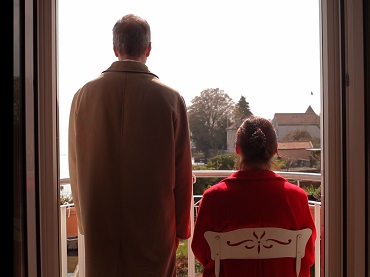
-
Saturday, October 8 / Museo Reina Sofía, Auditorio Sabatini
Session 1
Chronicle of Anna Magdalena Bach (Chronik der Anna Magdalena Bach, 1968, 93 min., HD archive)
Introduction: José Luis Téllez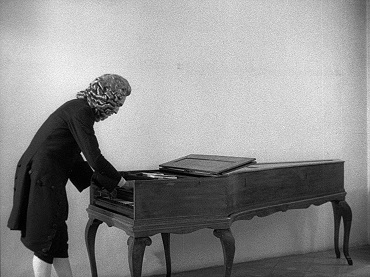
-
Sunday, October 9 and Tuesday, October 25 / Filmoteca Española, Cine Doré. Sala 1
Sesión 2
Machorka-Muff (1963, 18 min., DCP)
Not Reconciled or Only Violence Helps Where Violence Rules (Nicht versöhnt oder Es hilft nur Gewalt, wo Gewalt herrscht, 1965, 55 min., DCP)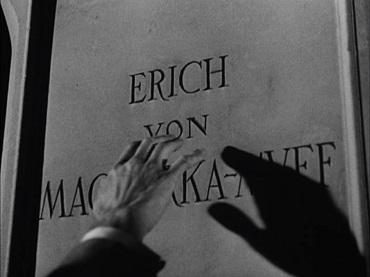
-
Tuesday, October 11 - 9:30 p.m. and Sunday, October 16, 5:30 p.m. / Filmoteca Española, Cine Doré. Sala 1
Session 3
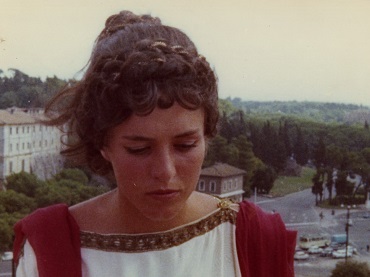
Eyes Do Not Want to Close at All Times or Perhaps One Day Rome Will Permit Herself to Choose in Her Turn (Othon) (Les yeux ne veulent pas en tout temps se fermer ou Peut-être qu'un jour Rome se permettra de choisir à son tour (Othon), 1970, 88 min., DCP)
-
Thursday, October 13 / Museo Reina Sofía, Sabatini Building, Auditorium
Session 4
The Bridegroom, the Actress and the Pimp (Der Bräutigam, die Komödiantin und der Zuhälter, 1968, 23 min., HD archive)
Every Revolution Is a Throw of the Dice (Toute révolution est un coup de dés, 1977, 10 min., HD archive)
Introduction: Paulino Viota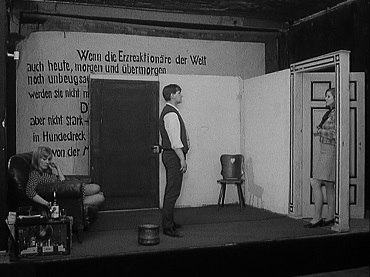
-
Friday, October 14 / Museo Reina Sofía, Sabatini Building, Auditorium
Session 5
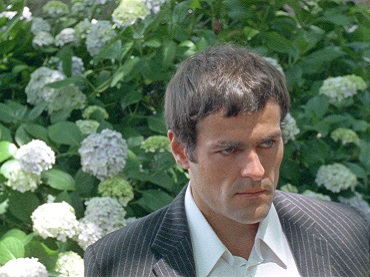
History Lessons (Geschichtsunterricht, 1972, 85 min., HD archive)
-
Saturday, October 15 / Filmoteca Española, Cine Doré. Sala 1
Session 6
Introduction to Arnold Schoenburg’s “Accompaniment to a Cinematic Scene” (Einleitung zu Arnold Schoenbergs Begleitmusik zu einer Lichtspielscene, 1973, 15 min., DCP)
Moses and Aaron (Moses und Aron, 1975, 105 min., DCP)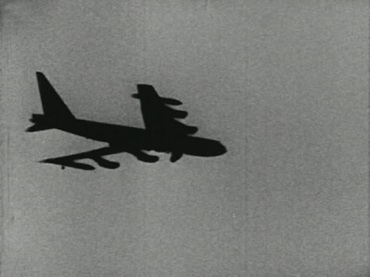
-
Wednesday, October 19 - 7:30 p.m. and Sunday, October 23 - 9:30 p.m. / Filmoteca Española, Cine Doré. Sala 1
Session 7
Jackals and Arabs (Schakale und Araber, 2011, 11 min., DCP)
Fortini/Cani (Fortini/Cani, 1976, 83 min., DCP)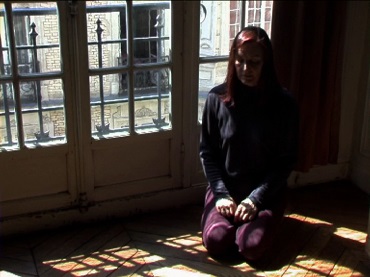
-
Thursday, October 20 / Museo Reina Sofía, Sabatini Building, Auditorium
Session 8
From the Cloud to the Resistance (Dalla nube alla resistenza, 1979, 105 min., HD archive)
Introduction: Ana Useros and Miriam Martín
-
Friday, October 21 / Museo Reina Sofía, Sabatini Building, Auditorium
Session 9
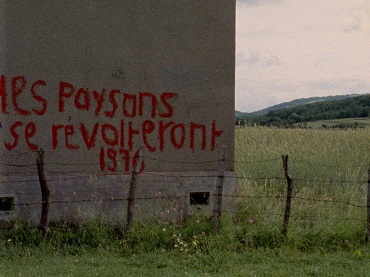
Too Early, Too Late (Zu früh, zu spät — Trop tôt, trop tard — Troppo presto, troppo tardi, 1981, 100 min., HD archive)
-
Saturday, October 22 - 7:00 p.m. and Tuesday, November 22 - 7:30 p.m. / Filmoteca Española, Cine Doré. Sala 1
Session 10
En Rachâchant (1983, 7 min., 35 mm)
Class Relations (Klassenverhältnisse, 1984, 130 min., 35 mm)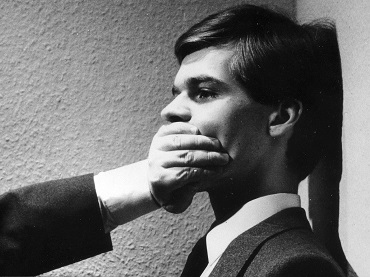
-
Wednesday, October 26. Filmoteca Española, Cine Doré. Sala 2, 8:00 p.m. and Sunday, October 30, Sala 1, 7:30 p.m.
Session 11
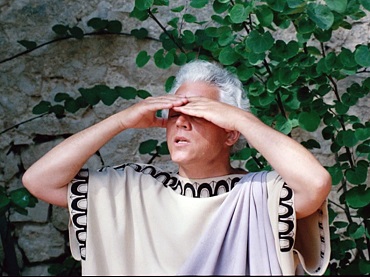
The Death of Empedocles or When the Green of the Earth Will Glisten for You Anew (Der Tod des Empedokles oder Wenn dann der Erde grün von neuem euch ergläntz, 1987, 132 min., 35 mm)
-
Thursday, October 27 / Museo Reina Sofía, Sabatini Building, Auditorium
Session 12
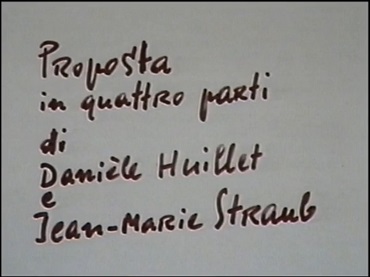
Proposition in Four Parts (Proposta in quattro parti, 1985, 41 min., HD archive)
-
Friday, October 28 / Museo Reina Sofía, Sabatini Building, Auditorium
Session 13
Cézanne. Conversation with Joachim Gasquet (Cézanne. Dialogue avec Joachim Gasquet, 1990, 51 min., 35 mm)
A Visit to the Louvre (Une visite au Louvre, 2004, 48 min., 35 mm)
Introduction: Natalia Ruiz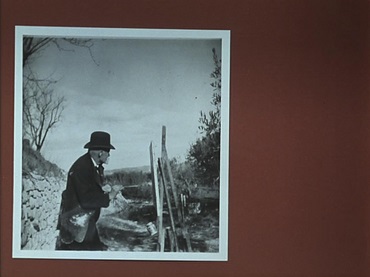
-
Saturday, October 29. Filmoteca Española, Cine Doré. Sala 1 - 7:30 p.m. and Tuesday, November 8, Sala 2 - 9:00 p.m.
Session 14
Black Sin (Schwarze Sünde, 1989, 42 min., 35 mm)
Introduction: Manuel Asín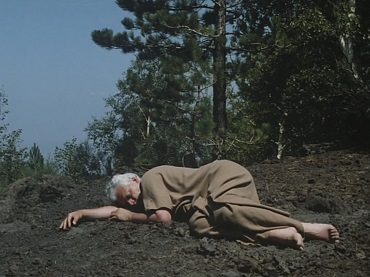
-
Wednesday, November 2 - 5:30 p.m. / Filmoteca Española, Cine Doré. Sala 1 and Sunday, November 6 - 8:00 p.m. / Filmoteca Española, Cine Doré. Sala 2
Session 15
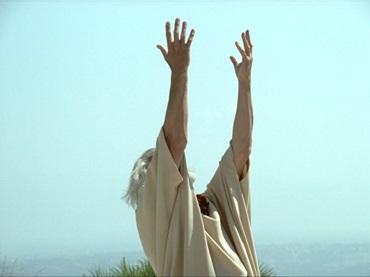
The Antigone of Sophocles After Hölderlin’s Translation Adapted for the Stage by Brecht 1948 (Die Antigone des Sophokles nach der Hölderlinschen Übertragung für die Bühne bearbeitet von Brecht 1948, 1992, 100 min., 35 mm)
-
Thursday, November 3 / Museo Reina Sofía, Sabatini Building, Auditorium
Session 16
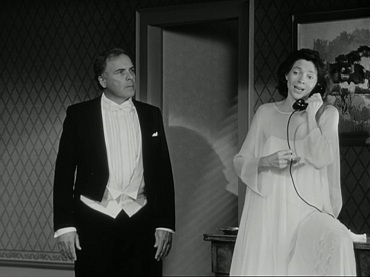
From Today until Tomorrow (Von heute auf morgen, 1997, 62 min., 35 mm, original version with French subtitles)
-
Friday, November 4 / Museo Reina Sofía, Sabatini Building, Auditorium
Session 17
Sicilia! (1998, 66 min., 35 mm, original version with French subtitles)
Introduction: Santos Zunzunegui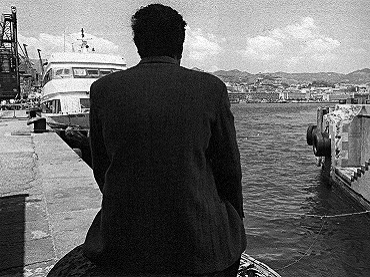
-
Saturday, November 5 - 7:00 p.m. and Tuesday, November 15 - 7:30 h / Filmoteca Española, Cine Doré. Sala 1
Session 18
The Wayfarer (Il viandante, 2001, 5 min., DCP)
The Knife Sharpener (L’arrotino, 2001, 7 min., DCP)
Workers, Peasants (Operai, contadini, 2001, 123 min., 35 mm)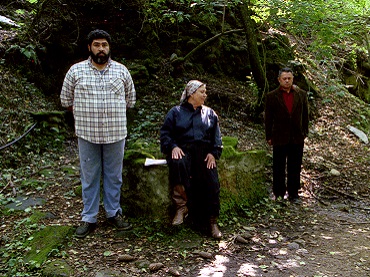
-
Tuesday, November 8 - 7:30 p.m. and Sunday, November 13 - 9:30 p.m. / Filmoteca Española, Cine Doré. Sala 1
Session 19
The Return of the Prodigal Son (Il ritorno del figlio prodigo, 2003, 29 min., 35 mm original version with French subtitles)
Humiliated: That Nothing Produced or Touched by Them, Coming From their Hands, Proves Free from the Claim of Some Stranger (Workers, Peasants— Continuation and End) (Umiliati: che niente di fatto o toccato da loro, di uscito dalle mani loro, risultasse esente dal diritto di qualche estraneo (Operai, contadini — seguito e fine), 2003, 35 min., 35 mm, original version with French subtitles)
Dolando (2003, 7 min., DCP)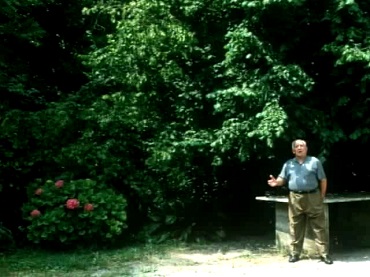
-
Thursday, November 10 / Museo Reina Sofía, Sabatini Building, Auditorium
Session 20
Incantati (2003, 6 min., HD archive)
These Encounters of Theirs (Quei loro incontri, 2006, 68 min., 35 mm)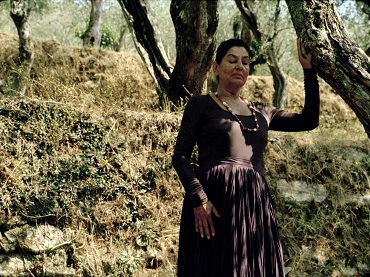
-
Friday, November 11 / Museo Reina Sofía, Sabatini Building, Auditorium
Session 21
Europa 2005, 27 October (Europa 2005, 27 octobre, 2006, 11 min., HD archive)
Joachim Gatti (2009, 1 min. 30 sec., HD archive)
Corneille-Brecht or Rome, the Only Object of My Resentment (Corneille-Brecht ou Rome, l'unique objet de mon resentiment, 2009, 27 min., HD archive)
Oh, Supreme Light (O somma luce, 2010, 18 min., HD archive)
Introduction: Jenaro Talens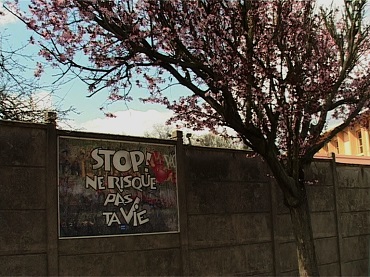
-
Saturday, November 12 / Filmoteca Española, Cine Doré. Sala 1
Session 22
Artemide’s Knee (Le Genou d'Artémide, 2008, 26 min., 35 mm)
The Witches / Women Among Themselves (Le streghe — Femmes entre elles, 2009, 21 min., 35 mm)
The Inconsolable One (L'Inconsolable, 2011, 15 min., DCP)
The Mother (2012, 19 min., DCP)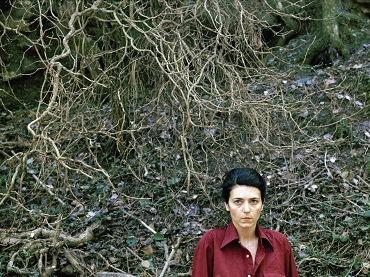
-
Wednesday, November 16 - 7:30 p.m. and Sunday, November 20 - 15:30 p.m. / Filmoteca Española, Cine Doré. Sala 1
Session 23
Lothringen! (1994, 21 min., 35 mm)
Itinerary of Jean Bricard (Itinéraire de Jean Bricard, 2008, 40 min., 35 mm)
An Heir (Un héritier, 2011, 20 min., DCP)
Concerning Venice (History Lessons) (À propos de Venise (Geschichtsunterricht), 2014, 23 min., DCP)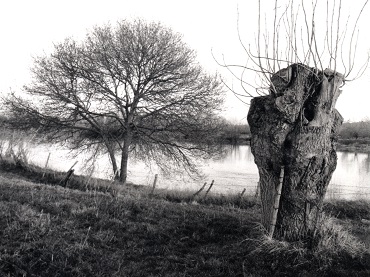
-
Thursday, November 17 / Museo Reina Sofía, Sabatini Building, Auditorium
Session 24
A Tale by Michel de Montaigne (Un conte de Michel de Montaigne, 2013, 34 min., HD archive)
Dialogue of Shadows (Dialogue d'ombres, 2014, 28 min., HD archive)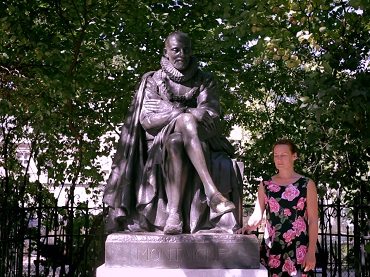
-
Friday, November 18 / Museo Reina Sofía, Sabatini Building, Auditorium
Session 25
Communists (Kommunisten, 2014, 70 min., HD archive)
The Algerian War! (La Guerre d'Algérie!, 2014, 2 min., HD archive)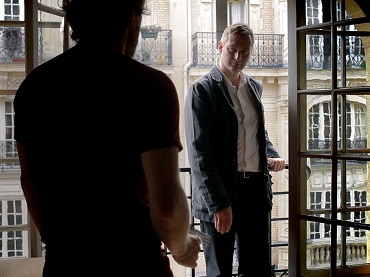
-
Saturday, November 19 - 7:30 p.m. and Tuesday, November 22, 10:00 p.m. / Filmoteca Española, Cine Doré. Sala 1
Session 26
The Aquarium and the Nation (L’Aquarium et la nation, 2015, 31 min., DCP)
Introduction: Albert Serra (November 19 only)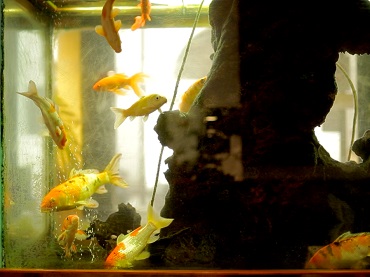
Jean-Marie Straub and Danièle Huillet
To Make the Revolution Also Means to Put Back Into Place Things that Are Very Ancient But Forgotten
Held on 07, 08, 09, 10, 13, 14, 15, 16, 17, 19, 20, 21, 22, 23, 24, 26, 27, 28, 29, 31 Oct, 02, 03, 04, 05, 06, 07, 10, 11, 12, 14, 16, 17, 18, 19, 20, 21 Nov 2016
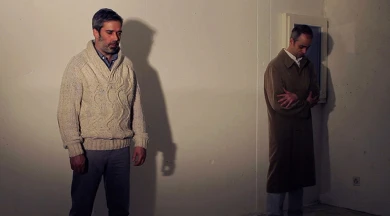
Museo Reina Sofía presents, in collaboration with Filmoteca Española, a comprehensive retrospective on the film-makers Jean-Marie Straub and Danièle Huillet. The series, comprising works spanning from 1962 to the present day, reflects one of the most cohesive and relevant film projects in the 20th century, whereby cinema is both an artistic form and a way of politically bursting forth in the present. Engaging in dialogue with Jean-Marie Straub, the series includes new translations of the vast majority of the films, original format screenings, remastered copies, a significant number of premieres in Spain, and a new publication featuring essays on the film-makers.
Jean-Marie Straub and Danièle Huillet are a key reference point in the field of cinema and contemporary art. Distantly inseparable in one part of the French Nouvelle Vague (Rivette, Godard, Moullet) and on the margins of New German Cinema, the production of their early films was divided between Germany, Italy and France, characterising a filmography shot in three countries and in different languages. This trait would not only distinguish the scope of their work in the aesthetic and political debates at the time, it would also set out a profound reflection on history, identity and European borders.
The poetics of Straub-Huillet adhere to the technical origins of film, whilst also readying us for a new relationship with the world’s sounds and images. Their work, like that of those they greatly admired - Cézanne, Griffith, Mallarmé, Chaplin and Schoenberg - opens up new pathways. Both figure among those to have obdurately reformulated what a new art, an art that starts, could become, while retracing a brief history of film before moving back to the point that is transformed in its inception. In the origins of their films we find artistic works – dramas, novels, music, music scores and paintings – rather than scripts, works that the directors reappropriate, uproot from their cultural contexts (Classical Antiquity, the Ancien Régime, the French Revolution, the Paris Commune, post-war Europe…), and place in the present as a critical event; they are destined not to be translated into a new language, but to be received and interpreted as an emancipatory tool for their new audiences. In the films of Straub-Huillet texts, works and images form a sequence that describes a revolutionary pedagogy of culture and history throughout time.
Following the death of Danièle Huillet in 2006, Jean-Marie Straub continues to work, upholding filmic poetics such as rupture and revelation, with his recent films, some of which will be shown for the first time in Spain in this film season. These works demonstrate social conflicts, citizen repression and the violence of power as they continue to explore the limits of representation on a political and artistic level.
In collaboration with
Filmoteca Española
Curatorship
Chema González and Manuel Asín
Itinerary
CGAI-Filmoteca de Galicia (December 29, 2016 - February 22, 2017)
TABAKALERA - Centro Internacional de Cultura Contemporánea, Donostia / San Sebastián (January 13 - March 31, 2017)
Filmoteca Cantabria (August 30, 2017 - October 1, 2017)
La Filmoteca - Institut Valencià de Cultura (January 9, 2018 - February 7, 2018)
NUMAX, S. Coop. Galega (February 6, 2018 - December, 2018)
Organised by
Museo Reina Sofía
Itinerancies
CGAI, Centro Galego de Artes da Imaxe
29 December, 2016 - 22 February, 2017
Tabakalera
13 January, 2017 - 31 March, 2017
La Filmoteca - Institut Valencià de Cultura
9 January, 2018 - 7 February, 2018
![Miguel Brieva, ilustración de la novela infantil Manuela y los Cakirukos (Reservoir Books, 2022) [izquierda] y Cibeles no conduzcas, 2023 [derecha]. Cortesía del artista](https://recursos.museoreinasofia.es/styles/small_landscape/public/Actividades/ecologias_del_deseo_utopico.jpg.webp)
![Ángel Alonso, Charbon [Carbón], 1964. Museo Reina Sofía](https://recursos.museoreinasofia.es/styles/small_landscape/public/Actividades/perspectivas_ecoambientales.jpg.webp)
Más actividades
Difficulty. Forms and Political Effects of Deviation in Writing and Contemporary Art
23 February – 14 December 2026 – Check programme
Difficulty. Forms and Political Effects of Deviation in Writing and Contemporary Art is a study group aligned towards thinking about how certain contemporary artistic and cultural practices resist the referentiality that dominates the logics of production and the consumption of present-day art. At the centre of this proposal are the concepts of difficulty and deviation, under which it brings together any procedure capable of preventing artistic forms from being absorbed by a meaning that appears previous to and independent from its expression. By ensuring the perceptibility of their languages, difficulty invites us to think of meaning as the effect of a signifying tension; that is, as a productive and creative activity which, from the materiality of art objects, frees aesthetic experience from the representational mandate and those who participate in it from the passiveness associated with tasks of mimesis and decoding.
The economy of the referential norm translates the social logic of capitalism, where insidious forms of capturing subjectivity and meaning operate. In the early 1980s, and adopting a Marxist framework, poet Ron Silliman highlighted how this logic entailed separating language from any mark, gesture, script, form or syntax that might link it to the conditions of its production, rendering it fetichised (as if without a subject) and alienating its users in a use for which they are not responsible. This double dispossession encodes the political strategy of referential objectivity: with no subject and no trace of its own consistency, language is merely an object, that reality in which it disappears.
The political uses of referentiality, more sophisticated today than ever before, sustain the neoliberal-extractivist phase of capitalism that crosses through present-day societies politically, economically and aesthetically. Against them, fugitive artistic practices emerge which, drawing from Black and Queer studies and other subaltern critical positions, reject the objective limits of what exists, invent forms to name what lies outside what has already been named, and return to subjects the capacity to participate in processes of emission and interpretation.
Read from the standpoint of artistic work, the objective capture of referentiality may be called transparency. Viewed from a social contract that reproduces inequality in fixed identity positions, transparent in this objectivity are, precisely, the discourses that maintain the status quo of domination. Opposite the inferno of these discourses, this group aims to collectively explore, through deviant or fugitive works, the paradise of language that Monique Wittig encountered in the estranged practices of literature. For the political potency of difficulty — that is, its contribution to the utopia of a free language among equals — depends on making visible, first, its own deviations; from there, the norm that those deviations transgress; and finally, the narrowness of a norm which in no way exhausts the possibilities ofsaying, signifying, referring and producing a world.
From this denouncement of referential alienation, fetishisation and capture, Difficulty. Forms and Political Effects of Deviation in Writing and Contemporary Art turns its attention to the strategies of resistance deployed by contemporary artists and poets. Its interest is directed towards proposals as evidently difficult or evasive as those of Gertrude Stein, Lyn Hejinian, Theresa Hak Kyung Cha, Kameelah Janan Rasheed, Kathy Acker, María Salgado and Ricardo Carreira, and as seemingly simple as those of Fernanda Laguna, Felix Gonzalez Torres and Cecilia Vicuña, among other examples that can be added according to the desires and dynamics of the group.
The ten study group sessions, held between February and December, combine theoretical seminars, work with artworks from the Museo Reina Sofía’s Collections and exhibitions, reading workshops and public programs. All these formats serve as spaces of encounter to think commonly about certain problems of poetics — that is, certain political questions — of contemporary writing and art.
Difficulty. Forms and Political Effects of Deviation in Writing and Contemporary Art inaugurates the research line Goodbye, Representation, through which the Museo Reina Sofía’s Studies Directorship seeks to explore the emergence of contemporary artistic and cultural practices which move away from representation as a dominant aesthetic-political strategy and redirect their attention toward artistic languages that question the tendency to point, name and fix, advocating instead for fugitive aesthetics. Over its three-year duration, this research line materializes in study groups, seminars, screenings and other forms of public programming.

CLINIC 2628. A Community of Writing and Research in the Arts
February – October 2026
Clinic 2628 is a project which supports and brings together writings which stem from the intention to offer a space and sustainable time for research work in art and culture. Framed within an academic context which is increasingly less receptive to the forms in which thinking happens and is expressed, the aim is to rescue the academic from its neoliberal trappings and thus recover the alliance between precision and intuition, work and desire. A further goal is to return writing to a commons which makes this possible through the monitoring of processes and the collectivisation of ideas, stances, references and strategies.
The endeavour, rooted in a collaboration between the Museo Reina Sofía’s Studies Directorship and the Artea research group, via the i+D Experimenta project, is shaped by three annual editions conceived as spaces of experimentation, discussion and a demonstration of writings critical of what is put forward by today’s academia.
What forces, forms and processes are at play when writing about art and aesthetics? In academia, in museums and in other cultural institutions, the practice of writing is traversed by productivist logics which jeopardise rhythms of research and experimentation. The imposition of both scientism inherent in the structure of “the paper” and the quantifying of results which demand a criterion of quality and visibility sterilise and smoothen, from the outset, the coarseness that is particular to writing understood from the concrete part of language: phonic, graphic, syntactic and grammatical resistance connecting the language user to the community the language unites and activates. They also sterilise the roughness enmeshed in the same desire to write, the intuitive, clear and confusing pathways that once again connect the writer to those reading and writing, participating in a common good that is at once discovered and produced.
The progressive commercialisation of knowledge propelled by cognitive capitalism moves further away from the research and production of knowledge in artworks and artistic languages and practices. The work of curators and archive, criticism, performances and essays formerly saw a horizon of formal and emotional possibilities, of imagination that was much broader when not developed in circumstances of competition, indexing and impact. Today, would it be possible to regain, critically not nostalgically, these ways; namely, recovering by forms, and by written forms, the proximity between art thinking and its objects? How to write in another way, to another rhythm, with no more demands than those with which an artwork moves towards different ways of seeing, reading and being in the world?
Cultural Work
Thursday, 12 February 2026 – 5:30pm
This series is organised by equipoMotor, a group of teenagers, young people and older people who have participated in the Museo Reina Sofía’s previous community education projects, and is structured around four themed blocks that pivot on the monstrous.
Session number two looks to approach film as a place from which cultural work is made visible and processes of production engage in dialogue with artistic creation. From this premise, the session focuses on exploring how audiovisual content is produced, assembled and distributed, from the hands that handle the images to the bodies that participate in its circulation. The aim is to reflect on the invisible effort, precarity and forms of collaboration that uphold cultural life, that transform the filmic experience into an act that recognises and cares for common work.
![Basel Abbas y Ruanne Abou-Rahme, At Those Terrifying Frontiers Where the Existence and Disappearance of People Fade Into Each Other [En esas fronteras aterradoras donde la existencia y la desaparición de personas se disuelven entre sí], 2019](https://recursos.museoreinasofia.es/styles/small_landscape/public/Colecci%C3%B3n/abbasabourahme.png.webp)
Gaza and Aestheticide
Tuesday February 10, 2026 – 16:00 h
This seminar examines the systematic destruction of Palestinian collective sensibility — what we might call “aestheticide” — that has accompanied Israel’s genocide and ecocide in Gaza, and considers the conditions of artistic practice in its aftermath. Over more than two years, the demolition of universities, archives, museums, and libraries has not only erased cultural and intellectual infrastructure but has also targeted the very possibility of representation itself. The destruction of a people has been accompanied by the destruction of their image, their history, and their capacity to be known: reportage, scholarship, and cultural memory have been deliberately undermined, with media institutions, universities, and museums often complicit in this repression. Gaza consequently functions as a rehearsal space for a possible global future — of fascism, post-liberal authoritarianism, militarized borders, and AI-enabled warfare —, a laboratory for an emerging world order. What, then, becomes of critical analysis and resistance under these conditions? And what becomes of aesthetics and politics?
This three-hour seminar engages in dialogue with a broader line of work on the climate emergency and decolonial perspectives developed within the Museum of the Commons project (2023–2026) of the L’Internationale network, of which the Museo Reina Sofía is a member; as well as with some of the questions that animate the study group Aesthetics of Peace and Desertion Tactics. Finally, it is also embedded in a wider strategy of support for and commitment to the artistic and discursive practices of Palestinian artists and cultural practitioners, most clearly reflected in the TEJA network.
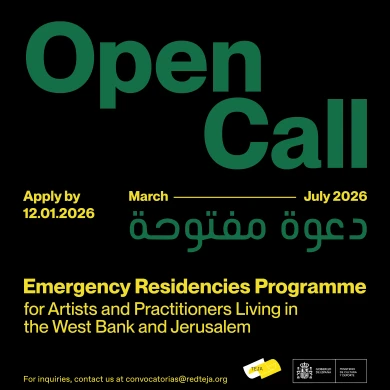
TEJA 2026. Open Call for Emergency Art Residencies
Proposal submission until 12 January, 2026
TEJA / Red de espacios culturales en apoyo a situaciones de emergencia [Network of Cultural Spaces in Support of Emergency Situations] has the mission to promote transnational cooperation by offering temporary art residencies to artists and cultural practitioners who find themselves in complex socio-political situations in their countries of origin. During their stay in Spain, residents receive accommodation, legal and psychological counseling, and access to a network of organizations and professionals with whom they can share, develop, and continue with their creative projects. The goal is to provide a safe and stimulating environment where artists can continue their work despite adverse circumstances and generate dialogue spaces that ensure freedom of expression through joint activities both in Spain and with international collaborators.
During 2026, TEJA hosts three new residencies, each lasting three months, dedicated to supporting artists and cultural practitioners residing in the West Bank and Jerusalem. In addition, in the second half of the year, TEJA hosts three additional residencies for Gazan artists, which are offered by invitation (as Spain is currently unable to facilitate evacuations from Gaza, these invitations are coordinated through France). These residencies aim to provide a stable, creative environment and foster artistic exchange in the face of ongoing adversities. Through this new program, TEJA reaffirms its commitment to amplifying Palestinian voices and empowering artists as they navigate these turbulent times.
The selection is carried out by the TEJA network in close collaboration with each hosting partner. This year the hosting partners are: La Escocesa (Barcelona), hablarenarte / Planta Alta (Madrid), Espositivo (Madrid), Institute for Postnatural Studies (Madrid), Casa Árabe (Córdoba). The selection prioritizes the artist’s personal and professional situation first, and then the alignment with the practices and themes of the hosting spaces. Proposal submission deadline is January 12th, 2026, 23:59 h.