-
Friday, 15 March 2024 Nouvel Building, Auditorium 200
Day I
Tickets6pm Introduction
— Conducted by Sarahi Bolekio (SOS Racismo Madrid), Sara Buraya Boned (Museo Reina Sofía, Museo Situado), Julissa Jáuregui (ActionAid Alliance for Solidarity) and Solanyely Sánchez (Festival of Anti-racist Culture)6:30pm Museums and Ethno-racial Diversity
A discussion on the key role of museums in promoting inclusion and equality, as well as the importance of involving ethno-racial communities in creating museographic content.
— With Alejandro Flórez Aguirre, Yeison F. García López, Mercedes Roldán Sánchez and Manuel Segade. Supported by: Andrea Pacheco8pm “Sabia tierra” Respeta la migración (“Wise Earth” Respect Migration)
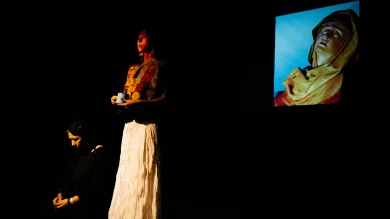
A dance and theatre piece which addresses the reality facing migrant people and how colonialism has influenced their lives. The work stems from support for the State campaign for the extraordinary regularisation of migrant people in Spain (#RegularisationNow).
— By the Arte sin frontera company -
Saturday, 16 March 2024 Nouvel Building, Protocol Room
Day II
Tickets11am Anti-racist Podcasts
A discussion that examines the role of podcasts in the fight against racism, emphasising awareness-raising strategies and experiences and anti-racist action in this medium.
— With Sara Bourehiyi and Maria Bennouna Rubia (Amigas y té), Ouyang Zhu and Jun Zheng (Generación banana) ad Frank T (No hay negros en el Tíbet). Supported by: Paula Guerra Cáceres12:30pm Dialogue between Anti-racist Cultural Initiatives
A space from which to share and reflect upon the impact and challenges of these initiatives in the fight for equality and social justice.
— With Sandra Carmona (Altramuz Editorial), Amal Hussein (Espacio Afro, Manual Antirracista), Paola Larco Muñoz (Mujeres, voces y resistencia and the Aquí estamos, no nos fuimos, no nos vamos fanzine) and Marcela Rodríguez Mesía (“Sudakasa” project). Supported by: Solanyely Sánchez2pm Community Meal
A collaborative, community-centred culinary experience.
— With Aires de Alondra (Network of Latin American Women) -
Saturday, 16 March 2024
Life Tours around the Collection
Visits to the Collection by mediators from the Aissatou Ndiaye School of Situated Mediation in Darija, Wolof, Bengali and Spanish.
-
Saturday, 16 March 2024 Nouvel Building, Auditorium 400
The Diasporic Gaze
TicketsScreening of the short films La Brecha (2023), by Rob Maldonado, and Ariel Heredia’s Janeth (2023), followed by a conversation to reflect on the experience of diaspora and its representation in contemporary film.
— With Ariel Heredia and Rob Maldonado. Supported by: Claudia Claremi -
Saturday, 16 March 2024 Nouvel Building, Auditorium 400
Resonanciaserpiente
TicketsA performative experience which explores the concept of “the cave” as a symbol of healing and protection, arising in response to reflections on necropolitics. Moreover, it seeks to dissipate borders and physical distances, shifting the “I” to “We are” as a collective echo.
— With Colectivo Chakiñan Mutante
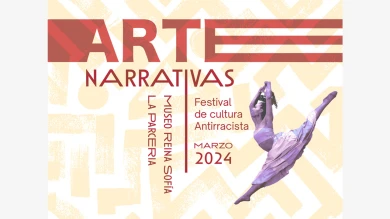
Ariel Antonio Sosa Urquía, poster for the Festival of Anti-racist Culture, 2024
Held on 15, 16 Mar 2024
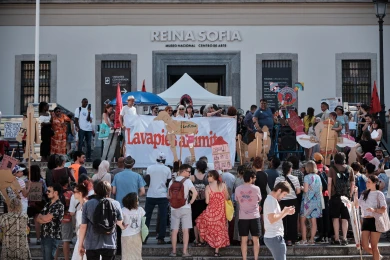
Since 2019, the Festival of Anti-racist Culture — an initiative between SOS Racismo Madrid and the ActionAid Alliance for Solidarity (a member of the Museo Situado Assembly in this edition) — has sought to give prominence to racialised and migrant artists who, from different artistic disciplines such as theatre, literature, dance and the visual arts, denounce discrimination, assert their resilience and advocate inclusion. This particular edition, in collaboration with the Museo Reina Sofía and La Parcería, is carried out within the framework of the International Day for the Elimination of Racial Discrimination, and is entitled ARTEnarrativas (ARTnarratives) to underline the importance of narratives in the fight against racism and xenophobia.
By way of discussions, screenings, visits to the Museo and stage pieces, the festival substantiates the visual arts, theatre, writing, the podcast and the fanzine as key tools to imagine and build inclusive cultural spaces for the realities racialised people face, and to steadfastly bring about communal enjoyment, reflection and laughter and promote co-existence and social participation.
Organised by
Collaboration
Madrid City Council
Participants
Aires de Alondra is a Peruvian family venture that works to promote and disseminate traditional food, conveying authentic flavours from their places of origin, and the places where they have migrated and travelled. They offer food they like to eat at home using seasonal ingredients and local products, putting forward gastronomy as an instrument of dialogue and care between people.
Amigas y té is a podcast hosted by Sara Bourehiyi and Maria Bennouna Rubia, who aim to talk about their reality as racialised people and the things that happen to them. In their words: “We don’t look to be something general, nor do we seek to be taken as a universal example. We are just one further example. One of the thousands of realities that racialised people in Spain experience”. Behind the production of this podcast is Leilani Tanimoto (video and image technician) and Ricardo Quesada (sound technician).
Arte sin frontera is an internationalist, ecofeminist, anti-species, decolonial and Indigenist collective that came into being in Madrid in 2005. Through art, it defends the rights to Earth and justice. At this festival, they present “Sabia tierra” Respeta la migración (“Wise Earth” Respect Migration), a dance and theatre piece performed by Ada Saliou (dancer, choreographer and dance teacher) and Mayaymara Behoteguy Chávez (an international dancer who began her dance studies in Bolivia).
Sarahi Bolekio is the chairperson of SOS Racismo Madrid. Specialising in anti-racism, gender, migration and social justice, she holds a degree in International Relations from the Rey Juan Carlos University in Madrid and an MA in African Studies and International Relations from the Autonomous University of Madrid. She is currently a field specialist in the Union of Family Associations.
Sara Buraya Boned coordinates the Museo Reina Sofía’s Tentacular Museum Area and is a member of the Museo Situado Assembly.
Sandra Carmona is an illustrator and educator. As a gypsy, mixed-race and lesbian woman, she devotes much of her professional work to illustrating social themes and to denouncing injustice through art. In 2019, she created Altramuz Editorial, a Romani publishing house situated at the heart of creating relevant narratives, whereby all works are written, narrated, illustrated and translated by people who are part of Diversity.
Chakiñan Mutante is a collective, made up of Rob Maldonado, Ana María Serpa and Andrés Vera, which works to shine a light on and challenge injustices affecting the Global South, particularly migrants, dissidents and racialised people, creating a space of healing, transformation and collective construction through action art and profound reflection. Their aim is to unite Abya Yala transdisciplinary creatives to explore and transform society.
Claudia Claremi is an artist and film-maker with a degree in Documentary Film from the International Film School of San Antonio de los Baños in Cuba and in Fine Arts from the University of the Arts, London. Her films have participated in festivals such as the International Film Festival Rotterdam, the Ann Arbor Film Festival, Raindance, the International Film Festival of Guadalajara and the International Short Film Festival Oberhausen. She currently develops different photography and moving image projects, most notably the series Amnesia colonial (2012–2021) and La memoria de las frutas (2015-2023).
Alejandro Flórez Aguirre is the technical coordinator of Proyecto Museo Afro de Colombia, and specialises in management and cultural management, as well as being a social communicator and journalist. He has worked on strategic communication, implementing public policies and project management in Colombia’s culture sector, and has experience in managing processes with all artistic practices, in both public and private entities.
Yeison F. García López is a political scientist, activist and cultural manager who identifies as Afro-Colombian and Afro-Spanish. He earned a degree in Political Science and an MA in Research Methodology in Social Sciences: Innovations and Applications from the Complutense University of Madrid. He is the director of the Espacio Afro cultural centre.
Generación Banana is a podcast on identity, mental health and anti-racism. It came into being on account of the lack of reference points and discussions on the reality of growing up in Spain being Chinese and the internal conflicts that can arise. It is hosted by Ouyang Zhu, an actress, publicist, model, dubbing artist and creative who works in cultural mediation, and Jun Zheng, a sociologist and creative who reflects on the situation of migrant children in Spain.
Paula Guerra Cáceres is a social communicator, anti-racist activist and a member of the team of La Quilombera, a contemporary programme with an anti-racist gaze from the Twitch channel of El Salto. She analyses and investigates structural racism and its consequences, and is also a columnist for online publications such as El Salto, elDiario.es and Pikara Magazine.
Ariel Heredia Pacheco is a Bolivian-born audiovisual artist and most notably the director of the short film Janeth (2023), in which he addresses themes such as migration, family and love. The project was among the ten finalists at the XI Navarra Tierra de Cine Short Film Competition.
Amal Hussein is a programme coordinator with Espacio Afro. With a degree in Political Science and Public Management, she is currently studying an MA in Human Rights, Democracy and Globalisation at the Autonomous University of Barcelona. She also has experience in social and political advocacy, with a focus on human rights, specifically in the defence of international protection and the eradication of female genital mutilation.
Julissa Jáureguiis a political scientist with an MA in International Cooperation. She is a technical specialist in migration and citizen participation for the ActionAid Alliance for Solidarity, where she coordinates projects with associations led by migrant women who work for their recognition as political subjects. She is also a member of the Museo Situado Assembly.
Paola Larco Muñoz is an activist and the co-founder of Mujeres, voces y resistencias (Women, Voices and Resistance), a feminist and anti-racist collective made up exclusively of migrant and racialised women in Valencia. She holds a degree in Economics and is a PhD candidate in Gender Studies and Equality Policies at the University of Valencia.
Rob Maldonado is a transdisciplinary artist who is currently part of the project “Relaciones Sonoras” (Sound Relations) from La Parcería and La Casa Encendida. La Brecha (The Gap, 2023), one of his most recent audiovisual pieces, is part of the artistic research project “Territorio” (Territory), which studies transitions related to displacement.
Andrea Pacheco González is a Chilean researcher and curator who lives in Madrid, and lectures at Nebrija University and is the artistic director of FelipaManuela. She has curated solo exhibitions by artists such as Teresa Margolles, Asunción Molinos Gordo, Los Carpinteros and Juan Castillo, and is co-curator of the exhibition Colonial Memory in the Thyssen-Bornemisza Collections (2024). Moreover, she is the curator of the Chilean Pavilion at the 60th Venice Biennale in 2024 with the Cosmonación project by artist Valeria Montti Colque.
Marcela Rodríguez Mesía is a copywriter, editor and producer. She holds a degree in Media Sciences and Arts, specialising in Performing Art (2006), from the Pontificia Universidad Católica del Perú. She is also the co-founder and editorial and content director of Pequeño Pato Salvaje Editorial (2015), a publishing house which focuses on visual books. She is part of the project “Sudakasa”, an experiential space for community writing and art.
Mercedes Roldán Sánchez is the assistant director-general of Spain’s State Museums. She holds a degree in Law and Art History, specialising in public management applied to museums, and has been a member of the Professional Body of Museum Conservators since 2005.
Solanyely Sánchez is a sociologist, poet, actor and cultural manager, and coordinator of the Festival of Anti-racist Culture.
Susana Sanz coordinates the Museo Reina Sofía’s Tentacular Museum Area.
Manuel Segade is the director of the Museo Reina Sofía. With a degree in Art History from the University of Santiago de Compostela, his curatorial experience spans two decades (2003–2023) and numerous exhibitions in national and international institutions. He was the director of the Centro de Arte Dos de Mayo from 2015 to 2023.
Frank T is an MC and a pioneering producer in Spain’s hip-hop scene. As a communicator, he directs and hosts the La Cuarta Parte programme on Spain’s Radio3 station, and, with Lamine Thior and Asaari Bibang, participates on the podcast No hay negros en el Tíbet from the Podium Podcast network.


Más actividades
![Isabel Coixet, 100 Years and You Everywhere [100 años y tú en todos los sitios], 2026, película](https://recursos.museoreinasofia.es/styles/small_landscape/public/Actividades/2.diseminar-mundo.jpg.webp)
John Berger and Isabel Coixet. Continued Ways of Seeing
Thursday, 17 September 2026 at 7pm
Ways of Seeing (1972) is one of the most revolutionary television series on art history, the museum and contemporary critical culture. Across four episodes, an articulate, enthusiastic John Berger unpacks the relationships between classical art through the gaze and new technology, the nude and feminism, the oil painting and commodity fetichism, advertising and consumerism. In essence, a level of critical commitment only comparable to its capacity for dissemination. Unsurprisingly, the series, and the book that would distil it, continues to forge vocations. This session sees art historians Alberto López Cuenca and Modesta Di Paola carry out an analysis of Berger’s audiovisual work, placing the stress on episodes one and four of the series. In the first episode, Berger reflects on the connection between the act of seeing, looking and being in light of new technology, such as the film camera. At the same time, it analyses how the culture of reproduction is turning paintings into messages or fragments of communication while stressing the importance of silence when observing historical paintings. In the fourth and final episode, he introduces advertising as a new iconic-verbal language that shares certain principles with the message of oil painting as a luxury item.
The session opens with the premiere of a filmic letter from Isabel Coixet, one of Spain’s most internationally acclaimed directors, to John Berger, with whom she maintained a long friendship and deep admiration. The short film is testament to the ubiquitous and long-lasting presence of the author of Ways of Seeing, even after his death in 2017.
![Chantal Akerman, Woman Sitting after Killing [Mujer sentada después de matar], 2001, instalación. Museo Reina Sofía](https://recursos.museoreinasofia.es/styles/small_landscape/public/Actividades/chantal-akerman-mujer-sentada-despues-matar.jpg.webp)
On Your Screen: Art History and the Museum Facing the Audiovisual Challenge
18, 19 SEP 2026
The conference On Your Screen: Art History and the Museum Facing the Audiovisual Challenge sparks debate around the transformations of art history and museum space upon embracing the audiovisual format. Its starting point is John Berger’s emblematic television series Ways of Seeing (1972), a landmark in the democratisation of art-historical discourse. In the series, Berger illustrated how the transfer of a work such as Goya’s Los fusilamientos del 3 de mayo (The Third of May 1808 or the Executions) from museum gallery to home TV screen completely changed the viewer’s experience, allowing the image to travel to straight to the viewer.
In the twenty-first century, this screen-based ecosystem has expanded exponentially, with museums not only physically integrating screenings and devices into their galleries— following in the wake of many exhibitions on the moving image — but also deploying complex virtual strategies. Equally, numerous en vez de a multitudeof historians, students and creators use digital platforms to circulate their ideas and projects. This audiovisual shift opens access to ignored materials and democratises knowledge, as well as challenging traditional hierarchies and the interpretive authority of institutions. The conference, promoted by the research project ATLAS AV: The Audiovisualisation of Art History and the Museum, seeks to analyse this vast audiovisual material, its archives, and its capacity to transform the memory of art.
Godard and Miéville: Time and Ruin
Friday, 18 September 2026 - 7pm
Inside the framework of the conference On Your Screen: Art History and the Museum Facing the Audiovisual Challenge, this film series sets forth three critical visions of the museum via three sessions featuring the works of John Berger, Jean-Luc Godard and Anne-Marie Miéville, Ariella Azoulay, Alan Resnais and Chris Marker, Kwate Nee-Owoo, and the premiere of short films by Isabel Coixet and La Vulcanizadora (Maria Rojas Arias and Andrés Jurado). In classical theory, the museum gives the world meaning; it contains fragments of the past, granting them a history, a narrative that explains preterite time and the present. Today, there is an implicit assumption that this function hides and legitimises forms of power, yet what if the museum, instead of explaining the world, multiplied it through radical ideas, silenced periods and repressed subjects? Such is the approach of the film-makers and artists in this film season.
In 1972 the writer John Berger opened the landmark television series Ways of Seeing with an iconoclastic gesture: slicing Sandro Botticelli’s painting Venus and Mars (1485) in London’s National Gallery. A transgressive act that recalls contemporary attacks on the museum by dissident youth and with which Berger, after revealing it was a reproduction, sought to ignite debate around the idea of an original artwork and a copy. In this, the hundredth anniversary of his birth, the first session pays homage to one of the great art writers of the twentieth century. Starting with a review of Berger’s audiovisual work by art historians Alberto López Cuenca and Modesta Di Paola, the series begins with the premiere of 100 Years and You Everywhere (2026), an unreleased short film by Isabel Coixet composed as a beautifully crafted letter to Berger, and continues with an analysis of fragments of Ways of Seeing in relation to the museum and contemporary art.
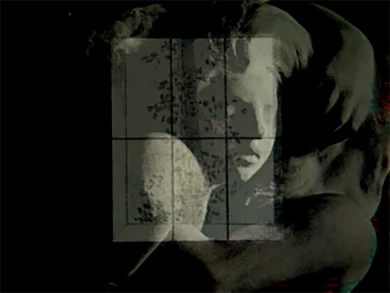
The second session screens two medium-length films by Jean-Luc Godard and Anne-Marie Miéville on time, ruin and museum. In The Old Place. Small Notes Regarding the Arts at Fall of 20th Century (1999), both film-makers consider what remains of that “old place”, the museum, at the close of a century of wars and totalitarianism, and ask whether it should be more of a legend or desire than a place. This same driving principle leads Godard to build his own imaginary museum in Reportage amateur (maquette expo) (2006), a rickety toy museum which, paradoxically, contains the great film-maker’s full power of thought on history and images.
Finally, the third session explores one of the major challenges of recent years: the decolonisation of the museum, the recognition of its link to imperialist discourses of power and the need to situate a new silenced or repressed subject at the centre of the Western narration of history. Under the title Museums and Restitution, it includes the film Undocumented. Unlearning Imperial Plunder (2019), by theorist Ariella Azoulay, Statues Also Die, by Alan Resnais and Chris Marker (1953), Kwate Nee-Owoo’s You Hide Me (1970) and the first screening of the short film Quinto verso, parte de Tonada (Fifth Verse, Part of Tonada), by La Vulcanizadora (Maria Rojas Arias and Andrés Jurado), filmed at the Museo de América in Madrid.
![Ariella Azoulay, Un-documented. Unlearning Imperial Plunder [Indocumentados. Desaprendiendo el saqueo imperial], 2019, película](https://recursos.museoreinasofia.es/styles/small_landscape/public/Actividades/5.diseminar-mundo.jpg.webp)
Museums and Restitution
Saturday, 19 September 2026 - 7pm
Centuries of plundering, decades of amnesia, years of living with unmitigated extractivist power… Does a museum, as we know it, have a raison d'être in a postcolonial society?
This session expounds the operations of the museum as a colonial machine, while putting forward ideas, in narration, for a more just, equal and inclusive institution of the future via society’s marginalised and minority voices. The session begins with the international premiere of Quinto verso, parte de Tonada (Fifth Verse, Part of Tonada), which presents a vision of the Quimbaya Collection (fifth and sixth centuries CE) from the Museo de América in Madrid. It is constructed with the voices and chants of Wayúu mourners and guides, not only as a way of reinstating the role of these gold idols — anthropomorphic figures of men and women used as vessels in ritual practices — but also to imagine that what must be exhibited is not the gold itself. It is the ritual’s own chant. In the classic film You Hide Me (1970), Ghanaian film-maker Kwate Nee-Owoo accesses the British Museum’s collection of African art, located in the building’s basement, to question the meaning behind a museum plundering and nullifying. A fine exercise of first-person institutional critique screened for the first time in Spain. Almost seventy years since Resnais and Marker made Statues Also Die (1953), a reflection on the aura-bearing value of the museum opposite the identity-based and cultural belonging of African art, theorist Ariella Azoulay films the same statues again at the Musée du Trocadéro (today the Musée du Quai Branly), which survive and wait to be reunited with their people. Azoulay, whose wholly original undertaking is a lesson to the museum of the future, connects the forced migration of these sculptures with the mass transit of people crossing borders artificially imposed by the same system that has plundered their culture.
The School of Transformative Institutionalism and Local Organisation
From 21 to 24 September 2026
The School of Transformative Institutionalism and Local Organisation (S.T.I.L.O.) is a programme of joint learning and join strategy which sets in motion a process for the exchange of questions, methodologies and experiences between cultural organisations. The overall aim is to create, circulate and prototype tactics, tools and collective knowledge on institutional practices that open new channels for defending culture and advocating structural transformation in divergent geographical contexts.
The project is part of the Laboratorio de Institucionalidad Compartida (The Laboratory of Shared Institutionalism, LIC), a space for the Museo Reina Sofía’s research, work and advocacy centred on developing, experimenting with and systemising practices, protocols and tools which contribute to a fairer and more liveable cultural ecosystem.
For many years now, so-called infrastructural critique in museums questions material, legal and economic infrastructures, among others, as well as the forms of solidarity and practices required to sustain the cultural ecosystem. By approaching current debates, S.T.I.L.O. raises questions on the ways in which organisations define and interpret their practices, organise their relations and respond to the social contexts in which they operate.
The school gathers four cultural organisations that work via different institutional models – scale, contexts, conditions, different working models — with the goal of pooling common strategies and tools of organisation, advocacy and relationships with local communities.
The programme is conceived as a collaborative process with the participation of Arika, La Revuelta, BAK Basecamp and The Tentacular Museum (Museo Reina Sofía) and is structured around preparatory online sessions and an in-person seminar in Madrid.
S.T.I.L.O. is an activity framed inside the working strand of Situated Organisations from L'Internationale’s Museum of the Commons project, which reflects on the role of museums and art organisations as actors within complex social networks and ecosystems, with a view to exploring new ways to democratise institutions and make them more open, inclusive and useful.