On Your Screen: Art History and the Museum Facing the Audiovisual Challenge
![Chantal Akerman, Woman Sitting after Killing [Mujer sentada después de matar], 2001, instalación. Museo Reina Sofía](https://recursos.museoreinasofia.es/styles/small_landscape/public/Actividades/chantal-akerman-mujer-sentada-despues-matar.jpg.webp)
hantal Akerman, Woman Sitting after Killing, 2001, installation
Museo Reina Sofía
The conference On Your Screen: Art History and the Museum Facing the Audiovisual Challenge sparks debate around the transformations of art history and museum space upon embracing the audiovisual format. Its starting point is John Berger’s emblematic television series Ways of Seeing (1972), a landmark in the democratisation of art-historical discourse. In the series, Berger illustrated how the transfer of a work such as Goya’s Los fusilamientos del 3 de mayo (The Third of May 1808 or the Executions) from museum gallery to home TV screen completely changed the viewer’s experience, allowing the image to travel to straight to the viewer.
In the twenty-first century, this screen-based ecosystem has expanded exponentially, with museums not only physically integrating screenings and devices into their galleries— following in the wake of many exhibitions on the moving image — but also deploying complex virtual strategies. Equally, numerous en vez de a multitudeof historians, students and creators use digital platforms to circulate their ideas and projects. This audiovisual shift opens access to ignored materials and democratises knowledge, as well as challenging traditional hierarchies and the interpretive authority of institutions. The conference, promoted by the research project ATLAS AV: The Audiovisualisation of Art History and the Museum, seeks to analyse this vast audiovisual material, its archives, and its capacity to transform the memory of art.
Research Management
Iñaki Estella (Complutense University of Madrid, CO-IP ATLAS AV) and Modesta Di Paola (University of Málaga, CO-IP ATLAS AV)
Research Committee
Javier Arnaldo (Museo Nacional del Prado), Irene Baldriga (Università La Sapienza), Giovanni Careri (CEHTA, Centre d'Histoire et de Théorie des Arts – CRAL, Centre de recherches sur les arts et le langage – EHESS, École des hautes études en sciences sociales – CRNS, Centre national de la recherche scientifique), Vincent Debiais (CEHTA – CRH, Centre de Recherches Historiques – CNRS – EHESS), Sabine Guermouche (CEHTA – CRAL – EHESS – CNRS), Manuela García Lirio (University of Málaga), Chema González (Museo Reina Sofía), Luis Sazatornil (UNED, Spain’s National University of Distance Education), Sonsoles Hernández (Universitat de Les Illes Balears), Davide Lacagnina (Università di Siena), Daniel Lesmes (Complutense University of Madrid), Antonio Labella (International University of La Rioja), José Ignacio Mayorga (University of Málaga), Fernando Ramos (Complutense University of Madrid), Sonia Ríos (University of Málaga), Iván de La Torre (University of Seville), Leticia Crespillo (University of Málaga), David Domínguez Escalona (University of Granada) and Marc Montijano (University of Córdoba)
Organised by
Museo Reina Sofía and ATLAS AV (Ministry of Science and Innovation and SU+MA):
(PID2022-1367530B-100) funded by MCIN/AEI/10.13039/501100011033
Collaboration
The Complutense University of Madrid; University of Málaga; EHESS, L’École des hautes études en sciences sociales; CEHTA, Centre d’Histoire et de Theórie des Arts; Università di Siena and Sapienza Università di Roma
Inside the framework of
The research project ATLAS AV: The Audiovisualisation of Art History and the Museum

Accessible activity
This activity has spaces reserved for people with reduced mobility
Agenda
viernes 18 sep 2026 a las 10:30
Presentation and Opening Lecture: Cinema and Art Documentaries in the Policies of UNESCO and ICOM in the Second Half of the Twentieth Century
— Presentation by Iñaki Estella and Modesta di Paola. Lecture by Irene Baldriga
The aim of this article is to analyse the efforts of UNESCO and ICOM to promote tools of audiovisual communication for cultural heritage and museums, particularly in the decades that followed the Second World War. In the first ICOM conference held in Mexico City in 1947, audiovisual media was presented and debated as a key tool in museums’ education and information activities. The Italian representative, archaeologist Ranuccio Bianchi Bandinelli, presented a documentary made in Italy to document the damages caused by the bombing of many artworks and Italian monuments. In the following years, the theme of filmic communication was returned to numerous times at ICOM conferences, to such a degree that an International Cinema and Television Committee was formed. The resulting publications, reports and official documents allow us to trace the development of this interest in audiovisual communication in art history.
viernes 18 sep 2026 a las 11:45
Round-Table I. The Audiovisual Format and Historiography
Media modifies historical and artistic knowledge — in contrast to the theoretical impact of the double screening and photography, the audiovisual format barely contains profound reflections. This round-table examines, via case studies, the forms of analysis that foster the audiovisual medium, the different knowledge it produces and how to upgrade the methodology of the discipline.
— Moderated by Iñaki Estella
11:45am First part
Audiovisual: Reinventing Art History in Brazil
— By Sonia de Laforcade
Conception/Perception and Primitive Gestures. Teri Wehn-Damisch Films Robert Morris Performing Blind Time (Drawing with Davidson)
— By Sabine Guermouche
12:15pm Break
12:45pm Second part
Temporal Glitching: Decolonial Chronopolitics in the Moving Image
— By Simona Maria Pagano
The Subjective Value of the Image. Alienation and Creative Autonomy in Conceptual Art and Video Art in Late-Francoist Spain
— By Antonio Gómez Heras
Pasts on the Surface. Film, Archive and the Care of Ghosts
— By Santos Rojas Ogáyar
Appearing without Revealing Oneself. The Verifying Screen in Digital Art history
— By Nicolás Marín Bayona
1:45pm Debate
viernes 18 sep 2026 a las 15:30
Round-Table II. The Documentary as a Way to Disseminate Art History
Since UNESCO endorsed film on art in the 1940s, documentary has witnessed steady growth, working today as a device that flows beyond academic classrooms and widens traditional teaching. The documentary genre, series and specialist channels are analysed as key tools for the mediation of, access to and democratisation of heritage before a large audience.
— Moderated by Modesta Di Paola and Davide Lacagnina
Beyond Documentation: Lecture Performance and the Audiovisual Production of Artistic Knowledge
— By Lisa Andreani
Museum as Muse. The Exhibition as Art Genre from the Photographic Image
— By Iván de la Torre Amerighi and Rafael de Besa Gutiérrez
1956: Shipwrecks in the Lagoon. The International Retrospective of Film on Art and the Conference of Cinema and Television in the Service of Museums
— By Ambra Cascone
The Audiovisual Register of Performance: From Documentation to Building Memory
— By Marc Montijano
Non-audiovisual Fiction as an Institutional Critique of Museums
— By Joan Miquel Gual Bergas
viernes 18 sep 2026 a las 17:15
Round-Table III. White Cube, Black Box, Grey Areas. Cinema in Museums
The cinema-museum relationship is becoming stronger. With exhibition rooms now grey zones that welcome at once screenings by renowned directors and experimental cinema with no commercial space, this benefits both: cinema achieves legitimacy for alternative culture and the museum attracts audiences schooled in audiovisual culture. This round-table reflects on how this process transforms viewings, alters the notion of the spectator and redefines cinematheques.
— Moderated by Fernando Ramos
From Militant Cinema to the Museum. Spell Reel and the Circulation of the Guinea-Bissau Audiovisual Archive
— By Eloísa Suárez López-Zuriaga
The Hybridised Spectator: A Passive and Active Gaze on the Video Game in Exhibition Space
— By Jan Matthews
Disputed Histories: Audiovisual Archive, Display and Critical Montage in the Disobedience Archive
— By Miriam Rejas Del Pino
From Object to Process: Video as an Epistemological Device in the Museo Vasco de Bilbao. The Case of the Urrá Workshop’s Museumization
— By Ander López
Framing the Art Screen: Muntadas and Audiovisual Culture in the Museum
— By Carmen Caballé Tutosaus
The Audiovisual Wunderkammer: La habitación de al lado (The Room Next Door, Pedro Almodóvar, 2024) as a Paradigm
— By Ruth Barranco
sábado 19 sep 2026 a las 10:30
Round-Table IV. The Online Museum: The Museum’s New Models of Exhibition, Collection and Screening in Digital Space
While digitisation and social media allow the museum to act as a digital narrator which builds communities beyond its walls, algorithms also introduce hierarchies that condition the visibility of critical knowledge. This round-table debates institutions’ responses to these challenges, placing the stress on MOOCs, YouTube, digital gallery labels and AI, and how they turn visitors into an active witness that multiplies the artistic experience.
— Moderated by Manuela García Lirio and Antonio Labella
10:30am First part
The Museum’s Digital Online Space as a New Virtual Ekphrasis
— By Paola Nicita
Techno-Mediated Perception and Experiences of Sociability: Possible Futures to Inhabit the Post-Digital Museum
— By David Torres and Ángel Lumbreras
When the Exhibition Goes On: The Online Recreation of the Exhibition Dordio [A1] Gomes and Mural Painting in Porto. Lime, Pigments and Pixels as a Case Study
— By Leticia Crespillo
Memory Questioned. The Online Museum as a Space to View Women’s Heritage
— By Sofía Portillo
Portable Black Mirrors: Museums and the Attention Economy. An Approach to Cultural Ethics and its Colonialisms in the Digital Age
— By Ana Pérez Milán
11:45am Debate
12:00pm Break
12:30pm Second part
The Deterritorialisation of the Post-Digital Museum: Global Communities and Hybrid Experiences
— By Irene Pérez
Video-Archives on the Radical Gesture of Publishing
— By Manuela Martínez Romero
Wide Reach, Weak Community: The Limits of Museum Communication in TikTok from the Communication Dimension of Huella M
— By Julio González Liendo and Anelyn Torres
Denials 4.0: Audiovisualisation, Accessibility and the Transfer of Devotional Heritage
— By Sonia Ríos
1:30pm Debate
1:45pm Lunch break
4pm Third part
The Mirror Phase of the Museum: Synesthetic Ontologies, Algorithmic Curation and the Defence of Aura
— By Carina-Nathalia Madonna Visconti di Modrone-Paff (Università La Sapienza)
At the Crossroads of Museum, World and Web: Memefication as a Curatorial Paradigm
— By Clarissa Diniz and Ismael Monticelli
4:30pm Debate
sábado 19 sep 2026 a las 17:00
Closing Lecture: Latent Spaces: AI, Art and the Archive
— By Antonio Somaini. Moderated by Daniel Lesmes
This lecture sees Antonio Somaini analyse the ways in which AI technologies are transforming our relationship with the past: with history, memory and the archive. Somaini puts forward a technical and philosophical explanation of latent spaces as a new type of historical a priori, comparing them to different concepts of the “archive” in its technical, institutional and epistemological scope. Further, he examines the wide array of contemporary artistic practices that use AI to explore alternative and counterfactual pasts, including works by Erik Bullot, Grégory Chatonsky, Alexander Kluge, Kevin B. Lee, Ania Szczepanska, Gwenola Wagon and Pierre Cassou-Noguès. Such works embody what he calls a “meta-archivist drive”: a critical desire to investigate, expound and resist algorithmic processes through which AI models organise, transform and, at times, erase historical materials. The lecture will conclude by arguing that the political challenge of our time is twofold: to develop critical methodologies to examine latent spaces as new infrastructures of memory and to resist the privatisation of these meta-archives by a handful of hegemonic technology corporations.
sábado 19 sep 2026 a las 18:00
Debate and Final Summary
— By Iñaki Estella, Daniel Lesmes and Modesta Di Paola
Participants
Lisa Andreani
is a researcher and curator who works with Università luav di Venezia and Université Paris 8. A specialist in managing art archives and institutional memory, her work analyses the confluences between the audiovisual format, contemporary curating and the production of historical knowledge.
Irene Baldriga
is an associate professor of Museum Policies, Heritage and Citizenship and Museum Education. She is an expert in heritage education and the political role of the museum, and noteworthy among her publications are Diritto alla bellezza (2017), Estetica della cittadinanza (2020) and Politics of the Arts and Collective Memory (2025).
Ruth Barranco
is an audiovisual artist and independent researcher whose practice and work explore film experimentation, Video Art, contemporary aesthetics of the image and processes of creating and publishing as tools of critical and narrative analysis.
Rafael de Besa Gutiérrez
holds a PhD in Art History and lectures at the University of Seville. His research specialises in the history of photography, cultural heritage and the formal analysis of visual languages.
Carmen Caballé Tutosaus
is a pre-doctoral researcher in the Art History Department of the Complutense University of Madrid. She is a member of the ATLAS AV research project, her work focusing on the phenomenological analysis of the work of conceptual artist Antoni Muntadas and the relationship between art, perception and space.
Ambra Cascone
holds a PhD in Art History from the University of Padua. Her research centres on the critique between twentieth-century art and historiography, museology, discordant heritage and the relationship between word and image under political and ideological frameworks. She has published numerous essays and academic monographs.
Leticia Crespillo Marí
is a researcher and lecturer in the Art History Department of the University of Málaga. Her work focuses on the study of contemporary art, visual culture, digital aesthetics, Net Art and the relationships between new technology, interactivity and new media art.
Clarissa Diniz
is a professor of Art History and Theory at Universidad Federal de Río de Janeiro, with a PhD in Cultural Anthropology. She is also a researcher of modern and contemporary art and its relationship to anthropology and politics. She has been a curator at the Museo de Arte de Río and co-curated the project MEME: In Br@zil in the Age of Memefication.
Antonio Gómez Heras
is a researcher in the Art History Department of the University of Málaga. Her line of research approaches contemporary Spanish art, processes of alienation, creative autonomy and the development of Video Art and conceptual practices during Late Francoism and the Transition to democracy.
Julio González Liendo
holds a PhD in Communication and Cultural Industries from Universitat Politècnica de València. With experience stretching across twenty-five years, he lectures at UNIE Universidad (the International University of Business), UDIT (the University of Design, Innovation and Technology) and Universidad Anáhuac México. He is the creator of Huella M, the first methodology for managing museums’ sustainability, and also coordinates Erasmus+ European projects (for instance SUMED and RESPRO) and researches cultural sustainability, strategic communication, digital museums and video games for the purposes of social transformation.
Joan Miquel Gual Bergas
is a professor and collaborating researcher at Universitat de Barcelona and Universitat Oberta de Catalunya. He holds a PhD in the Information and Knowledge Society, focusing his studies on political cinema, working-class cinema, social movements and the use of audiovisual archives as tools of collective historical memory.
Sabine Guermouche
is an art historian and researcher at CEHTA-CRAL from EHESS in Paris. She specialises in analysing art documentaries, the epistemology of images and the relationship between cinema and the visual arts. Notable among her works are critical studies on filming contemporary artistic processes.
Sonia de Laforcade
is an adjunct professor of Modern and Contemporary Art at Radboud Universiteit. Her research focuses on critique, artistic pedagogy and the art of Latin America and the Global South. Of note is her publication ÁUDIO-VISUAL: The Slide as Medium in Brazilian Art (2020), resulting from her award-winning Princeton University doctoral dissertation.
Ander López Díez
is an art historian, exhibition curator and researcher who works with the Museo Vasco (Euskal Museoa) and the University of the Basque Country. His field of research centres on the history of museum institutions, heritage management and manifestations of contemporary Basque art.
Ángel María Lumbreras Fernández
is a pre-doctoral researcher at the University of Málaga. His work combines the history of digital art, digital aesthetics and artificial intelligence, and he analyses how generative models and computer technologies transform archives, heritage and cultural memory.
Nicolás Marín Bayona
is a researcher at UCLouvain (Université catholique de Louvain, Belgium). Specialising in visual culture, screen technologies and the field of digital art history, he researches new modes of verification and interactivity in digital environments.
Manuela Martínez Romero
is an artist, curator and teacher whose work pivots on the creation and dissemination of contemporary art via independent publishing. Since 2001 she has been co-editor of Lalata (www.lalata.es), which brings together original works by numerous artists. She also conducts research into artists’ magazines in Spain and their makers.
Jan Matthews
is an artist and researcher who is a PhD candidate at the Complutense University of Madrid. His work combines contemporary artistic practice and academic research, and he has exhibited at international symposia and prestigious art spaces such as Matadero, Galería Magda Bellotti and centres in Lisbon and Tokyo.
Ismael Monticelli
is an artist and researcher with a PhD in Contemporary Art and Culture from the Río de Janeiro State University. He has exhibited his work individually and collectively on an international scale and participated at the Mercosur Biennial. With Diniz, he co-curated the show MEME: In Br@zil in the Age of Memefication.
Marc Montijano
is an eminent visual artist who holds a PhD in Art History and is a lecturer at the University of Córdoba. His research and creative work centre on the art of performance, the body as support, social critique and forms of audiovisual register in ephemeral art.
Paola Nicita
is a professor of the Theory of Perception and the Psychology of Form at the Academia de Bellas Artes de Palermo (ABAPA). A contemporary art critic and researcher, she is a member of AICA (Associazione Internazionale dei Critici d'Arte) and has curated international exhibitions, as well as publishing multiple essays on aesthetics and visual culture.
Simona Maria Pagano
is a doctoral researcher at Università di Bologna, within the Arts Department. Her work focuses on the study of moving images, decolonial chronopolitics, experimental film practices and the critical analysis of contemporary and independent audiovisual archives.
Irene Pérez López
holds a PhD in Art History from the Complutense University of Madrid. Her research in museum studies centres on the visitor, participation and well-being. She has also worked through FPU and Margarita Salas grants, occupying international residencies and working with institutions such as Museo del Prado and the Museo Reina Sofía.
Anna Pérez Milán
is a contemporary art historian, curator and researcher. She is a PhD candidate at Universitat de Barcelona, where she researches the decolonial turn in Spanish contemporary art, analysing curatorial practices, extractivism and institutional debates. She co-directs the FUGA gallery and has an extensive background in curating international projects, publishing academic magazines and cultural mediation from an interdisciplinary perspective.
Sofía Portillo Rivas
is an art historian at the University of Málaga, where she obtained an MA in the Social Developments of Art Culture. Her work combines historical analysis, digital humanities and Big Data applied to culture, and she has experience in exhibition design, focusing on gender perspective and exploring how digital innovation democratises access to art.
Miriam Rejas Del Pino
is an art historian and doctoral researcher at the IUAV University of Venice. Her field of study centres on the practice of moving images, exhibition film, contemporary Video Art and points of convergence between curatorial logics and film environments.
Sonia Ríos
is a professor in the Art History Department at the University of Málaga. With a PhD in Art History (2004) and the recipient of a Doctoral Excellence Award, her research career is situated at the crossroads of contemporary art, visual culture, graphic design and the management of artistic and cultural heritage. Throughout her career, she has focused much of her work on twentieth-century design history, decorative and industrial arts and cultural manifestations. She also teaches on different degree and MA programmes, including subjects linked to design, aesthetics and the publishing industry.
Santos Rojas Ogáyar
is a researcher in the Art History Department of the University of Granada. Her working strands include visual studies, the relationships between film and memory, the management and analysis of audiovisual archives and the representation of the past in contemporary culture.
David Ruiz Torres
is a head professor in Art History at the University of Málaga. He researches the application of new digital technologies in museology, contemporary creation and historical heritage. Specialising in augmented reality, he has published distinguished books and annual volumes on digital conservation.
Antonio Somaini
is a lecturer in Film Theory, Visual Studies and Media Theory at Université Sorbonne Nouvelle – París and a senior member of the Institut Universitaire de France. A worldwide specialist in the theories of Serguéi Eisenstein, media archaeology and visual culture, he currently focuses his research on artificial intelligence’s impact on images and contemporary artistic practices. He has been a guest lecturer at Yale and Harvard and has curated benchmark exhibitions like Time Machine: Cinematic Temporalities and Le monde selon l'IA/The World Through AI.
Eloísa Suárez López-Zuriaga
is an art historian and researcher at the Complutense University of Madrid. Her work focuses on the study of avant-garde cinema, Video Art, the aesthetic relationships between the visual arts and moving images and spectator theory in contemporary practices.
Iván de la Torre Amerighi
is a head professor and researcher at the University of Seville, as well as an art critic and independent curator. He centres his work on contemporary art, the art market and exhibition dynamics.
Anelyn Torres
is a scholar, teacher and researcher who works with UNIE University. Her field of specialisation is framed within art disciplines and cultural management, actively collaborating in the university’s academic sphere and in higher-education training.
Carina-Nathalia Madonna Visconti di Modrone-Paff
is an art historian and PhD candidate at Sapienza Università di Roma. Her research spans Iberian and Andean visual culture, Colonial Baroque, environmental history and digital curating. She also has a strong interdisciplinary background in law, art history and curatorial studies.
Más actividades
![Isabel Coixet, 100 Years and You Everywhere [100 años y tú en todos los sitios], 2026, película](https://recursos.museoreinasofia.es/styles/small_landscape/public/Actividades/2.diseminar-mundo.jpg.webp)
John Berger and Isabel Coixet. Continued Ways of Seeing
Thursday, 17 September 2026 at 7pm
Ways of Seeing (1972) is one of the most revolutionary television series on art history, the museum and contemporary critical culture. Across four episodes, an articulate, enthusiastic John Berger unpacks the relationships between classical art through the gaze and new technology, the nude and feminism, the oil painting and commodity fetichism, advertising and consumerism. In essence, a level of critical commitment only comparable to its capacity for dissemination. Unsurprisingly, the series, and the book that would distil it, continues to forge vocations. This session sees art historians Alberto López Cuenca and Modesta Di Paola carry out an analysis of Berger’s audiovisual work, placing the stress on episodes one and four of the series. In the first episode, Berger reflects on the connection between the act of seeing, looking and being in light of new technology, such as the film camera. At the same time, it analyses how the culture of reproduction is turning paintings into messages or fragments of communication while stressing the importance of silence when observing historical paintings. In the fourth and final episode, he introduces advertising as a new iconic-verbal language that shares certain principles with the message of oil painting as a luxury item.
The session opens with the premiere of a filmic letter from Isabel Coixet, one of Spain’s most internationally acclaimed directors, to John Berger, with whom she maintained a long friendship and deep admiration. The short film is testament to the ubiquitous and long-lasting presence of the author of Ways of Seeing, even after his death in 2017.
On Your Screen: Art History and the Museum Facing the Audiovisual Challenge
18, 19 SEP 2026
The conference On Your Screen: Art History and the Museum Facing the Audiovisual Challenge sparks debate around the transformations of art history and museum space upon embracing the audiovisual format. Its starting point is John Berger’s emblematic television series Ways of Seeing (1972), a landmark in the democratisation of art-historical discourse. In the series, Berger illustrated how the transfer of a work such as Goya’s Los fusilamientos del 3 de mayo (The Third of May 1808 or the Executions) from museum gallery to home TV screen completely changed the viewer’s experience, allowing the image to travel to straight to the viewer.
In the twenty-first century, this screen-based ecosystem has expanded exponentially, with museums not only physically integrating screenings and devices into their galleries— following in the wake of many exhibitions on the moving image — but also deploying complex virtual strategies. Equally, numerous en vez de a multitudeof historians, students and creators use digital platforms to circulate their ideas and projects. This audiovisual shift opens access to ignored materials and democratises knowledge, as well as challenging traditional hierarchies and the interpretive authority of institutions. The conference, promoted by the research project ATLAS AV: The Audiovisualisation of Art History and the Museum, seeks to analyse this vast audiovisual material, its archives, and its capacity to transform the memory of art.
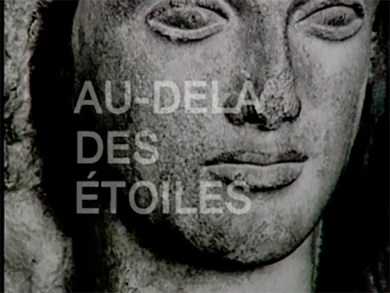
Godard and Miéville: Time and Ruin
Friday, 18 September 2026 - 7pm
Inside the framework of the conference On Your Screen: Art History and the Museum Facing the Audiovisual Challenge, this film series sets forth three critical visions of the museum via three sessions featuring the works of John Berger, Jean-Luc Godard and Anne-Marie Miéville, Ariella Azoulay, Alan Resnais and Chris Marker, Kwate Nee-Owoo, and the premiere of short films by Isabel Coixet and La Vulcanizadora (Maria Rojas Arias and Andrés Jurado). In classical theory, the museum gives the world meaning; it contains fragments of the past, granting them a history, a narrative that explains preterite time and the present. Today, there is an implicit assumption that this function hides and legitimises forms of power, yet what if the museum, instead of explaining the world, multiplied it through radical ideas, silenced periods and repressed subjects? Such is the approach of the film-makers and artists in this film season.
In 1972 the writer John Berger opened the landmark television series Ways of Seeing with an iconoclastic gesture: slicing Sandro Botticelli’s painting Venus and Mars (1485) in London’s National Gallery. A transgressive act that recalls contemporary attacks on the museum by dissident youth and with which Berger, after revealing it was a reproduction, sought to ignite debate around the idea of an original artwork and a copy. In this, the hundredth anniversary of his birth, the first session pays homage to one of the great art writers of the twentieth century. Starting with a review of Berger’s audiovisual work by art historians Alberto López Cuenca and Modesta Di Paola, the series begins with the premiere of 100 Years and You Everywhere (2026), an unreleased short film by Isabel Coixet composed as a beautifully crafted letter to Berger, and continues with an analysis of fragments of Ways of Seeing in relation to the museum and contemporary art.
The second session screens two medium-length films by Jean-Luc Godard and Anne-Marie Miéville on time, ruin and museum. In The Old Place. Small Notes Regarding the Arts at Fall of 20th Century (1999), both film-makers consider what remains of that “old place”, the museum, at the close of a century of wars and totalitarianism, and ask whether it should be more of a legend or desire than a place. This same driving principle leads Godard to build his own imaginary museum in Reportage amateur (maquette expo) (2006), a rickety toy museum which, paradoxically, contains the great film-maker’s full power of thought on history and images.
Finally, the third session explores one of the major challenges of recent years: the decolonisation of the museum, the recognition of its link to imperialist discourses of power and the need to situate a new silenced or repressed subject at the centre of the Western narration of history. Under the title Museums and Restitution, it includes the film Undocumented. Unlearning Imperial Plunder (2019), by theorist Ariella Azoulay, Statues Also Die, by Alan Resnais and Chris Marker (1953), Kwate Nee-Owoo’s You Hide Me (1970) and the first screening of the short film Quinto verso, parte de Tonada (Fifth Verse, Part of Tonada), by La Vulcanizadora (Maria Rojas Arias and Andrés Jurado), filmed at the Museo de América in Madrid.
![Ariella Azoulay, Un-documented. Unlearning Imperial Plunder [Indocumentados. Desaprendiendo el saqueo imperial], 2019, película](https://recursos.museoreinasofia.es/styles/small_landscape/public/Actividades/5.diseminar-mundo.jpg.webp)
Museums and Restitution
Saturday, 19 September 2026 - 7pm
Centuries of plundering, decades of amnesia, years of living with unmitigated extractivist power… Does a museum, as we know it, have a raison d'être in a postcolonial society?
This session expounds the operations of the museum as a colonial machine, while putting forward ideas, in narration, for a more just, equal and inclusive institution of the future via society’s marginalised and minority voices. The session begins with the international premiere of Quinto verso, parte de Tonada (Fifth Verse, Part of Tonada), which presents a vision of the Quimbaya Collection (fifth and sixth centuries CE) from the Museo de América in Madrid. It is constructed with the voices and chants of Wayúu mourners and guides, not only as a way of reinstating the role of these gold idols — anthropomorphic figures of men and women used as vessels in ritual practices — but also to imagine that what must be exhibited is not the gold itself. It is the ritual’s own chant. In the classic film You Hide Me (1970), Ghanaian film-maker Kwate Nee-Owoo accesses the British Museum’s collection of African art, located in the building’s basement, to question the meaning behind a museum plundering and nullifying. A fine exercise of first-person institutional critique screened for the first time in Spain. Almost seventy years since Resnais and Marker made Statues Also Die (1953), a reflection on the aura-bearing value of the museum opposite the identity-based and cultural belonging of African art, theorist Ariella Azoulay films the same statues again at the Musée du Trocadéro (today the Musée du Quai Branly), which survive and wait to be reunited with their people. Azoulay, whose wholly original undertaking is a lesson to the museum of the future, connects the forced migration of these sculptures with the mass transit of people crossing borders artificially imposed by the same system that has plundered their culture.
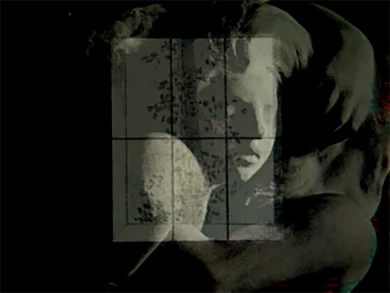
The School of Transformative Institutionalism and Local Organisation
From 21 to 24 September 2026
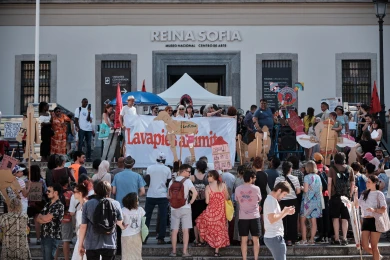
The School of Transformative Institutionalism and Local Organisation (S.T.I.L.O.) is a programme of joint learning and join strategy which sets in motion a process for the exchange of questions, methodologies and experiences between cultural organisations. The overall aim is to create, circulate and prototype tactics, tools and collective knowledge on institutional practices that open new channels for defending culture and advocating structural transformation in divergent geographical contexts.
The project is part of the Laboratorio de Institucionalidad Compartida (The Laboratory of Shared Institutionalism, LIC), a space for the Museo Reina Sofía’s research, work and advocacy centred on developing, experimenting with and systemising practices, protocols and tools which contribute to a fairer and more liveable cultural ecosystem.
For many years now, so-called infrastructural critique in museums questions material, legal and economic infrastructures, among others, as well as the forms of solidarity and practices required to sustain the cultural ecosystem. By approaching current debates, S.T.I.L.O. raises questions on the ways in which organisations define and interpret their practices, organise their relations and respond to the social contexts in which they operate.
The school gathers four cultural organisations that work via different institutional models – scale, contexts, conditions, different working models — with the goal of pooling common strategies and tools of organisation, advocacy and relationships with local communities.
The programme is conceived as a collaborative process with the participation of Arika, La Revuelta, BAK Basecamp and The Tentacular Museum (Museo Reina Sofía) and is structured around preparatory online sessions and an in-person seminar in Madrid.
S.T.I.L.O. is an activity framed inside the working strand of Situated Organisations from L'Internationale’s Museum of the Commons project, which reflects on the role of museums and art organisations as actors within complex social networks and ecosystems, with a view to exploring new ways to democratise institutions and make them more open, inclusive and useful.