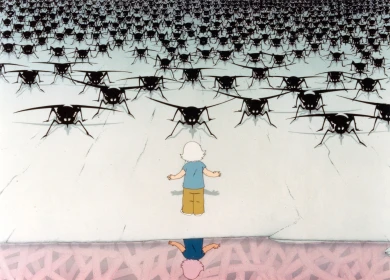
René Laloux y Mœbius, Los amos del tiempo, película, 1982
Held on 11, 25 May 2025
Les Maîtres du temps (The Time Masters) is the second feature-length film by the master of fantastical animation, René Laloux (Paris, 1929 – Angoulême, 2004), on this occasion with the collaboration of the great illustrator and cartoonist Jean Giraud (Nogent-sur-Marne, 1938 – Paris, 2012), known internationally as Mœbius. Laloux and Mœbius, along with esteemed Hungarian film-maker Tibor Hernádi (Budapest, 1947–2012) as animation director, made one of the most iconic works in sci-fi animation, despite its relative obscurity for many audiences. The story is based on the novel L'Orphelin de Perdide (1958) by French writer Stefan Wul, a source of creative inspiration for the metaphysical world of René Laloux.
The film, suitable for all ages, recreates the unique atmosphere of Mœbius’s graphic world and Laloux’s philosophical script, which manages to reach the youngest audiences via Piel, a roaming boy marooned on the planet of Perdide. With a comic-book graphic style and psychodelia, fantastical spaceships, cosmic landscapes, robot-humanoids and galactic beings all appear on screen to Mœbius’s unmistakeable aesthetic. The rescue of young Piel, by picking up a transmitter call from the adventurer Jaffar, takes us on a journey into a surreal and hypnotic future world with a seemingly linear narration. The film is a fantastical voyage into the meaning of childhood and the passage of time.
Organised by
Museo Reina Sofía
Participants
René Laloux
(Paris, 1929 – Angoulême, 2004) is one of the pre-eminent artists in the history of animation. Laloux started making short films from the 1950s onwards and his works for adults are striking for their philosophical and dystopian slant. The feature film La planète sauvage (Fantastic Planet) [1973], winner of the Grand Prix Award at Cannes that same year, is one of the genre’s most representative examples, shaped by a libertarian- and psychedelic-inflected style that would inspire future animators and artists such as Topor, Philippe Caza and Mœbius.
Jean Giraud
(Nogent-sur-Marne, 1938 – Paris, 2012), known as Mœbius, is among the most influential graphic artists in the history of the comic book. Known for his sci-fi and fantastical creations, for instance The Incal (1980), with film-maker and man of letters Alejandro Jodorowsky, Arzach (1975) and Le Garage hermétique (Airtight Garage) [1976], and as the co-creator of the western comic Blueberry (started in 1963) with Jean-Michel Charlier, under the pseudonym Gir, his surreal, oneiric style has inspired film-makers such as Miyazaki, Ridley Scott and Jean-Luc Besson. Moreover, his imagery gave rise to the interior of the Nostromo interstellar cruiser in the film Alien (1979) and the stage and character designs of Tron (1982) and The Fifth Element (1997).
Tibor Hernádi
(Budapest, 1974–2012) is one of Eastern Europe’s foremost animators and a central figure in the Hungarian School of Animation. Known for directing Felix the Cat: the Movie (1989), The Seventh Brother (1991) and the animated Red Bull adverts, the impact of his work and talent runs centrally through the animation industry.


Activity within the program...
Moon Projector
Moon Projector is the Museo Reina Sofía’s regular film programme for young audiences. Every Sunday morning, sessions are held to introduce children to cinema and audiovisual arts, taking them on a journey of fascination, where imagination and knowledge abound, from the dawn of film language to today’s most creative and original works with future generations in mind.
The programme title draws from the work of poet Federico García Lorca, a Moon Projector where dreams and early imagination reverberate, and where children’s fantasy emerges from the contemplation of projected light.
Ver programa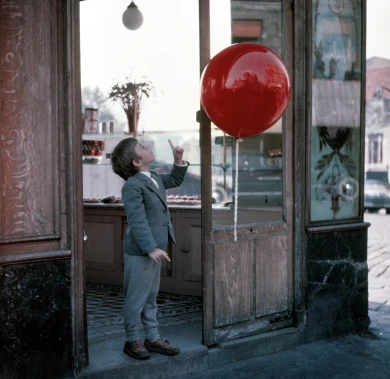
Albert Lamorisse, The Eternal Childhood
27 SEP, 4 OCT 2026
Moon Projector returns after the summer period with a session devoted to Albert Lamorisse (Paris, 1922 – Karaj, Iran, 1970), the French film-maker who turned cinema about children into a poetics of childhood.
A red balloon, let loose by a child in the street, takes on a life of its own to become a constant companion. This image is etched on the retina of different generations, perhaps establishing itself as the most recognisable cinematic shot of innocence: an act of pure love, like the pure air that hovers above the Paris streets, an eternal stage of children’s magic realism.
Even Lamorisse’s earlier works, such as Bim, the Little Donkey (1950) and White Mane: The Wild Horse (1953), expressed a sensitive, lucid gaze towards the bonds children build with life. With White Mane and, later, The Red Balloon (1956), the film-maker consolidated a stamp of identity on extolling the values of childhood, with both works setting out the resistance of a child’s world opposite the world of maturity — children build a shelter of love outside adult society through friendships with animals and objects that for adults would be mere tools.
Albert Lamorisse’s early medium-length films distil three unshakeable principles: freedom, kindness and imagination, accompanying him fully across his short filmography. The pure gaze of childhood seeks to reveal a bright world free of chains, where magic is perfectly congruous with reality.
Moon Projector is the Museo Reina Sofía’s regular film programme for young audiences. On Sunday mornings, sessions are held to introduce children to cinema and audiovisual arts, taking them on a journey of fascination, where imagination and knowledge abound, from the dawn of film language to today’s most creative and original works with future generations in mind. The programme title draws from the work of poet Federico García Lorca, a Moon Projector where dreams and early imagination reverberate, and where children’s fantasy emerges from the contemplation of projected light.

Cinema, for the First Time
Past activity
The final session in this Moon Projector season contemplates the feeling around the first experience of cinema — cinema as revelation, magic, fantasy and mystery from the first gaze, from the first contact with the medium, and imagery etched on the retina of childhood. The programme shows Émile Cohl’s landmark Fantasmagorie (1908), the first ever hand-drawn animation, and Ignacio Agüero’s Cien niños esperando un tren (One Hundred Children Waiting for a Train, 1988), a feature-length film on play and the origins of cinema.
Fantasmagorie (1908)by Émile Cohl (Paris, 1857– Villejuif, 1938) is the first expression in the history of animated drawing. Émile Cohl was an illustrator who belonged to the Parisian art group Arts incohérents (1882–1895), who was bestowed with an absurdist and pre-Surrealist talent. Whereas the Lumière brothers were able get audiences out of their seats as they witnessed a train moving towards them in 1895, Fantasmagorie is a supernatural experience, akin to an apparition yet also innocuous and entertaining — the inanimate comes to life out of nothing and figures seemingly move with little sense. From the outset, animation was related to caricature, fabulation and the comical, a sweet spot for the dreams of the youngest audience.
From the discovery of new imagery arising from the animated line to knowledge of the world through a screen, Cien niños esperando un tren (1988), by Chilean director Ignacio Agüero (Santiago, 1952), narrates a group of young people’s discovery of cinema in a workshop on the origins of the medium in a poverty-stricken town on the outskirts of Santiago de Chile. Play, fun and learning combine with a fascination with images, as viewing Émile Cohl’s Fantasmagorie (1908) in the workshop becomes an act of freedom.

Karel Zeman’s Dream
Past activity
Moon Projector returns in 2026 with the grandmaster of Czech animation, Karel Zeman (Ostroměř, 1910 – Prague, 1989), an iconic film-maker in the history of fantasy cinema.
The visual world of Karel Zeman encompasses an array of influences, from the imagery of Jules Verne and his provocative vision of the future to the dream-like, romantic aesthetic of illustrator Gustave Doré — palpable in Zeman’s scenes with an Orientalist and exotic flavour — not to mention the creative solutions of Georges Méliès. Zeman’s imagination led him not only to invent but also construct from a craftsman’s resources, and from this world came creations of identity such as the short film Inspiration (1948) and his first feature-length film King Lavra (1950), establishing him as a probing, revolutionary artist. From his first productions with puppets and the use of stop-motion, his style would evolve with the use of animated drawing and his interaction with classical fiction. Works such as The Treasure of Bird Island (1952), Journey to the Beginning of Time (1955), The Fabulous Baron (1961), The Stolen Airship (1967) and his final feature film The Tale of John and Mary (1980) combine to make Karel Zeman one of the twentieth century’s most relevant film artists. Such a legacy is discernible in the work of numerous directors — the creatures of Ray Harryhaussen, the puppets of Tadanari Okamoto, childhood as a free space in the work of Hayao Miyazaki, the animated illustrations of Terry Gilliam, the fantasy of Tim Burton and even the offbeat world of Wes Anderson.
Beyond the Wall… The Beach!
Past activity
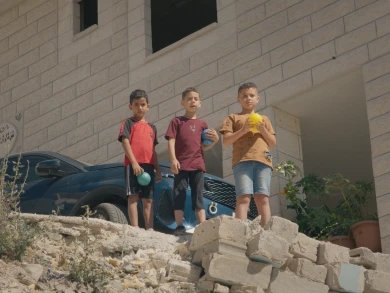
In a war, where does hope live? Beyond the Wall… The Beach! envisions a better world through the eyes of children in Palestine. A vision which is explored in this programme via a selection of films — fiction and animation — from this war-torn country. From an adult’s point of view, war is justified on political and moral grounds. Through a child’s eyes, however, any logic of war’s brutality is demolished and their perspective shows the tragedy of war as a mistake without justification. Faced with adult destruction, children reaffirm life in its fullness.
The line-up of film-makers of Palestinian origin to feature here — Ibrahim Handal, Tariq Rimawi, Firas Khoury, Rami Abbas, Nisreen Yaseen and Haneen Koraz — are a case in point. Ibrahim Handal stands as one of the emerging voices among young Palestinian film-makers, his practice focusing on daily life, identity and resistance with a body of work which, although rooted in reality, plays with creative documentary and fiction. Firas Khoury, meanwhile, is a renowned Palestinian director whose work has come to express what normal life would be like for children in Palestine, showing the reality facing any child. Both film-makers remove the veil of prejudice as they make the life of Palestinian children equal to the life of children in any peaceful country.
The introduction to the series features Rami Abbas, a Palestinian-born film-maker who studied in Syria and currently lives in Madrid. His work is a further example of diaspora and of memory and resistance. Hide & Seek (2024) reflects this side of exodus and, in relation to this experience, protection of the most vulnerable.
Nisreen Yaseen, for her part, imparts a vision of the transition from childhood to adolescence, in which the noise of war is dissolved, while Tariq Rimawi’s award-winning animated short film Zoo (2022) is an aesthetic work of profound symbolic importance which expounds the opposition between oppression and freedom.
Finally, Haneen Koraz, who has made her entire body of work from refugee camps on the Gaza Strip, giving voice, through animation workshops, to minors, mothers and families. A Day in the Tent (2024) is a filmic show of resilience and truth that allows the Gaza people to tell the world what it means to live under bombs. Only through a child’s eye, and drawings, can this reality without prejudice be shown.

They Came from the East. Cosmonauts from the Other Side
Past activity
Moon Projector is the Museo Reina Sofía’s regular film programme for young audiences. Every Sunday morning, sessions are held to introduce children to cinema and audiovisual arts, taking them on a journey of fascination, where imagination and knowledge abound, from the dawn of film language to today’s most creative and original works with future generations in mind. The programme title draws from the work of poet Federico García Lorca, a Moon Projector where dreams and early imagination reverberate, and where children’s fantasy emerges from the contemplation of projected light.
They Came from the East. Cosmonauts from the Other Side surfaces from an admiration of Iron Curtain film-makers and their brilliant visions. An indispensable ensemble of animation schools which were the inspiration for other radical, innovative productions, for instance René Laloux’s La planète sauvage (Fantastic Planet, 1973), George Dunning’s Yellow Submarine (1968) and Hayao Miyazaki’s Sen to Chihiro no Kamikakushi (Spirited Away, 2001). The creations that emerged in those Cold War years are a demonstration of how imagination and fantasy resided on the other side of the Berlin Wall — the unique way they approached science-fiction and stories of the future were a dream for children who looked up at the stars and thought of space ships and beings from other planets, but with the big difference that they dreamed of being cosmonauts, not astronauts.
Pannonia Film Studio (1951–2015), in Hungary, and Zagreb Film (1953–present), in the former Yugoslavia, were two of the major architects of these films and to whom this session is devoted. With their personal and inventive imagery, both schools endowed their creations with the avant-garde and with psychedelic forms. Their simple graphic style and minimal backgrounds, particularly those from the former Yugoslavia, would impact heavily on comic strips. By breaking naturalism and introducing an artistic and free style to these films, they exemplified a creative diversity that was unmatched. The greyness of this Europe formed the backdrop to the emergence of brilliant artists like Hungarian film-makers Gyula Macskássy, regarded as the father of Hungarian animation, the lyrical director and screenwriter Katalin Macskássy, the master of thought-provoking and psychedelic images, Sándor Reisenbüchler, and Tibor Hernádi, with his simple lines and minimalist scenes, who featured in Moon Projector #4. Not to mention the Croatian artist Zlatko Grgić, with his stripped-back drawings and irreverent humour, and the sarcasm and absurd situations of Dušan Vukotić. A constellation of film-makers who made animation differently, demonstrating the power of imagination without borders, neither in this world nor in outer space.
Dancing Forms
Past activity
Moon Projector is the Museo Reina Sofía’s regular film programme for young audiences. Every Sunday morning, sessions are held to introduce children to cinema and audiovisual arts, taking them on a journey of fascination, where imagination and knowledge abound, from the dawn of film language to today’s most creative and original works with future generations in mind. The programme title draws from the work of poet Federico García Lorca, a Moon Projector where dreams and early imagination reverberate, and where children’s fantasy emerges from the contemplation of projected light.
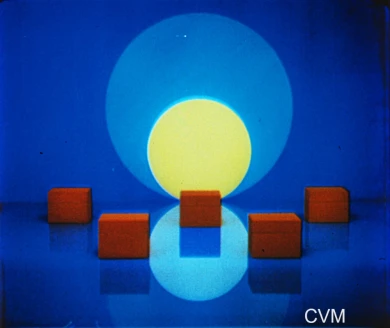
Dancing Forms takes us into the genesis of animation, into the fascinating worlds of early footage of moving forms and colour in film. These principles denoted the first filmic experience of animated cinema, in this case through the basic forms of art that inspired experimental creation, as well as an approach to primitive imagery. This visual and sound experience seeks to explore the sensory world of child contemplation — a journey of forms, colours, sound and different music which spark children’s curious gaze. A new world without identity figures or predictable narratives, where the youngest children can directly experience moving forms and colours.
The artists and film-makers who accompany us on this voyage include some of the pioneers from the historical avant-garde and key artists in the mid-twentieth century. The session is structured around Oskar Fischinger (Germany,1900 – USA,1967), one of the grand masters of animation by way of the experimental montage of sounds and images; Len Lye (New Zealand, 1901 – USA, 1980), a reference point in experimental animation in the first half of the twentieth century via the innovative fusion of sounds, such as Latin rhythms, mambo and swing, and abstract forms; Mary Ellen Bute (USA,1906–1983), one of the first women experimental film-makers with a work which pivots around synaesthesia, music turned into images; Norman McLaren (Scotland, 1914 – Canada, 1987), undoubtedly one of the most relevant artists in the creation of graphic-sound animations; and finally Faith Hubley (New York, 1924–2001), an artist behind evocative abstract films that evolved from primitive forms to narrative figuration.
René Laloux and Mœbius. The Time Masters
Past activity
Les Maîtres du temps (The Time Masters) is the second feature-length film by the master of fantastical animation, René Laloux (Paris, 1929 – Angoulême, 2004), on this occasion with the collaboration of the great illustrator and cartoonist Jean Giraud (Nogent-sur-Marne, 1938 – Paris, 2012), known internationally as Mœbius. Laloux and Mœbius, along with esteemed Hungarian film-maker Tibor Hernádi (Budapest, 1947–2012) as animation director, made one of the most iconic works in sci-fi animation, despite its relative obscurity for many audiences. The story is based on the novel L'Orphelin de Perdide (1958) by French writer Stefan Wul, a source of creative inspiration for the metaphysical world of René Laloux.
The film, suitable for all ages, recreates the unique atmosphere of Mœbius’s graphic world and Laloux’s philosophical script, which manages to reach the youngest audiences via Piel, a roaming boy marooned on the planet of Perdide. With a comic-book graphic style and psychodelia, fantastical spaceships, cosmic landscapes, robot-humanoids and galactic beings all appear on screen to Mœbius’s unmistakeable aesthetic. The rescue of young Piel, by picking up a transmitter call from the adventurer Jaffar, takes us on a journey into a surreal and hypnotic future world with a seemingly linear narration. The film is a fantastical voyage into the meaning of childhood and the passage of time.
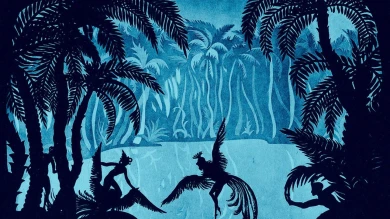
The Stories of Lotte Reiniger 2
Past activity
Moon Projector is the Museo Reina Sofía’s regular film programme for young audiences. Every Sunday morning, sessions are held to introduce children to cinema and audiovisual arts, taking them on a journey of fascination, where imagination and knowledge abound, from the dawn of film language to today’s most creative and original works with future generations in mind. The programme title draws from the work of poet Federico García Lorca, a Moon Projector where dreams and early imagination reverberate, and where children’s fantasy emerges from the contemplation of projected light.
Following a showing of The Adventures of Prince Achmed, the oldest feature-length animation film preserved, this edition of Moon Projector shows some of the animated short films Lotte Reiniger made with inspiration from European tradition: the Brothers Grimm’s Cinderella and Hansel and Gretel, Hans Christian Andersen’s Thumbelina and Jeanne-Marie Leprince de Beaumont’s The Three Wishes. Under the wing of the German film-maker, this children’s literary heritage, which germinated in Romanticism, takes on a new aesthetic and artistic meaning, her unique style of frame-by-frame silhouettes evolving in this ensemble of past animations with an original stage design and a new narrative rhythm from entertaining artistic expressions and musical pieces.
Lotte Reiniger (Germany, 1899–1981) is regarded as the pioneer of animation film. Inspired by the films of Georges Méliès, German Expressionism and pre-cinema inventions, Reiniger conceived of her own universe based on storytelling tradition, the genesis of narrative animation.
Pivotally, one aspect of the film-maker’s work was the prolific creation of animation films based on European cultural heritage, where she gathered the tales of the continent’s great fable storytellers. The majority of these animated black-and-white pieces were made for the BBC in the UK, where Reiniger lived from 1949 onwards after fleeing the spread of Nazism in Germany and following spells in different European countries.
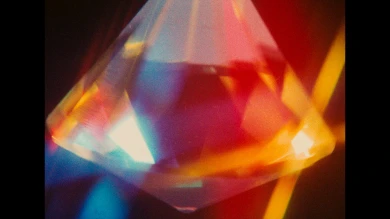
Colours!
Past activity
Colours! is the second instalment of the children’s film series Moon Projector, screening, under a conceptual chromatic arc, short animation and documentary films for all ages. This session shines a light on film-makers from a range of time periods, for example Iranian director Abbas Kiarostami; more contemporary figures like French artist and film-maker Alain Biet; young animation directors such as German artist Franka Sachse, Lithuanian director Ignas Meilunas; and Swiss illustrator and animator Oona Lacroix. Congregated here, they form an all-encompassing, colour-based experience from knowledge, plays with light, graphic stories, illustration and humour.
Rangha (The Colours) is a short film Kiarostami made for the Institute for the Intellectual Development of Children and Young Adults — known as Kanoon, and highly active in the 1960s and 1970s in Iran — which explores the theme of colour from an educational vision and its manifestation in the everyday of childhood. A knowledge-based aesthetic representation with echoes of daily life. Alain Biet’s Grands Canons (Perfect Copies) is a symphony of paper illustrations of daily objects which come to life with plays of colour. In Saka sy Vorona (Cat and Bird), Franka Sachse seems to make colours disappear, despite only using one: on a white background the silhouette of a black cat appears and discovers a small white bird emerging from the darkness, an encounter that creates a play of possible forms and silhouettes. In Mr. Night Has a Day Off, Mister Night is in charge of day becoming night, but one fine day he decides to visit the city in the morning, much to his dismay. Drawing from a simple idea and a fun character, animator Ignas Meilunas reveals the secret of colours to us: light. Finally, in Coucouleurs, Oona Lacroix recounts the lives of different birds that nest in trees sharing their same colour. But what happens when a bird has more than one colour?
The Stories of Lotte Reiniger
Past activity
Moon Projector is the Museo Reina Sofía’s regular film programme for young audiences. Every Sunday morning, sessions are held to introduce children to cinema and audiovisual arts, taking them on a journey of fascination, where imagination and knowledge abound, from the dawn of film language to today’s most creative and original works with future generations in mind. The programme title draws from the work of poet Federico García Lorca, a Moon Projector where dreams and early imagination reverberate, and where children’s fantasy emerges from the contemplation of projected light.
This inaugural session takes us back to the beginning. The Adventures of Prince Achmed is the first ever feature-length animation film, made using the silhouette animation technique and shadow puppetry, and tells a story from One Thousand and One Nights. Achmed, his father the Caliph, his sister Dinarsade and an evil sorcerer are the characters in this first great story. The young prince objects to his sister being handed over to a treacherous sorcerer who has put a price on a magic flying horse. In his eagerness, the prince is deceived by the wizard, who makes him mount the horse, taking him to an unknown and faraway place. The film reveals, for the first time, colour and forms in a fantastical story — an aesthetic explosion with the capacity for unique and dreamy fascination.
Lotte Reiniger (Germany, 1899–1981) is regarded as the pioneer of animation film. Inspired by the films of Georges Méliès, German Expressionism and pre-cinema inventions, Reiniger conceived of her own universe based on storytelling tradition, the genesis of narrative animation. Drawing from popular children’s puppetry theatre and shadow play, she built animated stories with silhouettes and shadows which would later evolve into experimentation with colour.
This screening unveils the Museo’s new cinema theatre, a renovated cinematic space, after a year of remodelling work, which holds a set Thursday-to-Sunday programme with an array of audiences and gazes in mind.
Más actividades
![Isabel Coixet, 100 Years and You Everywhere [100 años y tú en todos los sitios], 2026, película](https://recursos.museoreinasofia.es/styles/small_landscape/public/Actividades/2.diseminar-mundo.jpg.webp)
John Berger and Isabel Coixet. Continued Ways of Seeing
Thursday, 17 September 2026 at 7pm
Ways of Seeing (1972) is one of the most revolutionary television series on art history, the museum and contemporary critical culture. Across four episodes, an articulate, enthusiastic John Berger unpacks the relationships between classical art through the gaze and new technology, the nude and feminism, the oil painting and commodity fetichism, advertising and consumerism. In essence, a level of critical commitment only comparable to its capacity for dissemination. Unsurprisingly, the series, and the book that would distil it, continues to forge vocations. This session sees art historians Alberto López Cuenca and Modesta Di Paola carry out an analysis of Berger’s audiovisual work, placing the stress on episodes one and four of the series. In the first episode, Berger reflects on the connection between the act of seeing, looking and being in light of new technology, such as the film camera. At the same time, it analyses how the culture of reproduction is turning paintings into messages or fragments of communication while stressing the importance of silence when observing historical paintings. In the fourth and final episode, he introduces advertising as a new iconic-verbal language that shares certain principles with the message of oil painting as a luxury item.
The session opens with the premiere of a filmic letter from Isabel Coixet, one of Spain’s most internationally acclaimed directors, to John Berger, with whom she maintained a long friendship and deep admiration. The short film is testament to the ubiquitous and long-lasting presence of the author of Ways of Seeing, even after his death in 2017.
![Chantal Akerman, Woman Sitting after Killing [Mujer sentada después de matar], 2001, instalación. Museo Reina Sofía](https://recursos.museoreinasofia.es/styles/small_landscape/public/Actividades/chantal-akerman-mujer-sentada-despues-matar.jpg.webp)
On Your Screen: Art History and the Museum Facing the Audiovisual Challenge
18, 19 SEP 2026
The conference On Your Screen: Art History and the Museum Facing the Audiovisual Challenge sparks debate around the transformations of art history and museum space upon embracing the audiovisual format. Its starting point is John Berger’s emblematic television series Ways of Seeing (1972), a landmark in the democratisation of art-historical discourse. In the series, Berger illustrated how the transfer of a work such as Goya’s Los fusilamientos del 3 de mayo (The Third of May 1808 or the Executions) from museum gallery to home TV screen completely changed the viewer’s experience, allowing the image to travel to straight to the viewer.
In the twenty-first century, this screen-based ecosystem has expanded exponentially, with museums not only physically integrating screenings and devices into their galleries— following in the wake of many exhibitions on the moving image — but also deploying complex virtual strategies. Equally, numerous en vez de a multitudeof historians, students and creators use digital platforms to circulate their ideas and projects. This audiovisual shift opens access to ignored materials and democratises knowledge, as well as challenging traditional hierarchies and the interpretive authority of institutions. The conference, promoted by the research project ATLAS AV: The Audiovisualisation of Art History and the Museum, seeks to analyse this vast audiovisual material, its archives, and its capacity to transform the memory of art.
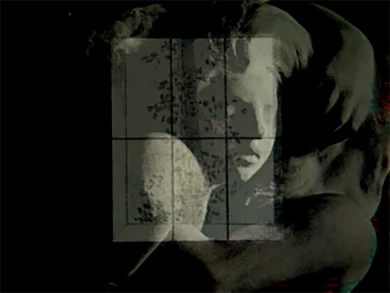
Godard and Miéville: Time and Ruin
Friday, 18 September 2026 - 7pm
Inside the framework of the conference On Your Screen: Art History and the Museum Facing the Audiovisual Challenge, this film series sets forth three critical visions of the museum via three sessions featuring the works of John Berger, Jean-Luc Godard and Anne-Marie Miéville, Ariella Azoulay, Alan Resnais and Chris Marker, Kwate Nee-Owoo, and the premiere of short films by Isabel Coixet and La Vulcanizadora (Maria Rojas Arias and Andrés Jurado). In classical theory, the museum gives the world meaning; it contains fragments of the past, granting them a history, a narrative that explains preterite time and the present. Today, there is an implicit assumption that this function hides and legitimises forms of power, yet what if the museum, instead of explaining the world, multiplied it through radical ideas, silenced periods and repressed subjects? Such is the approach of the film-makers and artists in this film season.
In 1972 the writer John Berger opened the landmark television series Ways of Seeing with an iconoclastic gesture: slicing Sandro Botticelli’s painting Venus and Mars (1485) in London’s National Gallery. A transgressive act that recalls contemporary attacks on the museum by dissident youth and with which Berger, after revealing it was a reproduction, sought to ignite debate around the idea of an original artwork and a copy. In this, the hundredth anniversary of his birth, the first session pays homage to one of the great art writers of the twentieth century. Starting with a review of Berger’s audiovisual work by art historians Alberto López Cuenca and Modesta Di Paola, the series begins with the premiere of 100 Years and You Everywhere (2026), an unreleased short film by Isabel Coixet composed as a beautifully crafted letter to Berger, and continues with an analysis of fragments of Ways of Seeing in relation to the museum and contemporary art.
The second session screens two medium-length films by Jean-Luc Godard and Anne-Marie Miéville on time, ruin and museum. In The Old Place. Small Notes Regarding the Arts at Fall of 20th Century (1999), both film-makers consider what remains of that “old place”, the museum, at the close of a century of wars and totalitarianism, and ask whether it should be more of a legend or desire than a place. This same driving principle leads Godard to build his own imaginary museum in Reportage amateur (maquette expo) (2006), a rickety toy museum which, paradoxically, contains the great film-maker’s full power of thought on history and images.
Finally, the third session explores one of the major challenges of recent years: the decolonisation of the museum, the recognition of its link to imperialist discourses of power and the need to situate a new silenced or repressed subject at the centre of the Western narration of history. Under the title Museums and Restitution, it includes the film Undocumented. Unlearning Imperial Plunder (2019), by theorist Ariella Azoulay, Statues Also Die, by Alan Resnais and Chris Marker (1953), Kwate Nee-Owoo’s You Hide Me (1970) and the first screening of the short film Quinto verso, parte de Tonada (Fifth Verse, Part of Tonada), by La Vulcanizadora (Maria Rojas Arias and Andrés Jurado), filmed at the Museo de América in Madrid.
![Ariella Azoulay, Un-documented. Unlearning Imperial Plunder [Indocumentados. Desaprendiendo el saqueo imperial], 2019, película](https://recursos.museoreinasofia.es/styles/small_landscape/public/Actividades/5.diseminar-mundo.jpg.webp)
Museums and Restitution
Saturday, 19 September 2026 - 7pm
Centuries of plundering, decades of amnesia, years of living with unmitigated extractivist power… Does a museum, as we know it, have a raison d'être in a postcolonial society?
This session expounds the operations of the museum as a colonial machine, while putting forward ideas, in narration, for a more just, equal and inclusive institution of the future via society’s marginalised and minority voices. The session begins with the international premiere of Quinto verso, parte de Tonada (Fifth Verse, Part of Tonada), which presents a vision of the Quimbaya Collection (fifth and sixth centuries CE) from the Museo de América in Madrid. It is constructed with the voices and chants of Wayúu mourners and guides, not only as a way of reinstating the role of these gold idols — anthropomorphic figures of men and women used as vessels in ritual practices — but also to imagine that what must be exhibited is not the gold itself. It is the ritual’s own chant. In the classic film You Hide Me (1970), Ghanaian film-maker Kwate Nee-Owoo accesses the British Museum’s collection of African art, located in the building’s basement, to question the meaning behind a museum plundering and nullifying. A fine exercise of first-person institutional critique screened for the first time in Spain. Almost seventy years since Resnais and Marker made Statues Also Die (1953), a reflection on the aura-bearing value of the museum opposite the identity-based and cultural belonging of African art, theorist Ariella Azoulay films the same statues again at the Musée du Trocadéro (today the Musée du Quai Branly), which survive and wait to be reunited with their people. Azoulay, whose wholly original undertaking is a lesson to the museum of the future, connects the forced migration of these sculptures with the mass transit of people crossing borders artificially imposed by the same system that has plundered their culture.
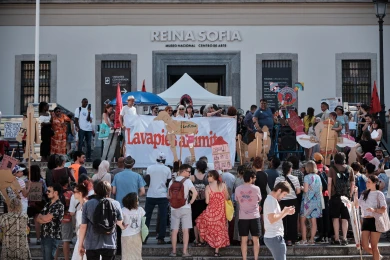
The School of Transformative Institutionalism and Local Organisation
From 21 to 24 September 2026
The School of Transformative Institutionalism and Local Organisation (S.T.I.L.O.) is a programme of joint learning and join strategy which sets in motion a process for the exchange of questions, methodologies and experiences between cultural organisations. The overall aim is to create, circulate and prototype tactics, tools and collective knowledge on institutional practices that open new channels for defending culture and advocating structural transformation in divergent geographical contexts.
The project is part of the Laboratorio de Institucionalidad Compartida (The Laboratory of Shared Institutionalism, LIC), a space for the Museo Reina Sofía’s research, work and advocacy centred on developing, experimenting with and systemising practices, protocols and tools which contribute to a fairer and more liveable cultural ecosystem.
For many years now, so-called infrastructural critique in museums questions material, legal and economic infrastructures, among others, as well as the forms of solidarity and practices required to sustain the cultural ecosystem. By approaching current debates, S.T.I.L.O. raises questions on the ways in which organisations define and interpret their practices, organise their relations and respond to the social contexts in which they operate.
The school gathers four cultural organisations that work via different institutional models – scale, contexts, conditions, different working models — with the goal of pooling common strategies and tools of organisation, advocacy and relationships with local communities.
The programme is conceived as a collaborative process with the participation of Arika, La Revuelta, BAK Basecamp and The Tentacular Museum (Museo Reina Sofía) and is structured around preparatory online sessions and an in-person seminar in Madrid.
S.T.I.L.O. is an activity framed inside the working strand of Situated Organisations from L'Internationale’s Museum of the Commons project, which reflects on the role of museums and art organisations as actors within complex social networks and ecosystems, with a view to exploring new ways to democratise institutions and make them more open, inclusive and useful.